
By Hannah Dadzie
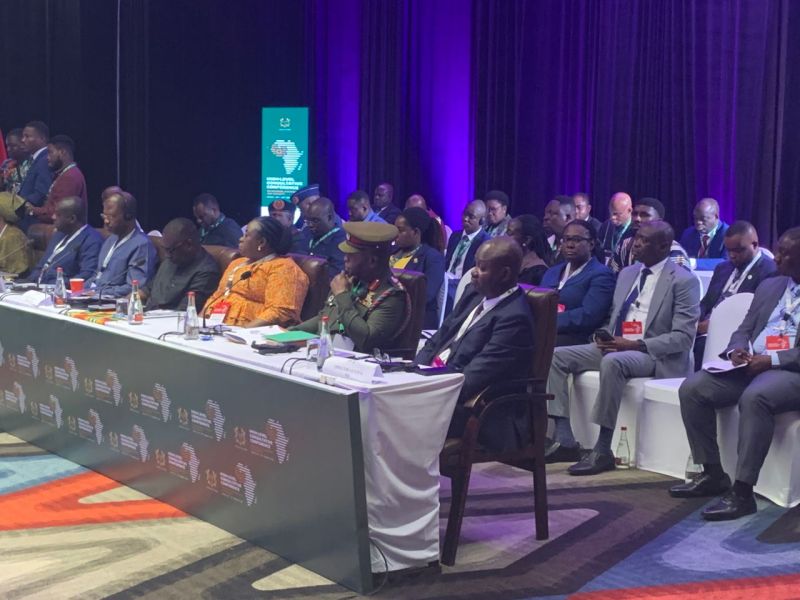
Ghana has convened a two day high-level consultative conference of intelligence chiefs and security officials from West Africa and the Sahel to strengthen regional cooperation against the growing threat of terrorism, violent extremism and transnational crime.
Speaking at the opening, Minister of Foreign Affairs, Samuel Okudzeto Ablakwa, warned that the region has become the new epicentre of global terrorism, recording an average of eight terror attacks daily and claiming about 44 lives each day. said West Africa and the Sahel now account for nearly half of all recorded global terrorist incidents
“On average, there are eight terror attacks every day in our region, claiming 44 lives daily. Over the last 15 years, our region has seen an increase of 1,266% in terror attacks, with the death toll rising by a staggering 2,860%. This is the grim reality we face.” Mr Ablakwa stated.
The Foreign Affairs Minister cited a dramatic rise in terror-related violence over the past 15 years, stressing that the threats confronting the region are transnational and cannot be addressed by individual states acting alone.
“The challenges we face are not confined to a single nation. Extremism in the Sahel, piracy in the Gulf of Guinea, trafficking across porous borders and the erosion of resilience in our communities demand a coordinated regional response,” he said.
The Foreign Affairs Minister underscored the need for intelligence cooperation that goes beyond military threats to include economic, social and governance factors, arguing that intelligence must also serve as a tool for development planning and early warning.

He called for a renewed culture of trust, transparency and actionable intelligence-sharing among states, built on four key principles: trust, resource mobilisation, integration of security and development efforts, and foresight to anticipate risks before they escalate.
According to him, the outcome of the intelligence chiefs’ deliberations will directly inform ministerial discussions and shape the draft communiqué to be considered by regional leaders at the Heads of State Summit.
Minister for the Interior and National Security, Muntaka Mohammed Mubarak, described the meeting as a defining moment for the sub-region, noting that terrorism and violent extremism have intensified in scale, sophistication and geographic reach.
He highlighted the escalating attacks in the central Sahel, including assaults on military installations, civilian communities and critical infrastructure, which have led to mass displacement and worsening humanitarian conditions.

“The Sahel now accounts for more than half of global terrorism-related deaths. This is no longer a localised crisis but a transnational threat with potential spillover into coastal states, including Ghana,” he said.
The Interior Minister pointed to structural vulnerabilities such as climate stress, food insecurity, youth unemployment, weak border management and limited access to basic services as factors exploited by extremist and criminal networks.
He stressed that security responses must move beyond narrow military approaches to a comprehensive, regionally owned framework where security and development reinforce each other.
“Security can no longer be addressed predominantly through a narrow military lens. It must be embedded within a comprehensive framework where development and security are mutually reinforcing pillars.” The Interior
While acknowledging the role of existing mechanisms such as ECOWAS and the African Union, he said renewed strategic direction, stronger coordination and practical intelligence cooperation are needed to deliver tangible benefits, including safer transport corridors, improved border services and stronger early warning systems.
The conference has brought together delegations from Nigeria, Burkina Faso, Senegal, Liberia, Mauritania, Mali, Sierra Leone, Togo, as well as representatives from the African Union and development partners. The Nigerien delegation was absent after cancelling its participation at the last minute, following a brazen terrorist attack on the airport in Niamey just hours before their scheduled departure.
Discussions will focus on key security and governance concerns affecting the region, including terrorism, violent extremism, transnational organised crime, and maritime insecurity in the Gulf of Guinea. Leaders are also expected to deliberate on the evolving security and humanitarian situation, review existing peace and security initiatives, and explore practical and sustainable frameworks to strengthen regional cooperation.
The conference is expected to produce actionable recommendations aimed at strengthening intelligence sharing, joint risk assessments and preventive measures to curb instability and protect vulnerable border communities across the region.