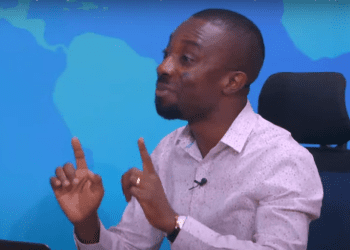
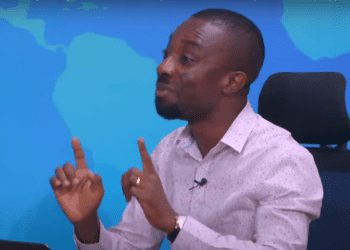

Former presidential staffer Dennis Miracles Aboagye has raised concerns about what he describes as a widening disconnect between Ghana’s improved macroeconomic indicators and the everyday cost of living under the National Democratic Congress (NDC) administration.
Speaking ahead of a public engagement in Koforidua on Friday, Aboagye stated that twelve months into the NDC’s tenure, ordinary Ghanaians are experiencing worsening living conditions despite positive economic data. He suggested the government has focused more on managing public perception than addressing substantive challenges facing citizens.
“Twelve months of the NDC in power, the disconnect between the improved macro-economic indicators and the cost of living is real and worsening the lives of the people,” Aboagye said. “It has largely been about optics and managing goodwill without actually paying attention to the substantive issues affecting the people.”
He acknowledged that the government disputes this assessment, viewing it as partisan criticism. “But that’s our view, and the government says our view is clouded with partisanship,” he added.
Aboagye, who served as Communications Director for former Vice President Mahamudu Bawumia’s 2024 campaign, announced plans to hold a People’s Forum in Koforidua to gather direct citizen feedback on governance.
“Today, we go to the people to listen to what they have to say about 12 months of NDC in government,” he stated. “The People’s Forum comes to you today from Koforidua.”
The forum is expected to engage market women, traders, commercial transport operators, teachers, nurses, and students to assess their experiences beyond official statistics on the dollar exchange rate and inflation.
“The goal is to understand how Ghanaians are experiencing life under the current government, beyond the numbers and statistics,” Aboagye explained.
The criticism comes as government officials and NDC members tout significant economic achievements during the administration’s first year. Deputy Defence Minister Ernest Brogya Genfi recently commended the government for reducing inflation from approximately 23 percent when it took office to single digits within months, while also noting cedi appreciation against major foreign currencies.
Technical Advisor at the Ministry of Finance Dr. Theo Acheampong described 2025 as a positive year for citizens, predicting further improvements in 2026 following Ghana’s anticipated exit from the International Monetary Fund (IMF) programme around midyear.
Official data indicates that inflation declined from 23.5 percent in January 2025 to 6.3 percent by November. The cedi strengthened from approximately GH¢17 per dollar to around GH¢10.35 during the same period. Public debt fell from 61.8 percent of Gross Domestic Product (GDP) in December 2024 to 45 percent by October 2025.
However, Aboagye has consistently questioned whether these improvements translate into tangible benefits for ordinary households. In previous statements, he argued that despite lower inflation and a stronger cedi, prices for goods and services have continued rising by more than 10 percent across markets.
“Is it not strange that we are in a country where inflation has dropped from a whopping 23 percent to 6 percent and yet no single price of a good has increased by less than 10 percent?” he stated in December during an appearance on JoyNews.
The former presidential staffer has also accused the NDC administration of delivering a reverse instead of the promised reset, claiming the government lacks clear strategies for addressing national challenges while focusing on suppressing opposition voices.
Aboagye previously served under the Akufo-Addo administration as a presidential staffer responsible for Local Government and Decentralization, with additional duties as Executive Secretary for the Inter-Ministerial Coordinating Committee on Decentralization.
The NDC won a decisive electoral victory in December 2024, with President John Dramani Mahama defeating Bawumia. The party’s economic narrative centers on restoring discipline, implementing the 24-hour economy policy, scrapping controversial taxes including the E-Levy and Betting Tax, and securing credit rating upgrades from Fitch, Moody’s, and Standard & Poor’s.
Critics from the New Patriotic Party (NPP), including Aboagye, maintain that macro-level improvements have not filtered down to households struggling with high food prices, transportation costs, and general living expenses.
The debate reflects broader tensions in Ghana’s political discourse regarding how economic recovery should be measured, whether through official statistics or lived experiences of citizens navigating markets, schools, and healthcare facilities.