

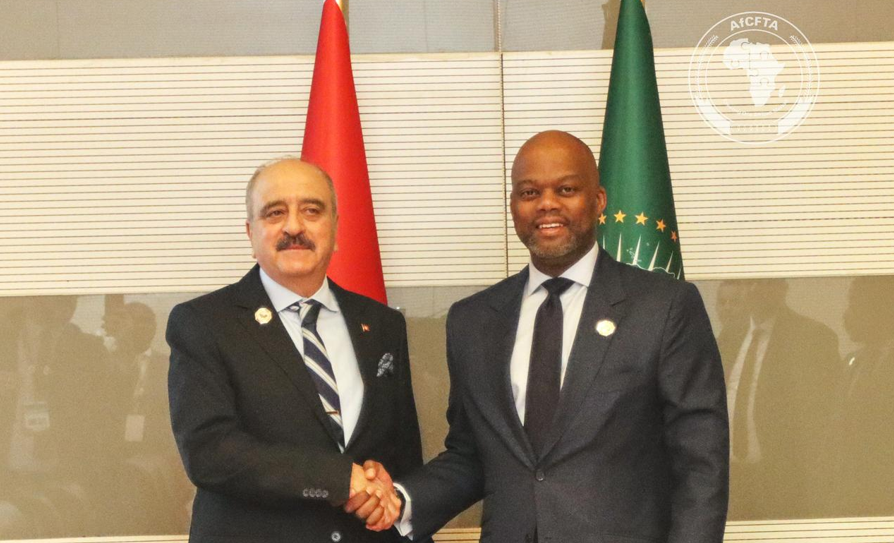
The Secretary-General of the African Continental Free Trade Area, H.E. Wamkele Mene, has held high-level talks with Tunisia’s Minister of Foreign Affairs, Mohamed Ali Nafti, on the sidelines of the 39th African Union Summit, with both leaders reaffirming their commitment to deepening Tunisia’s participation in the continental free trade area and ensuring its benefits reach women, youth, and the private sector.
The bilateral engagement, held on the margins of the AU’s flagship gathering of African heads of state and government, covered a broad agenda including private sector mobilisation, digitisation of trade processes, the development of trade corridors, and the imperative of inclusive implementation of the AfCFTA framework.
Tunisia, a founding signatory of the AfCFTA agreement, brings considerable assets to the continental integration project. The discussions underscored the importance of translating Tunisia’s formal participation in the AfCFTA into active and substantive engagement with the preferential market the AfCFTA creates. The critical role of the private sector in driving the AfCFTA’s implementation was emphasized as both leaders acknowledged that governments could create enabling frameworks and reduce barriers, but it is businesses that ultimately generate the trade and investment flows which the agreement is designed to catalyse.
They also focused on digitisation as a transformative tool for trade facilitation. The AfCFTA Protocol on Digital Trade, one of the agreement’s most forward-looking instruments, provides a framework for governing electronic commerce, enabling trusted data flows, and modernising the systems through which cross-border trade is conducted.
For Tunisia, which has invested significantly in digital infrastructure and has a growing technology sector, digitisation of trade processes presents opportunities. Modernising customs procedures, adopting electronic documentation, implementing digital payment systems, and developing e-commerce platforms can drastically reduce the time and cost of trading across borders.
The implementation of the AfCFTA Digital Trade Protocol addresses critical questions of data governance, cybersecurity, and digital identity that must be resolved to build the trust necessary for cross-border digital commerce to flourish.
The two leaders shared commitment to ensuring that AfCFTA implementation is genuinely inclusive, particularly for women, youth, and small businesses that have often been marginalised from the benefits of trade liberalisation
The AfCFTA includes dedicated provisions under its Protocol on Women and Youth in Trade, recognising that women and young people face specific barriers to participating in and benefiting from trade. The Women and Youth in Trade Protocol commits AfCFTA member states to addressing these barriers through targeted policies and programmes.
The commitment to inclusive implementation shared by Secretary-General, His Excellency, Mene and Minister Nafti signals recognition that the AfCFTA’s success will ultimately be measured not by trade statistics alone but by its impact on the lives of ordinary Africans including the women traders who form the backbone of cross-border commerce in many parts of the continent, and the young entrepreneurs who represent Africa’s economic future.
Post Views: 39
Discover more from The Business & Financial Times
Subscribe to get the latest posts sent to your email.