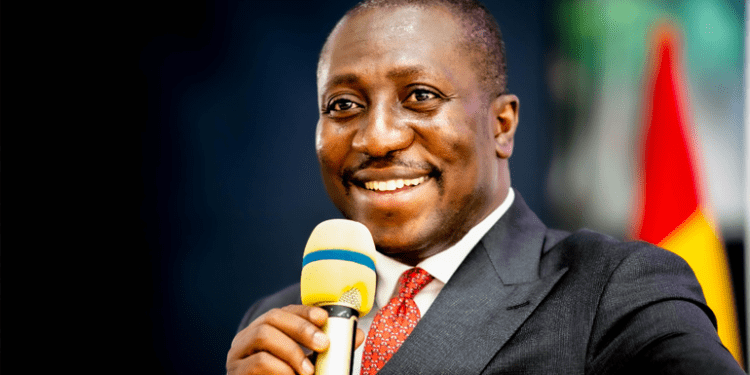

Minority Leader Alexander Afenyo Markin says Ghana must prioritize technological investment over political retribution or risk irrelevance in the Fourth Industrial Revolution while other nations advance.
In statements released today marking one year since the 2024 elections, the Effutu MP criticized government focus on political removals while competing economies invest heavily in artificial intelligence, infrastructure and human resource development. He pointed to the United States, China, the UAE and Saudi Arabia as countries positioning themselves for future global dominance through strategic technology adoption.
Afenyo Markin argued that Ghana cannot build a technology driven economy when priorities center on settling political scores rather than creating new industries. He noted that farmers in advanced nations now use AI powered tools, security agencies deploy predictive systems and industries undergo automation driven transformation across multiple sectors.
The Minority Leader questioned Ghana’s preparedness for technological shifts, asking what investments government is making to ensure young Ghanaians can compete globally. He warned that Ghana faces being left behind while other countries make transformative investments determining global leadership for coming decades.
In a letter titled One Year After Ghana’s Democracy at a Crossroads, Afenyo Markin addressed President John Dramani Mahama directly, urging him to resist advice from individuals focused solely on retribution. He described such advisers as hawks whose horizons extend only to the next arrest, removal or demonstration of power.
According to Afenyo Markin, these individuals are stealing time and energy from transformative nation building.
The Minority Leader emphasized that Mahama’s December 2024 electoral victory represented a rare political achievement, returning to power after eight years through democratic means. He urged the President to use this second chance for meaningful transformation rather than actions history will remember as removals and arrests.
Afenyo Markin called for moderate voices within the governing party to be empowered, insisting Ghana needs development oriented leadership. He cited examples including President Kufuor’s National Health Insurance Scheme and President Akufo Addo’s Free Senior High School policy as enduring legacies, suggesting transformative reforms outlast political vendettas.
The statements also addressed growing youth disillusionment across party lines. Afenyo Markin stated both the NPP and NDC must accept responsibility for abandoning young supporters after elections, noting that while senior party members receive appointments, young campaigners face continued unemployment and hopelessness.
He cautioned that treating youth as expendable campaign tools poses serious threats to national stability. The warning emphasized that social frustration transcends party affiliation, with unemployed youth caring about jobs and opportunity rather than party colors.
Afenyo Markin further emphasized that democracy functions effectively only when institutions remain independent and credible. He argued that weakening democratic structures fuels public frustration similar to movements witnessed from Paris to Antananarivo, where citizens grow weary of leaders promising transformation but delivering partisan conflict.
While condemning undemocratic takeovers across West Africa, he urged political leaders to address underlying reasons why citizens sometimes welcome such disruptions. He stressed that constitutional governance loses appeal when elected officials treat foundational documents as inconveniences.
The Minority Leader noted that democracy remains the best form of government because it contains within itself the mechanism for its own correction. However, he warned this mechanism only works if institutions remain independent and credible, cautioning that Ghana is not immune to pressures causing political upheaval elsewhere.
Afenyo Markin also directed criticism inward, acknowledging that NPP arrogance and detachment contributed to electoral defeat. He warned that when people’s anger is unleashed, it makes no distinction between NPP and NDC, emphasizing that youth care about employment opportunities regardless of political affiliation.
The statements reflect mounting concern about Ghana’s competitive positioning as global economies accelerate digital transformation initiatives. With artificial intelligence reshaping agriculture, security and manufacturing sectors worldwide, questions about Ghana’s strategic response grow more urgent amid limited visible progress.
His intervention highlights broader tensions between immediate political objectives and long term national development goals. The call for bipartisan recognition of youth frustration suggests that failure to address economic opportunities could destabilize democratic institutions regardless of which party holds power.
The Minority Leader’s warnings come as the new administration settles into office with various political appointees taking up positions across ministries and agencies. Whether government will pivot toward technology investment and youth employment remains uncertain as political transitions continue.
Afenyo Markin’s letter underscores concerns that excessive focus on political settlements undermines Ghana’s ability to compete in an era requiring massive investments in emerging technologies. His appeal to President Mahama represents an attempt to shift national conversation from retribution toward development oriented governance priorities.