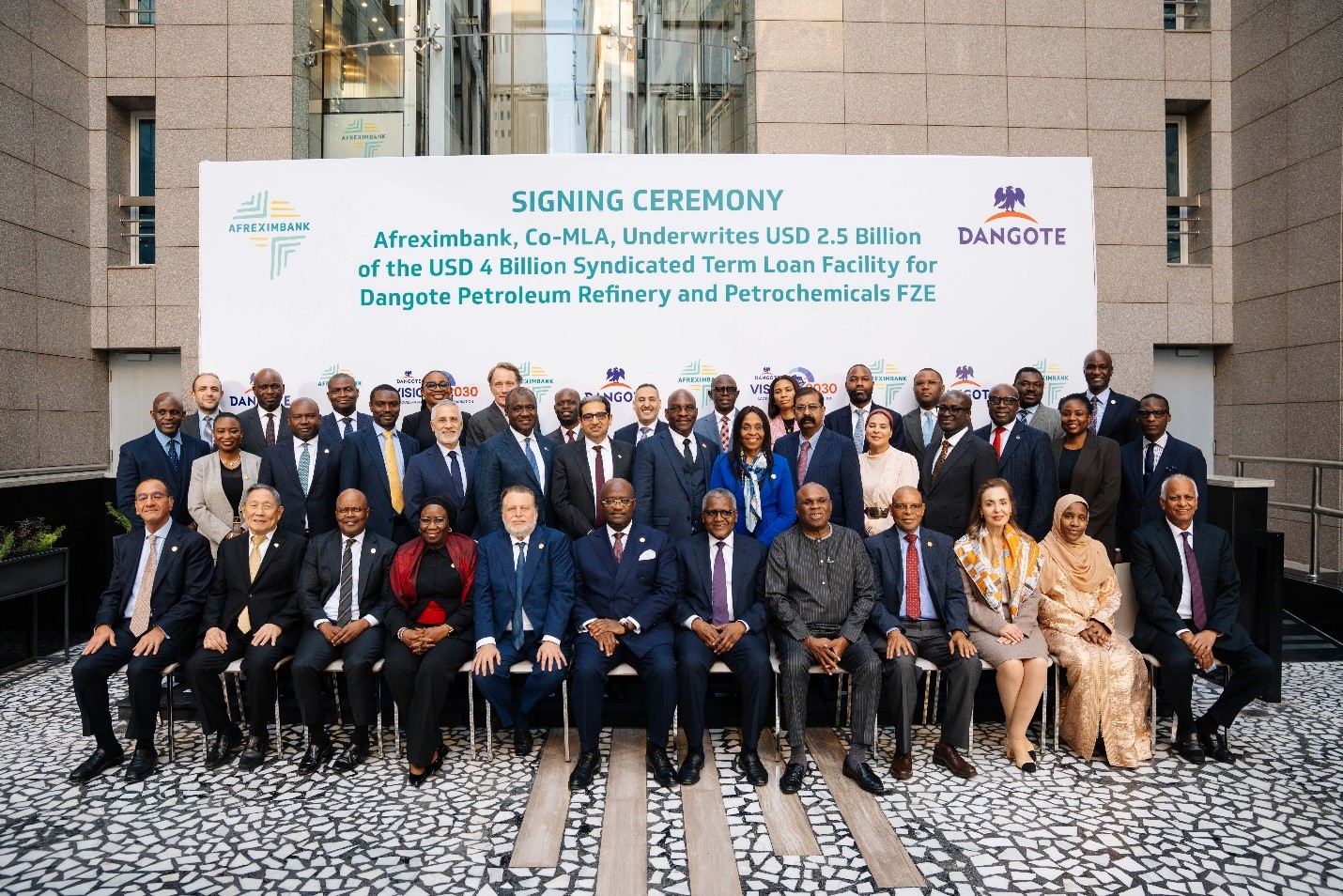

The African Export-Import Bank (Afreximbank) has underwritten $2.5 billion of a $4 billion syndicated term loan for Dangote Petroleum Refinery and Petrochemicals FZE (DPRP), marking one of the largest financing commitments in Africa’s industrial sector.
The five-year facility, arranged jointly by Afreximbank and Access Bank, is designed to consolidate existing financing, optimise the refinery’s capital structure, and align its operational trajectory. The deal attracted strong interest from African and international financial institutions, underscoring confidence in the refinery’s role as a transformative industrial asset.
Africa’s largest refinery secures financial backing
The Dangote Refinery, with a capacity of 650,000 barrels per day, is Africa’s largest petrochemical complex. Since commencing operations in February 2024, it has been positioned as a strategic supplier of refined petroleum products to both African and global markets.
Afreximbank’s $2.5 billion participation represents the largest share in the syndicate. The bank highlighted that the facility would enhance DPRP’s balance sheet flexibility, strengthen its financial position, and support its long-term growth plan.
Afreximbank’s commitment to African industrialisation
During a strategy session in Cairo, Afreximbank’s President and Chairman of the Board of Directors, Dr. George Elombi, emphasised that the bank’s support for Dangote Group was rooted in its mission to invest in African enterprises. He noted that Afreximbank had invested about $15 billion in the Dangote Group since 2015, stressing that such investments build resilience and self-sufficiency for the continent.
Dr. Elombi remarked that empowering African businesses was critical for reducing reliance on external support during difficult times. He described the transaction as a powerful statement of Afreximbank’s commitment to backing transformative projects that reshape Africa’s economic future.
Dangote Group’s growth vision
Dangote Industries Limited’s President and Chief Executive, Aliko Dangote, said the financing strengthens the refinery’s financial foundation and positions it for the next phase of growth. He expressed appreciation for Afreximbank’s continued confidence in the Group’s vision to build world-class industrial capacity serving Nigeria, Africa, and global markets.
Strategic impact on energy security
Beyond expanding refining capacity, the facility is expected to reduce Africa’s dependence on imported petroleum products, promote intra-African trade, and bolster energy security. Afreximbank has already supported the refinery with a $1 billion working capital facility and acted as financial adviser on the Naira-for-Crude initiative, which enables crude oil purchases and refined product sales in local currency, reducing reliance on foreign exchange.
Broader industrialisation agenda
The syndicated loan reflects a broader push to accelerate Africa’s industrialisation. Afreximbank underscored that the Dangote Refinery stands as a bold symbol of African ambition, capital, and execution at scale. The bank reiterated its readiness to continue supporting indigenous industrial projects that advance self-sufficiency, resilience, and prosperity across the continent.
About Afreximbank
Afreximbank is a Pan-African multilateral financial institution mandated to finance and promote intra- and extra-African trade. With total assets exceeding $40 billion as of December 2024, the bank has been instrumental in supporting the African Continental Free Trade Agreement (AfCFTA) through initiatives such as the Pan-African Payment and Settlement System (PAPSS) and a $10 billion Adjustment Fund.
About Dangote Industries
Founded in 1978, Dangote Industries Limited is one of Africa’s leading diversified conglomerates, with operations spanning cement, sugar, salt, fertiliser, energy, port operations, automotive, and petroleum refining. Its core focus is building local manufacturing capacity to generate employment, prevent capital flight, and provide locally produced goods for African markets.
Post Views: 13
Discover more from The Business & Financial Times
Subscribe to get the latest posts sent to your email.