


… as shallow markets stall infrastructure drive
By William Selassy ADJADOGO
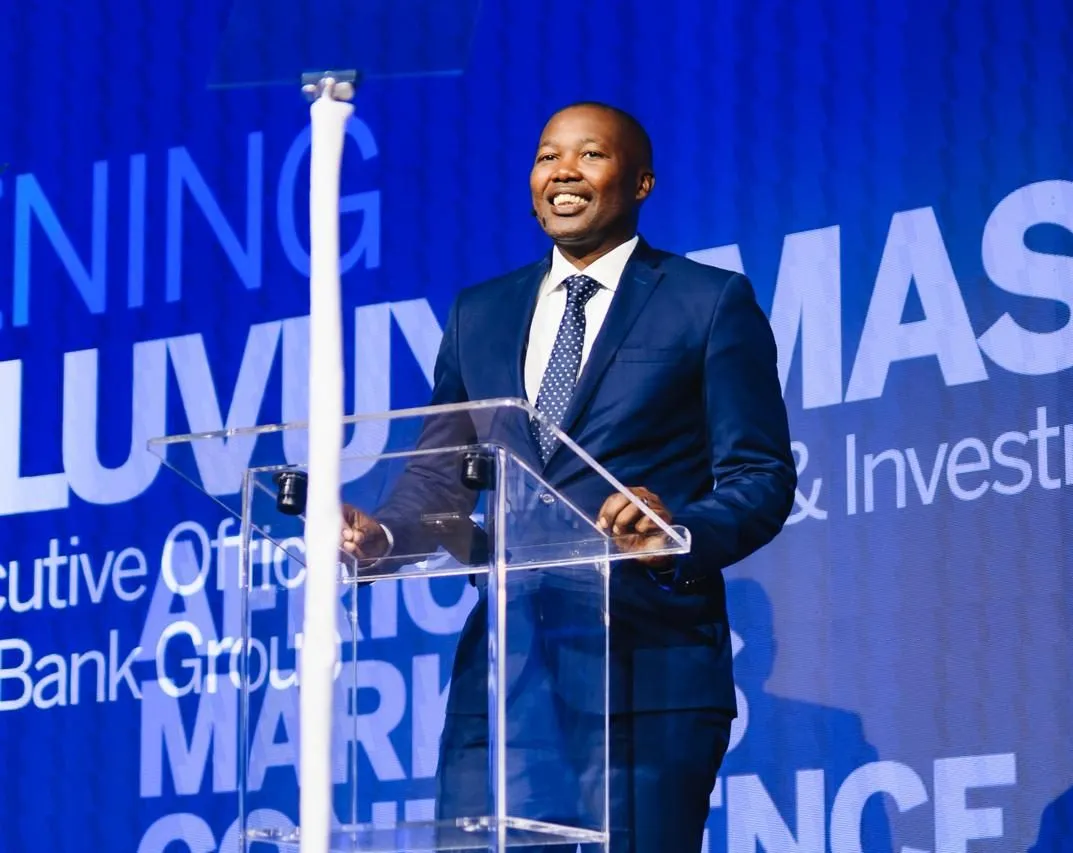
Africa is not short of capital but mechanisms to deploy it efficiently, Luvuyo Masinda, Chief Executive of Corporate and Investment Banking at Standard Bank Group, has said.
Addressing participants at the African Markets Conference 2026 held in Cape Town-South Africa, he noted that although the continent holds an estimated US$4trillion in domestic investable capital, it continues to grapple with a significant infrastructure financing gap.
The figure – which includes pension assets, insurance funds, sovereign wealth and bank balance sheets – challenges the long-held assumption that Africa’s development constraints are primarily the result of external capital scarcity.
Instead, Mr. Masinda argued, the constraint lies in shallow capital markets, regulatory fragmentation and limited secondary market depth, which prevent long-term domestic savings from being channelled into productive infrastructure assets.
“Africa has meaningful pools of domestic liquidity. The mobilisation remains uneven because the underlying market structures are not sufficiently deep, standardised or liquid enough to absorb capital at scale,” he explained.
The continent’s infrastructure deficit is estimated at between US$130billion and US$170billion annually, covering transport networks, power generation and transmission, water systems, digital infrastructure and logistics corridors. These assets, in principle, generate long-duration cash flows aligned with pension and insurance mandates.
In practice, however, project preparation bottlenecks, governance risks and limited credit enhancement mechanisms often deter institutional participation.
For Ghana, the remarks carry particular weight as policymakers in Accra have increasingly signalled their intention to deepen domestic capital markets and expand the role of pension funds in infrastructure financing.
The total value of pension assets under management (AUM) stood at GH¢61.8billion at the end of 2023. This increased to GH¢86.23billion a year later and preliminary estimates suggest it surpassed the GH¢100billion mark at the end of 2025.
Yet analysts note that secondary bond market liquidity remains thin, while risk concentration and regulatory limits constrain portfolio allocation flexibility.
The experience of Ghana’s recent debt restructuring has also heightened sensitivity among domestic institutional investors, reinforcing the need for stronger safeguards and improved risk pricing frameworks before long-term funds can be deployed at scale.
Mr. Masinda stressed that the solution lies not in isolated transactions but building predictable pipelines of bankable projects supported by credible procurement processes and enforceable contracts.
Layered financing models which combine development finance participation, credit guarantees and private capital featured prominently in discussions at the conference.
Regional integration is also viewed as critical. Through the African Continental Free Trade Area (AfCFTA), economies are seeking to create larger, more diversified markets that can attract institutional investors seeking scale and liquidity.
For Ghana, which hosts the AfCFTA Secretariat, integrated regional capital markets could broaden the investor base for domestic securities and infrastructure vehicles. However, financial market participants caution that integration must be matched by harmonised regulation, improved disclosure standards and reliable settlement systems.
Conference discussions also focused on moving from what Mr. Masinda described as “conceptual projects” to investable assets capable of meeting institutional risk-return requirements. Without stronger project preparation facilities and deeper capital market infrastructure, Africa’s savings pool will remain fragmented.
“Africa does not require isolated flagship transactions,” Masinda said.
“It requires deep, transparent and functioning markets capable of recycling domestic savings into long-term development,” he added.
For economies such as Ghana, the message is clear: mobilising domestic capital could reduce reliance on volatile external borrowing and help stabilise long-term financing costs. But doing so will depend on regulatory reform, market liquidity and institutional credibility.
The conference concluded with policymakers and investors advocating practical frameworks to unlock domestic capital for infrastructure and industrial development across the continent.
Post Views: 1
Discover more from The Business & Financial Times
Subscribe to get the latest posts sent to your email.