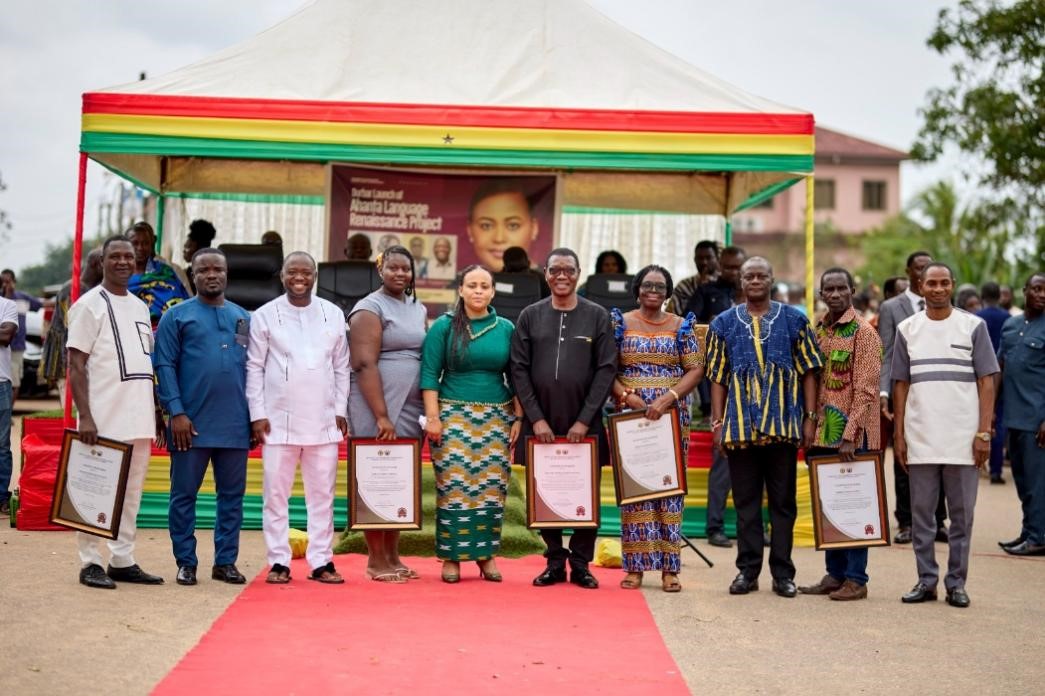


Ahanta, one of Ghana’s most at-risk indigenous languages, is now to be studied in school. This is the result of an initiative introduced by the Member of Parliament (MP) for the Ahanta West constituency, Mavis Kuukua Bissue.
The Ahanta language, also known as Ayinda, is a Central Tano language within the Kwa branch of the Niger-Congo language family, spoken by the Ahanta people in the Western Region. It is similar to languages like Nzema, Brosa, Evalue and other languages that are spoken in southeastern Ivory Coast.
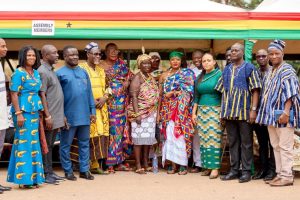
The Ahanta Language Renaissance Project (ALRP) is a grassroots-driven agenda started by Ms. Mavis Kuukua Bissue, the first female MP elected on the ticket of the National Democratic Congress.
Speaking at the pilot phase of the initiative which is to start in the Ahanta West Municipality, she indicated that her motivation stemmed from her inability to learn the Ahanta language as a child despite being born to Ahanta parents.
“I am an example of the dangers that lie ahead if we fail as a country to document and teach our indigenous languages. Despite being born to Ahanta parents, I did not have the benefit of being taught the language at home or in school.
We had no books from which I could read my language. And travelling and living out of Ghana for more than 25 years of my life, I had no reference point to connect with my mother tongue. Today, like thousands of Ahanta people, I am unable to speak the language. My children, too, have no means of learning it,” she said.
For generations, this language has served as a medium of identity, oral history, governance and spirituality for the Ahanta people. As a result of long-standing marginalisation and the absence of state-led preservation efforts, the Ayinda language is now endangered, with fewer children speaking or understanding their ancestral tongue. It has now been identified as one of nearly 40 indigenous Ghanaian languages at risk of extinction.
The agenda to make Ahanta language studied in school, a long-standing dream for the people of Ahanta, was a priority campaign promise by the then NDC candidate in the 2024 General Election. After having won the seat and assuming office, she moved swiftly to transform that promise into action, constituting a dedicated and inclusive committee to lead the process.
This committee included representatives from all three traditional councils; a member from the University of Education, Winneba’s Department of Ghanaian Languages; a representative from the Ahanta Bible Project; a member from the Ghana Education Service (GES); a media representative; a member from the Local Council of Churches, among others.
The committee has, so far, worked with the University of Education to begin the work in building a curriculum and with the GES to begin a pilot teaching of the language in selected schools in Ahanta West.
The ALRP, according to madam Bissue, builds on the foundational work done by the Ahanta Bible Project which has already worked with the Ghana Institute of Linguistics, Literacy and Bible Translation to produce alphabets and an orthography based on which the bible has been translated into Ahanta.
Western Regional Minister Joseph Nelson, speaking as a guest of honour at the event, described the project as a revolutionary project that would help protect one of the largest indigenous languages spoken in the region. “Language is more than a means of communication; it embodies the worldview, values, history and soul of a people. As a region proud of its cultural diversity, we must support projects like the Ahanta Language Renaissance Project, ensuring no part of our heritage is left behind,” he said.
Minister for Lands and Natural Resources, and MP for Ellembelle, Emmanuel Armah Kofi Buah, spoke highly of the initiative and its potential to address historical injustices.
He argued that the Ahanta people, a sister group of the Nzema – where he is an MP, are a formidable group of people whose contribution to Ghana’s pre-colonial history should not be allowed to die with their language.
“Ahantas are a very brave and dynamic group of people. Their history is rich. If you are an Ahanta, you have every reason to be proud. Your people stood their ground against European imperialists like the Dutch. This initiative led by your courageous MP is in the right direction and would help revive this beautiful language and help you restore your history and culture,” he said.
The ALRP has already started in the 20 schools under the pilot in the Ahanta West Municipal Assembly, with more teachers about to be trained.
Post Views: 44