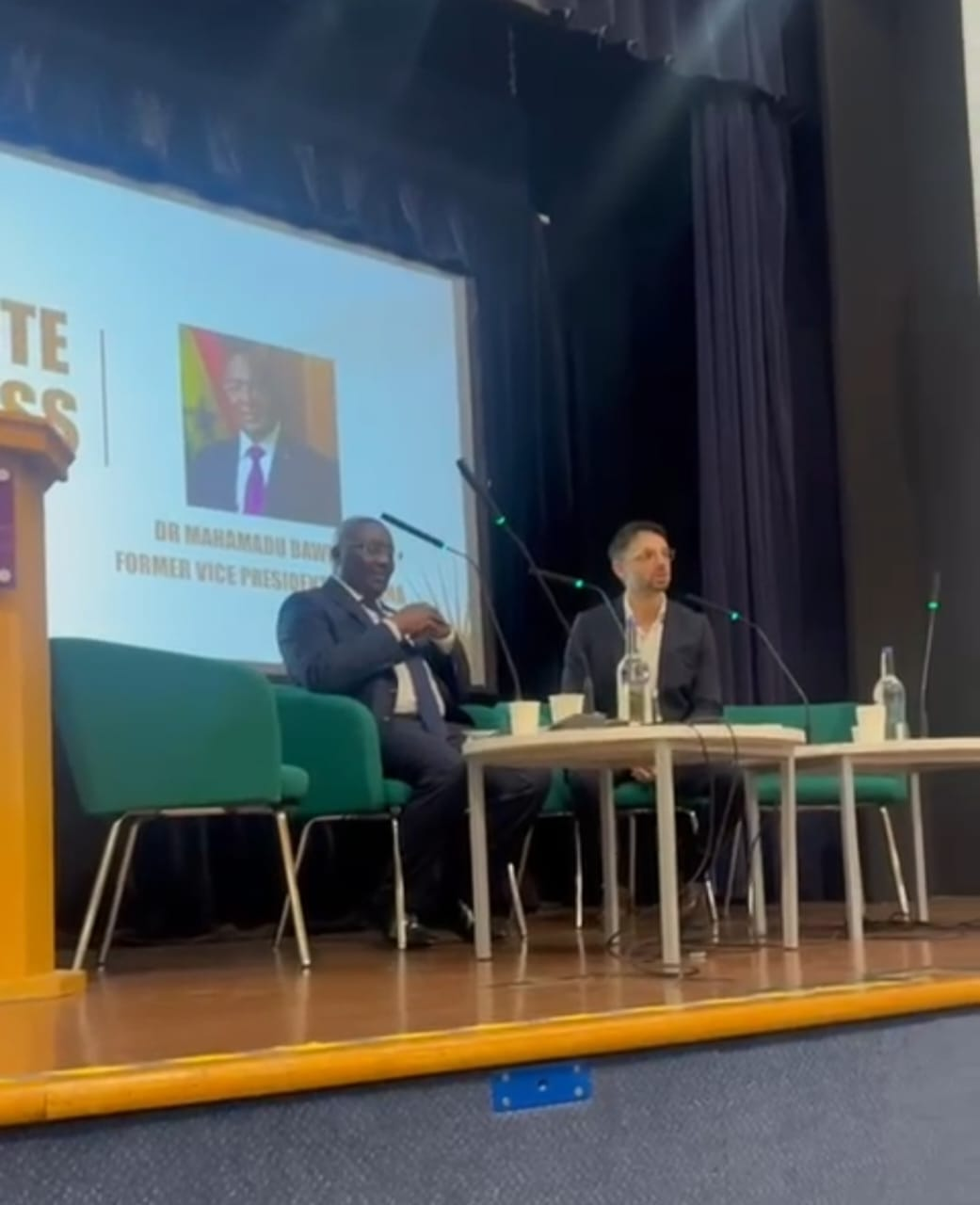
Former Vice President, Dr Mahamudu Bawumia, has cautioned Africa to up its game in embracing digital technology because the phenomenon is witnessing rapid transformation.
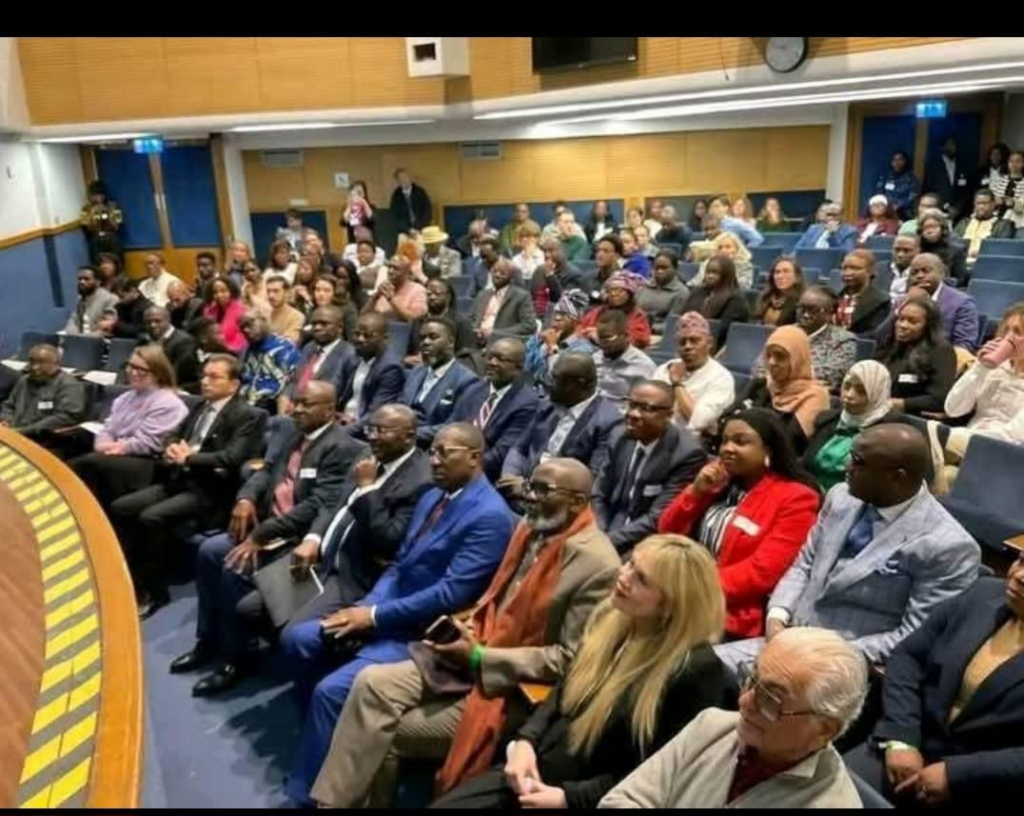
Delivering the Keynote Address on the theme: Artificial Intelligence and Uniting Borders, at the London School of Economics and Political Science’s Africa Summit in London earlier today, Dr Bawumia decried how Africa is behind in embracing the ongoing global digital transformation of the 4th industrial revolution.
He expressed worry that, as a result of the slow pace with which policymakers are embracing digitalisation, the continent risks already being behind in the modern form of digitalisation, artificial intelligence (AI), which he said can help significantly transform Africa in many sectors, including agriculture, if treated with seriousness.
“We are in the midst of a digital revolution. AI, data, cloud computing, and automation are reshaping productivity, security, and the very architecture of global competition. That is why the question “AI in Africa” is not a niche technology topic; it is a question about sovereignty, inclusion, and opportunity,” Dr Bawumia said.
“Artificial intelligence can unite borders if Africa builds capability and then connects that capability across borders. However, if we treat AI as a set of imported tools, we will remain price-takers in the Knowledge Economy. If we treat AI as a national and continental capability stack, we can become co-authors of the rules, the markets, and the benefits,’ Dr Bawumia.
Dr Bawumia, however, cautioned that, for Africa to fully benefit from AI, the continent must prepare and be ready for it by building the needed foundations, just as it is essential to build the foundations of digitalisation.
“History teaches us something important: technological revolutions reward those who build foundations: institutions, infrastructure, skills, and rules before they chase the latest applications. This is how nations have always converted innovation into prosperity. Africa’s task is to do the same boldly, but methodically,” Dr Bawumia said.
Breaking down his call on Africa to build the needed foundation for the effective implementation of AI, Dr Bawumia proved with data that Africa’s limited AI foundation, which he said is having a serious effect on the spread of AI through the continent.
“AI thrives on connectivity, electricity, and reliable digital infrastructure. Across Africa, these fundamentals remain uneven, and that unevenness determines whether AI narrows gaps or widens them. Before we debate algorithms, we must be disciplined about the foundations that enable adoption at scale: networks, power, and trustworthy data systems.”
“On connectivity, World Bank indicators show internet use in Africa at 43%. However, within Africa, there are large divergences between countries. Internet connectivity is about 34% in Rwanda (2023), 70% in Ghana (2023), and 76% in South Africa (2023).”
“Progress is real, but the indicator itself is modest: “internet users” were people who used the internet in the last three months, from any location and device. So, for policy, the critical question is not only “who is online,” but “who is online meaningfully” with affordable data, adequate speeds, and reliable service.”
The second foundation, Dr Bawumia said, was lacking, which is hindering the smooth take off of AI is access to electricity, which he described as non-negotiable” for computers.
“Electricity access: non‑negotiable for computers, cloud services, and modern public service delivery, stands at 60% for Africa. Again, there are variances between countries, with 76.2% for Kenya, 63.9% for Rwanda, 87.7% for South Africa and 89.5% for Ghana (all 2023). Yet, access is only the starting point. AI systems require uptime and stability: intermittent power turns digital systems into fragile pilots rather than dependable national services,” he explained.
“So, the first message is straightforward: Africa’s AI agenda is also an infrastructure agenda. No electricity, no computer, no broadband, no scaling. No trusted data systems, no safe deployment.”
HOPE FOR AFRICA
Dr Bawumia notes further that in spite of the gloomy picture, the “data also points to something hopeful” and Africa does not need to wait for “perfect” infrastructure before it uses AI responsibly.
“The World Bank’s Digital Progress and Trends Report 2025 highlights the rise of ‘small AI’: affordable applications designed to run on everyday devices like mobile phones that are already supporting use cases in agriculture, health, and education,” he said.
“At the same time, the World Bank emphasises the “four Cs” for inclusive AI ecosystems: connectivity, compute, context (data), and competency (skills).”
“If we look beyond these basics to government readiness, the Oxford Insights Government AI Readiness Index 2024 places Ghana at 43.30, Kenya 43.56, Rwanda 51.25, and South Africa 52.91 out of 100.”
Dr Bawumia told the Summit that the above from the countries’ names ‘are not “zero scores” and they indicate momentum, adding, however, that the progress ought to move from pilots to national systems.
“The country details reinforce that readiness is multidimensional: for example, Ghana’s overall 43.30 pairs stronger scores in the Government pillar (59.53) with weaker performance in the Technology Sector pillar (25.35), while South Africa’s scores include a relatively higher Data & Infrastructure pillar (65.28).”
As Dr Bawumia reiterated his call on policy leaders in Africa to create the needed environment for AI, he was emphatic in declaring that “the digital age has now entered the phase of artificial intelligence (AI).”
“As the e-governance Academy (eGA) of Estonia has put it, “the coming decade will be shaped by the integration of artificial intelligence into governance and everyday life”.
DISCLAIMER: The Views, Comments, Opinions, Contributions and Statements made by Readers and Contributors on this platform do not necessarily represent the views or policy of Multimedia Group Limited.
DISCLAIMER: The Views, Comments, Opinions, Contributions and Statements made by Readers and Contributors on this platform do not necessarily represent the views or policy of Multimedia Group Limited.
Source link