


www.project-syndicate.org
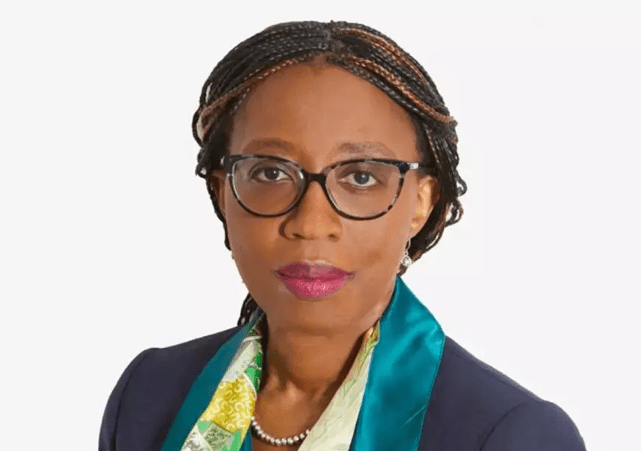
By Vera Songwe
One month of war in Iran has added nearly $4.4 billion to Africa’s annual debt burden, enough to build a gigawatt of solar power or 400 kilometers (250 miles) of railway. Yet, as is often the case, this hit to Africa’s finances is not due to new borrowing but rather to the rising cost of capital.
With $149 billion in African Eurobonds outstanding, the combined effect of climbing US Treasury benchmarks and widening risk premiums has been to drain between $900 million and $1.2 billion annually from budgets already stretched to the breaking point.
Moreover, the war has invalidated the assumption that investors rush to safety during a crisis, which has long underpinned global bond markets. Traders initially reached for US Treasuries, but within 48 hours, the markets turned.
The ten-year benchmark rose from 3.96% to 4.43% in March, an increase of 12%, and the two-year yield surged by 39 basis points as markets pivoted from pricing in two rate cuts by the Federal Reserve to pricing in possible hikes. Rather than offering shelter, US government bonds were part of the broader fire sale.
This is the opposite of what we saw during the COVID-19 pandemic. That shock was deflationary: oil collapsed to $20 per barrel, the Fed slashed rates to zero, and Treasuries rallied, with yields falling by 140 basis points, as bonds cushioned equity losses. The United States was the undisputed safe haven.
In March, Wall Street had its worst month since 2022, with US bonds and equities falling in lockstep. With the US no longer seen as a neutral safe landing zone, its bonds are being sold off like those of an emerging-market economy. For African sovereigns whose borrowing architecture is based on US Treasuries and listed in London, that is alarming.
To be sure, the widening in African sovereign yield curves since February is a fraction of what happened during the pandemic, when yields soared by 200-600 basis points in a single month. But for all African countries, the real danger lies in US Treasury movements. When these rallied 140 basis points during COVID-19, they pulled Africa’s borrowing costs down, even as spreads widened. But this time, the benchmark itself is rising—by 44 basis points and counting—compounding the damage rather than cushioning it.
As a result, some countries are facing a renewed liquidity crisis. Kenya, for example, recently spent two years executing textbook liability management: buying back expensive bonds, extending maturities, securing a standby program with the International Monetary Fund, and earning a Moody’s upgrade to B3.
Ghana clawed its way back from default, re-entered capital markets, and rebuilt its reserves. Côte d’Ivoire earned BB-range ratings through disciplined debt management and targeted investments, re-entered international markets, and secured resources to reprofile its debt on better terms. And Cameroon recently tapped international markets for the first time in years.
At the start of this year, all four also rushed to issue debt to lock in rates before the window of opportunity closed, which they did before the war began. Yet now, their yields are 45–75 basis points higher than they were a month ago. Every basis point of dollar strengthening makes their existing debt more expensive to service.
These are not reckless borrowers. They are reformers caught in a liquidity trap caused by someone else’s war, someone else’s currency, and someone else’s highly concentrated bond market.
Three structural shifts could break the pattern of vulnerability that this crisis has exposed. First, African countries must diversify their borrowing. African Eurobonds are overwhelmingly listed in London and Dublin, with prices based on US-dollar benchmarks. When US policy decisions drive Treasury yields higher, every African sovereign pays the price.
There is a strong case for alternatives. Hong Kong’s Hang Seng Index has outperformed the S&P 500 in the first 30 days of the Iran war. The Hang Seng has fallen by 6.3% from its February 28 level, while the S&P 500 has declined by 7.4%.
Meanwhile, the Dim Sum bond market (offshore renminbi-denominated debt) has seen issuance surge to record levels. Deutsche Bank estimates that CN¥1.4 trillion ($196 billion) in Dim Sum bonds was issued in 2024, three times the 2022 level, with 2025 likely exceeding that figure, marking an eighth consecutive year of growth. These bonds delivered a 9.2% return in US dollar terms in 2025, with coupons of 2%-3.6% for one- to five-year maturities, roughly 200 basis points below comparable dollar-denominated bonds.
When Indonesia issued its first Dim Sum bond in late 2025, it attracted orders three times the offering size. If Southeast Asian sovereigns can tap Hong Kong, so can African sovereigns. African countries should also diversify into Samurai and Panda bonds.
Second, African governments should focus on building regional capital markets. Like Europe, which has worked to develop a single bond market through harmonized regulation and shared infrastructure, Africa has the building blocks it needs. The West African Economic and Monetary Union’s regional bond market experienced an 84% increase in issuances (reaching $12.5 billion) in the first half of 2025, and South Africa’s domestic market already meets global standards.
Looking ahead, the African Continental Free Trade Area can serve as a launchpad for capital-market integration, giving pension funds, commercial banks, and others across the region a viable regional alternative to dollar-denominated debt. African leaders must focus on scaling and integrating these initiatives.
Third, African governments must accelerate the transition to local-currency borrowing. Some 53% of all outstanding African corporate debt is denominated in US dollars—the very currency whose strengthening during every geopolitical crisis makes repayment more expensive.
To alleviate this pressure, multilateral development banks should scale up local-currency lending facilities, and African central banks must deepen their repo markets (ultra-short-term lending) and adopt policies to promote greater pension-fund participation in the economy.
In each case, the goal is not to abandon international markets but to diversify them and build more international, regional, and national resilience before the next global crisis erupts.
Vera Songwe, a nonresident senior fellow at the Brookings Institution, is Founder and Chair of the Liquidity and Sustainability Facility and Co-Chair of the Expert Review on Debt, Nature, and Climate.
Post Views: 29
Discover more from The Business & Financial Times
Subscribe to get the latest posts sent to your email.