
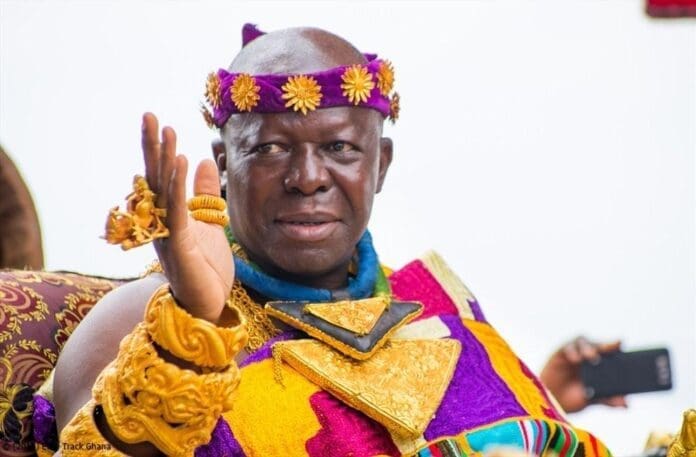

The Asantehene, Otumfuo Osei Tutu II, has rejected proposals to establish a Chamber of Queenmothers and include queenmothers in sittings of the Ashanti Regional House of Chiefs, maintaining that Asante customs cannot be altered through legislation.
Speaking at the final meeting of the Ashanti Regional House of Chiefs for 2025 on Friday, the King acknowledged the central role queenmothers play in customary governance, particularly in selecting chiefs, but said their influence is traditionally exercised privately. He warned against imposing uniform cultural practices across Ghana, stressing the uniqueness of the Asante chieftaincy system.
According to Otumfuo, “I will not allow anyone in Ghana to change my culture.” He added that he would cancel any rule attempting to alter Asante traditions regarding queenmothers’ roles.
The comments follow a proposal by the National House of Chiefs to amend the Chieftaincy Act 2008 to create a Chamber of Queenmothers and allow their participation in House of Chiefs sittings. Otumfuo emphasized that traditions and customs differ across various areas and no one should create rules that bind everyone.
The Asantehene explained that the law governing queenmothers exists and has not changed, noting that all chiefs in the room were selected by women who are queenmothers. He stated that Asante tradition is that queenmothers offer advice behind closed doors rather than in public forums.
Otumfuo Osei Tutu II warned against mixing cultural practices, pointing out that the creation of the House of Chiefs is not Asante culture. He noted that some cultures follow the patrilineal system while Asante follows the matrilineal system, cautioning against attempts to merge the two traditions.
The Asantehene also questioned the authority of the National House of Chiefs over the Asante Kingdom, warning of possible resistance if the proposal is pursued. He stated that no one should bring such a proposal to the table because it will not work, adding that the National House of Chiefs has no authority over him.
Otumfuo threatened that if the National House of Chiefs attempts to assert authority over Asante customs, he will instruct chiefs under his jurisdiction to stop attending its sittings. He warned that if the government wishes, it can arrest all of them for refusing to comply.
The stance reflects broader tensions over cultural autonomy and the balance between national legislative frameworks and traditional governance systems in Ghana. The Asante Kingdom operates under a distinct matrilineal succession system that differs from many other Ghanaian chieftaincy traditions.
Queenmothers hold significant influence in Asante culture as kingmakers who play crucial roles in selecting paramount chiefs and settling disputes. However, their power has historically been exercised through private counsel rather than formal participation in public chieftaincy deliberations.
The National House of Chiefs proposal aims to formalize queenmothers’ participation across Ghana’s chieftaincy institutions. Proponents argue this would recognize their contributions and provide them with official platforms to influence decisions affecting traditional governance.
However, the Asantehene’s firm rejection signals resistance from one of Ghana’s most powerful traditional institutions. His position carries significant weight given the Asante Kingdom’s historical importance and the influence of the Golden Stool across the country.
The disagreement highlights ongoing debates about how Ghana’s diverse chieftaincy systems should adapt to contemporary governance while preserving distinct cultural identities and practices that have existed for centuries.