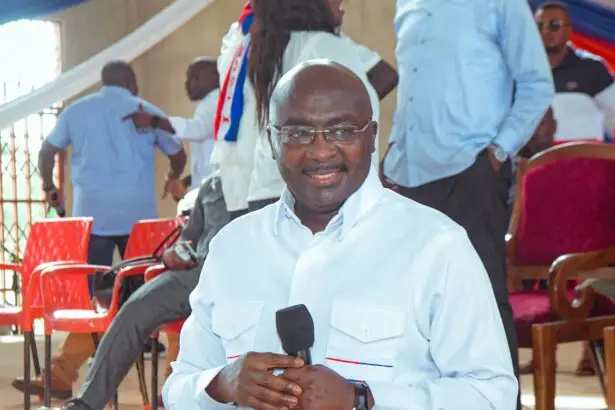
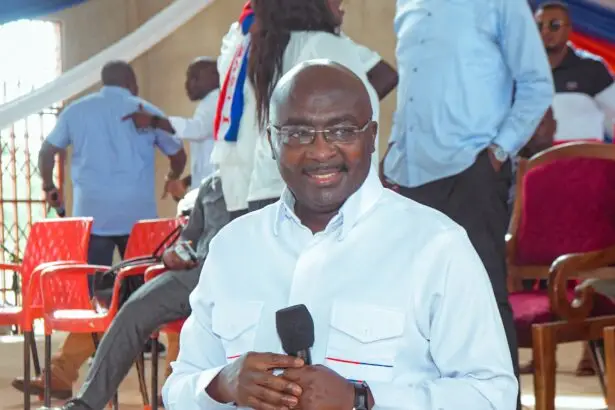

Former Vice President Mahamudu Bawumia launched a vigorous defense of his electoral record, accusing internal party critics of spreading propaganda while pledging to counter their claims with hard data and metrics.
Speaking to supporters during a nationwide tour aimed at positioning himself for the New Patriotic Party’s 2028 leadership race, Bawumia directly confronted allegations that his background and faith had weakened the party’s appeal in key constituencies during the recent national elections. The former vice president insisted his performance in Zongo communities exceeded critics’ characterizations.
Bawumia framed the internal party debate as a choice between emotion-driven narratives and empirical analysis. He challenged detractors to examine actual voting data rather than accepting what he characterized as unfounded accusations about his electoral impact.
The former vice president’s defense comes as the NPP begins its post-election assessment following his concession to John Mahama in the 2024 presidential election. Internal party discussions have reportedly intensified regarding leadership direction and the factors contributing to the electoral outcome.
Bawumia specifically rejected claims that his identity as a Muslim from northern Ghana had undermined party support in traditional strongholds. He argued that detailed constituency-level analysis would reveal a more nuanced picture than critics were presenting to party members and the public.
The former vice president’s emphasis on data-driven arguments reflects his technocratic approach to politics, which characterized much of his tenure in government. Throughout his vice presidency, Bawumia frequently employed economic statistics and digital metrics to support policy positions and political arguments.
His current tour appears designed to maintain political momentum despite the recent electoral setback. By directly engaging with supporters across the country, Bawumia signals his intention to remain a central figure in NPP politics as the party prepares for internal reorganization.
The timing of these remarks suggests strategic positioning ahead of expected NPP leadership elections. Party tradition typically sees leadership reviews following electoral defeats, creating opportunities for new candidates to emerge or established figures to consolidate their positions.
Bawumia claimed his analysis showed stronger performance in certain areas compared to the NPP’s 2020 results under President Nana Akufo-Addo. While not providing specific numbers during the rally, he promised to present comprehensive data refuting critics’ narratives about his electoral impact.
The internal NPP debate reflects broader questions facing the party after eight years in power. Leadership succession, regional balance, and religious diversity remain sensitive topics within Ghana’s political landscape, particularly for parties seeking to build broad national coalitions.
Political observers note that Bawumia’s defense strategy mirrors his governmental approach, where he frequently cited economic indicators and digital transformation metrics. This consistency in messaging style may resonate with supporters who appreciate his analytical methodology.
The former vice president’s pushback against internal critics highlights tensions within the NPP as it navigates its transition to opposition status. Official results showed Mahama securing 56.55% of votes, marking a decisive victory for the National Democratic Congress.
Bawumia’s insistence on examining constituency-level data rather than accepting broad generalizations about voting patterns suggests he intends to challenge prevailing narratives about the election outcome. This approach could influence how the party conducts its official post-election review.
The controversy over Bawumia’s electoral performance in Zongo communities touches on longstanding questions about religious and ethnic politics in Ghana. These Muslim-majority areas have historically shown varied voting patterns influenced by multiple factors beyond religious identity.
By framing the debate as propaganda versus data, Bawumia attempts to shift discussion from subjective assessments to measurable outcomes. This rhetorical strategy aligns with his reputation as a policy-focused politician who emphasizes technical competence over traditional political messaging.
The former vice president’s nationwide tour indicates his determination to shape the NPP’s future direction despite the electoral defeat. His ability to mobilize supporters and counter internal criticism will likely influence his standing within the party hierarchy moving forward.
As the NPP begins its rebuilding process, the debate over Bawumia’s role and performance represents just one element of broader strategic discussions. The party faces decisions about ideological direction, generational change, and coalition building strategies for future electoral contests.