
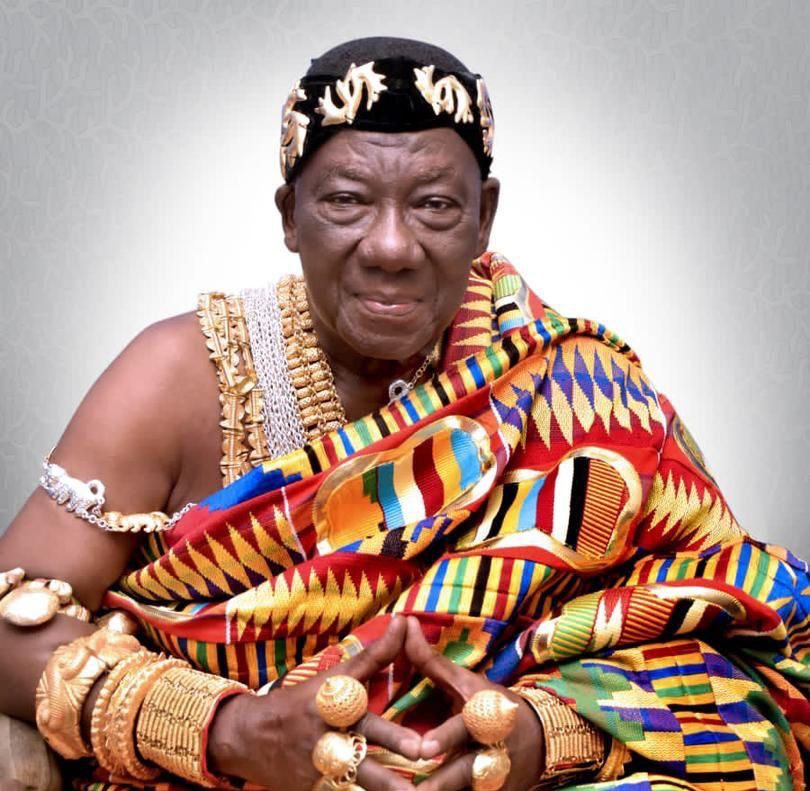


Mahamudu Bawumia suspended his political activities Friday to visit the Mampong Palace in Ghana’s Ashanti Region, paying tribute to the late Daasebre Nana Osei Bonsu II, the Mamponghene and second highest ranking leader in the Asante traditional hierarchy.
The paramount chief, a key cultural and governance figure, died earlier this week, triggering nationwide condolences.
Bawumia, who referred to the late leader as a mentor, paused the New Patriotic Party’s (NPP) scheduled “thank you tour” to meet with Nana Agyakoma Difie II, Queenmother of Mampong, and local chiefs. During discussions, traditional leaders acknowledged Bawumia’s close relationship with the Mamponghene, forged through years of collaboration on regional development initiatives. The vice president later signed a condolence book at the palace, describing the chief as a trusted advisor to his family. He also privately met the late leader’s widow to express sympathy.
Nana Osei Bonsu II’s death marks a significant moment for Asanteman, given his role in mediating disputes and advancing cultural preservation. As custodian of the Silver Stool, he advised successive governments on integrating traditional governance with national policy. His passing has reignited discussions about the symbiotic relationship between Ghana’s political class and hereditary authorities, a dynamic central to social stability.
Funeral arrangements for the Mamponghene are pending, but his legacy as a unifying figure is expected to draw dignitaries and citizens alike. Analysts emphasize that such visits by officials like Bawumia underscore the enduring relevance of traditional leadership in modern governance, particularly in regions where chiefs remain pivotal to community cohesion. The Mamponghene’s counsel, often sought on education and land reforms, leaves a void likely to influence future dialogues between Ashanti leaders and national policymakers.
Send your news stories to newsghana101@gmail.com
Follow News Ghana on Google News