
By Juliet ETEFE
Ghana is set to host Africa’s first Blue Food Innovation Hub, an initiative designed to unlock at least US$10million in new investments into the aquaculture value chain by 2032 while tackling structural constraints facing the sector.
The Hub, an initiative of the World Economic Forum and to be hosted by the Chamber of Aquaculture Ghana, will officially be launched on February 25, 2026. It aims to position Ghana as a continental leader in blue food innovation by driving sustainable growth through technology, product and business model transformation.
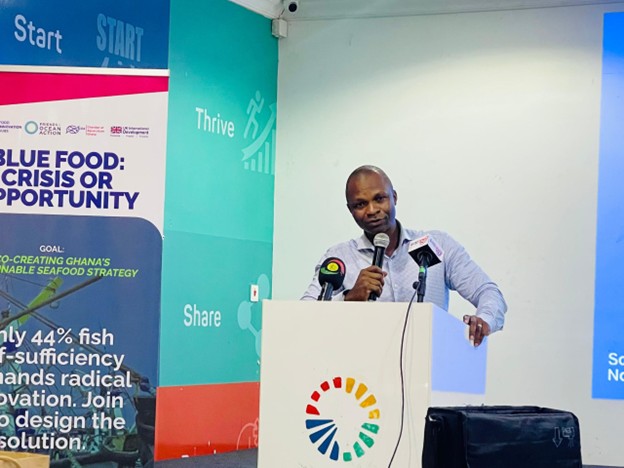
Chief Executive Officer of the Chamber of Aquaculture Ghana, Jacob Adzikah, said the Hub will focus primarily on inland aquaculture – particularly tilapia and catfish production – as the most viable pathway for scaling Ghana’s blue food economy.
“From 2026 to 2032, we project that the Hub will unlock approximately US$10million in new investments for businesses within the blue food value chain,” he said at a media engagement ahead of the launch.
Blue foods – which include aquatic animals and plants harvested from marine and freshwater ecosystems – are critical to Ghana’s food security and economy. The sector contributes about 5 percent to GDP, employs an estimated 500,000 people directly and indirectly, and provides roughly 60 percent of the country’s animal protein intake.
However, while the marine and inland fisheries segments remain significant, both are constrained by overfishing, pollution and resource depletion. Artisanal fishing capacity, for instance, is estimated at about 8,000 canoes, yet approximately 13,000 are currently operating – intensifying pressure on marine stocks.
Aquaculture, by contrast, continues to show growth potential. Currently, about 80 percent of farmed fish production is tilapia, with catfish accounting for the remaining 20 percent.

Challenges and responses
The Hub’s strategy is therefore designed to address bottlenecks limiting aquaculture expansion. Key challenges identified include high feed costs driven by reliance on imported inputs, disease outbreaks such as the Infectious Spleen and Kidney Necrosis Virus (ISKNV) and streptococcus infections, post-harvest losses estimated at between 20 and 30 percent, limited access to finance and weak market linkages.
To respond to these constraints, the Hub will operate as a neutral, multi-stakeholder platform bringing together public institutions, private sector actors, development partners, academia and financial institutions to co-create and scale innovative solutions.
Initial activities
Initial activities will include an accelerator programme targeting SMEs and startups within the aquaculture value chain. The first cohort of 10 enterprises will be selected, assessed and supported to become investment-ready before being matched with appropriate financing partners.
In addition, the Hub will run finance clinics to prepare businesses to meet lender requirements, facilitate knowledge exchange programmes in partnership with academia and research institutions, and promote research and development – particularly in areas such as circular economy solutions to convert aquaculture waste into commercially viable products.
Access to markets will also form a core pillar. Many small and medium enterprises currently struggle to meet certification and standards requirements needed to supply formal retail outlets and export markets. The Hub intends to support firms to secure the requisite permits and compliance standards to expand market reach.
The initiative also embeds a gender, equity and social inclusion framework, with a deliberate focus on women, youth and persons with disabilities across the blue food value chain.
Governance structures will include an advisory board, executive leadership and administrative teams to ensure accountability and long-term sustainability. According to the Chamber, key financial institutions have already expressed interest in supporting enterprises graduating from the Hub at competitive interest rates.
The Ministry of Fisheries and Aquaculture Development is expected to launch the Hub officially, reflecting government’s broader push to strengthen aquaculture under its 24-hour economy agenda, including planned investments in aquaparks on the Volta Lake.
Mr. Adzikah said the long-term vision is to make Ghana “the blue food innovation leader for Africa” by building a resilient, competitive and inclusive sector capable of driving nutrition, livelihoods and economic resilience.
“We have a clear vision, clear performance indicators and strong partnerships to ensure this Hub stands the test of time,” he added.
Post Views: 6
Discover more from The Business & Financial Times
Subscribe to get the latest posts sent to your email.