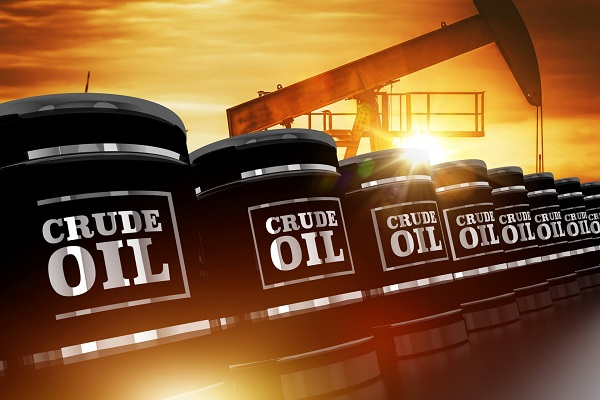

Ghana could face sharp fuel price hikes and rising living costs if global crude oil prices surge as a result of the ongoing US–Israel strikes on Iran, economist Godfred Bokpin has warned.
Speaking on Tuesday on the Joy Super Morning Show, Prof. Bokpin said any major disruption to oil supplies in the Middle East would quickly affect Ghanaian consumers through higher fuel, transport, and commodity prices.
“If the world price of crude should go up, chances are that the oil marketing companies would adjust the price upwards,” he said.
“And once fuel prices go up, transportation costs will rise and feed into inflation.”
The professor, who teaches finance and economics at the University of Ghana, was reacting to escalating military action involving the United States and Israel against Iran, which has entered its fourth day.
The strikes, which began on February 28, reportedly targeted Iran’s military and nuclear facilities. In response, Iranian authorities have threatened large-scale retaliation and warned of possible attacks on shipping routes.
Of particular concern is the Strait of Hormuz, a narrow waterway through which a significant portion of the world’s crude oil supply passes.
Iran has hinted at restricting access to the route, raising fears of supply shortages.
Prof. Bokpin said Ghana’s recent relative stability in the cedi would offer little protection if international oil prices jump sharply.
“The pass-through effect from crude prices to pump prices in Ghana is very strong,” he explained. “So even if the exchange rate is doing well, it may not be enough to cushion consumers.”
He added that uncertainty surrounding the conflict was already unsettling global markets.
“Nobody prefers uncertainty,” he said. “Businesses, planners, and governments need stability to function. What we are seeing now makes long-term planning difficult.”
Meanwhile, the OPEC group of oil-producing countries is expected to meet to consider increasing production in a bid to contain price pressures. However, analysts say any intervention may come too late to prevent short-term spikes if supply routes are disrupted.
For Ghana, the stakes are high. Fuel price increases have historically been among the most politically sensitive economic issues, often leading to transport fare hikes and higher food prices across the country.
With the economy still recovering under the ongoing support programme with the International Monetary Fund (IMF), Prof. Bokpin warned that another external shock could slow down the fragile recovery.
“An oil price shock at this time will put pressure on households and businesses,” he noted. “It will also complicate the government’s efforts to stabilise the economy.”
He urged policymakers to closely monitor developments and prepare contingency measures to cushion vulnerable consumers if global prices rise sharply in the coming days.
DISCLAIMER: The Views, Comments, Opinions, Contributions and Statements made by Readers and Contributors on this platform do not necessarily represent the views or policy of Multimedia Group Limited.
DISCLAIMER: The Views, Comments, Opinions, Contributions and Statements made by Readers and Contributors on this platform do not necessarily represent the views or policy of Multimedia Group Limited.
Source link