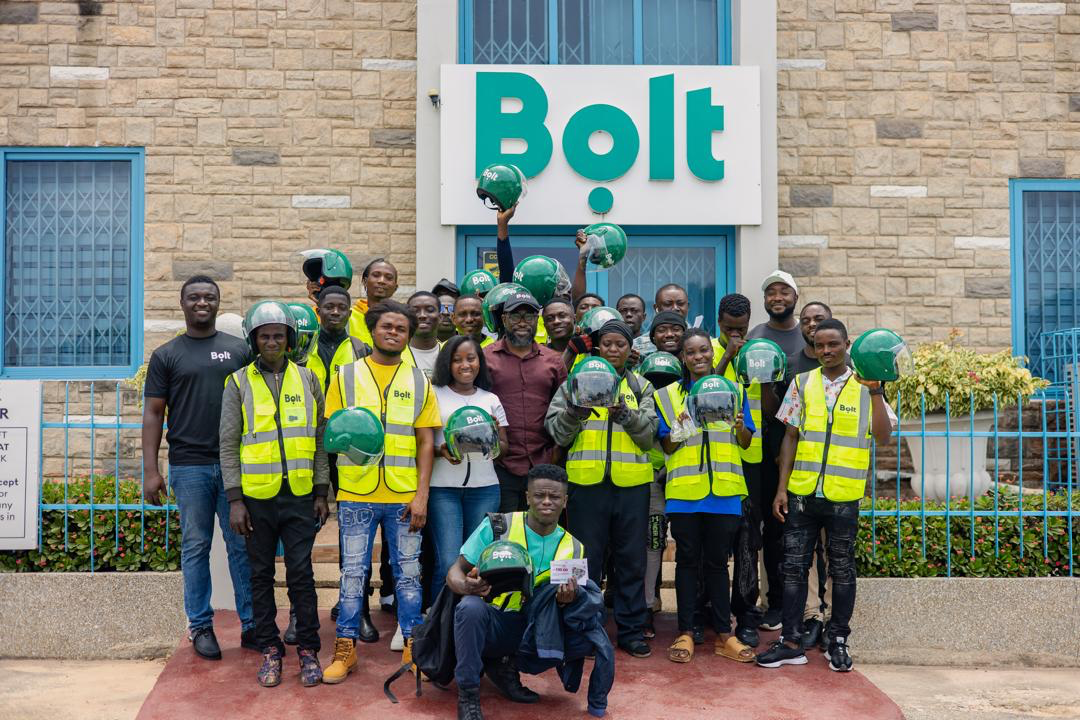
Bolt Ghana has intensified its rider safety and compliance efforts, hosting a targeted training session for motorbike riders as the country prepares to operationalise legislation governing commercial motorcycle transport, widely referred to as the okada bill.

The ride-hailing platform convened 30 of its top-performing riders in Accra for a safety engagement session aimed at strengthening regulatory awareness, improving road discipline, and aligning operations with anticipated policy changes in Ghana’s two-wheel transport ecosystem.
The initiative, held under the theme “Steering Toward Safety: Empowering the Two-Wheel Revolution,” reflects growing industry recognition that rapid expansion in motorcycle ride-hailing must be matched by stronger safety frameworks and behavioural standards.
Senior General Manager for Bolt West Africa, Teddy Appa Dankyi, said the session forms part of a broader strategy to proactively address safety concerns as demand for motorbike transport accelerates.
“As the two-wheel category continues to grow, safety remains our highest priority,” he said. “We are taking deliberate steps to work closely with riders to ensure they understand the importance of compliance, responsible riding, and operating within the law—especially as the regulatory environment evolves.”
He noted that Bolt’s approach is anchored on early preparation ahead of formal regulatory approval, with the company seeking to position its riders as compliant operators rather than contributors to road safety risks.
The training focused on defensive riding techniques, adherence to traffic regulations, and the importance of holding valid Class A licences. Riders were also taken through platform-based safety features, including emergency SOS tools and dispute resolution systems designed to enhance both rider and passenger protection.
The move comes amid increasing public concern over road safety involving commercial motorbike operators, including reports of reckless riding, traffic violations, and rising accident rates. Bolt’s intervention appears aimed at addressing these behavioural risks through structured training and continuous engagement.
Mr. Dankyi indicated that the programme will not be a one-off initiative but part of a recurring training model to reinforce standards over time. He added that rider behaviour on the platform will continue to be monitored, with safety performance expected to improve as training scales up.
“We want our riders to be ambassadors of safety,” he said, stressing that consistent education and monitoring will be key to embedding responsible practices across the platform.
Participants also highlighted operational challenges on the road, including poor road conditions and occasional tensions with passengers, but acknowledged the importance of prioritising safety despite these constraints.
One rider, Mireku Samuel Oteng, said the training was timely and necessary, noting that safety gear and practical guidance provided during the session would help reduce risks. He urged fellow riders to comply with traffic rules and avoid speeding, describing safety as critical to sustaining livelihoods in the sector.
The session concluded with a safety pledge by riders and the distribution of protective gear, including helmets and reflective vests.
Bolt said it will continue investing in rider education, safety technology, and regulatory collaboration, positioning itself ahead of expected policy shifts that could formally integrate motorcycle ride-hailing into Ghana’s urban transport system.
Post Views: 23
Discover more from The Business & Financial Times
Subscribe to get the latest posts sent to your email.