
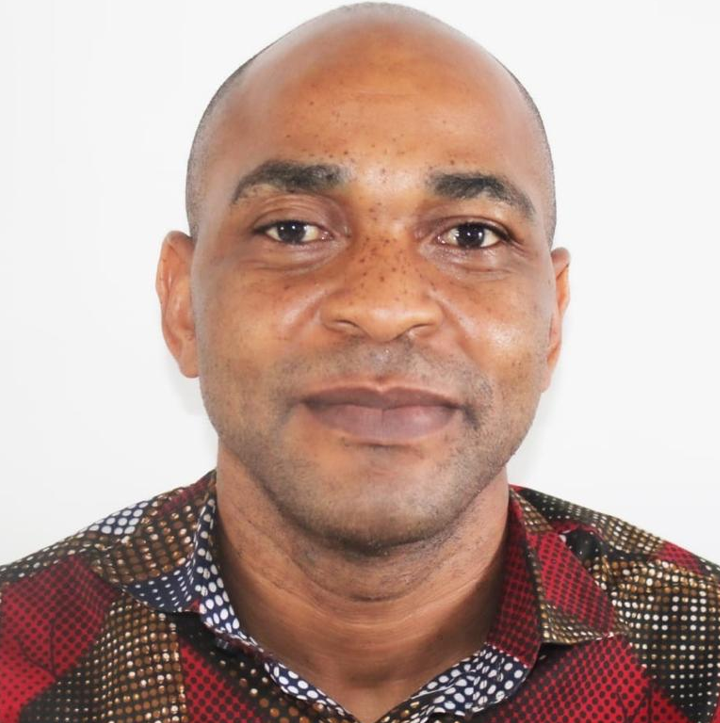

By Michael Kofi Fosu
In 2026, Ghana stands at a historic crossroads. Recent data from the Bank of Ghana indicate record-breaking export performance, with total receipts reaching $31.1 billion in 2025. Whilst this suggests a “resetting for growth,” it also highlights a dangerous reality: Ghana is more dependent on its primary commodities now than it was a decade ago.
The conversation around “plugging leakages” is vital for the country’s moral and fiscal health, but we must distinguish between fiscal prosperity and economic existence.
To say Ghana needs gold and cocoa is an understatement; they are the oxygen of the economy. In 2025, gold export earnings surged to $20 billion, whilst cocoa brought in $3.8 billion. Together, these two commodities account for roughly 77% of all foreign exchange (FX) inflows.
The Economics of Existence
- The Import Bill: Ghana spent $17.4 billion on imports in 2025, mostly for refined fuel, medicines, and machinery.
- Debt Obligations: Servicing external debt requires hard currency.
- The Buffer: Ghana’s Gross International Reserves reached a record $13.8 billion in early 2026, almost entirely due to the gold-led surplus.
Without these exports, the cedi would lose its anchor, causing hyperinflation that no amount of leakage-plugging could fix. One cannot “save” one’s way out of a $24 billion FX hole by merely stopping corruption at the ports or ending tax evasion — that value must be earned.
Plugging Leakages: The Path to Prosperity
If gold and cocoa provide existence, then reducing leakages provides prosperity. Leakages — ranging from gold smuggling to transfer pricing and inefficient tax collection — strip the government of the funds needed for schools, hospitals, and roads.
According to the 2026 Budget, the government is targeting a 1.5% primary surplus. This is only possible through:
- Digitalisation of the GRA: Moving revenue collection to paperless systems to reduce human interference.
- The Ghana Gold Board (GoldBod): Strategic oversight that helped double gold revenues in 2025 by formalising small-scale mining flows.
- Port Reforms: Streamlining customs to ensure every cedi of import duty reaches the treasury.
Plugging these holes does not replace the need for gold; it ensures that the wealth generated by gold actually benefits the average Ghanaian rather than disappearing into private pockets.
The 20-Year Pivot: Manufacturing and High-Tech
The only way to break the “Commodity Curse” is an aggressive, multi-decade shift. We are seeing the first seeds of this in 2026 with the 24-Hour Economy Authority Act, which aims to maximise industrial output.
The strategy for transformation rests on three pillars:
- Agribusiness Over Raw Cocoa: Transitioning from exporting beans to being a hub for processed butter, liquor, and finished confectionery.
- The ‘Make’ Pillar: Shifting from importing textiles and vehicles to local assembly. The 2026 goal is to source all state uniforms and apparel locally.
- High-Tech Services: Non-traditional exports (NTEs) grew by 41% in 2025, reaching over $5 billion. Leveraging the 24-Hour Economy to export digital services, coding, and Business Process Outsourcing (BPO) is the long-term play.
Conclusion
Ghana cannot divorce itself from gold and cocoa today without risking total economic collapse. Instead, the country must double down on these sectors to fund the very infrastructure that will eventually make them less central.
By improving the efficiency of the extractive sectors and aggressively plugging revenue leakages, Ghana can buy the 10 to 20 years of stability required to build a modern, industrialised economy that “never sleeps.”
Michael Kofi Fosu is the Chief Executive Officer of the International Trade Finance and Payment Consultancy (ITFP), a firm specialising in import and export trade finance, asset recovery, project financing and intermediation. A registered member of the International Trade and Forfaiting Association (ITFA) in Zurich, as well as the Financial Times and Global Trade Review in the UK, ITFP serves as Ghana’s gateway to global trade finance advisory. Mr Fosu also represents ITFP at ITFA.
Email: [email protected] | Mobile: +233208301785
Post Views: 1
Discover more from The Business & Financial Times
Subscribe to get the latest posts sent to your email.