

When I spoke to Santana Simiyu, a human rights lawyer at Equality Now, working with partners on The Gambia’s FGM Supreme Court case, she told me something I have not forgotten. Children’s rights are non-negotiable, she said. That is the line.
Everything happening in that Banjul courtroom, all the arguments about culture and religion and freedom, they are distractions. The only question that matters is whether we believe girls have rights that cannot be taken away by appeals to tradition.
Equality Now has worked with local activists in The Gambia for years, providing technical expertise and helping partners build cases that can withstand scrutiny amongst various other interventions. But Santana Simiyu is careful about the work. Equality Now supports Gambian activists, she explains, never replaces them. Gambian activists are leading the fight to protect their girls.

Right now, winning looks uncertain. The case before The Gambia’s Supreme Court case could make the country the first in the world to reverse an FGM ban. Two infants died last year due to FGM complications. One was a month old. The other not much older. Both bled to death. Their deaths should have ended the debate. Instead, they became footnotes in a legal battle where grown men argue that cutting infants is a matter of religious freedom.
The first witness called by the petitioners was Imam Abdoulie Fatty. He claimed that Islam supports FGM and that it reduces women’s sexual desire. Those who want it should have it, he said. Those who do not can simply opt out.
As if opting out were simple. As if girls who refuse will not become outcasts, will not face social stigma that affects their marriage prospects, their standing in the community, their entire lives.
The second witness was Mariama Njie. She cut children for 15 years. She told the court she once cut 30 to 40 girls in a single day with razor blades. She inherited the practice from her mother and grandmother. It is tradition, she said.
Neither witness mentioned the two dead babies. Neither explained how infants who cannot speak, cannot walk, cannot understand the word choice are somehow exercising religious freedom.
You cannot consent to anything at one month old. But in that Banjul courtroom, grown men and women argued that culture and religion give them the right to cut babies anyway.
When I asked Simiyu about the health implications, her response was clinical and devastating. Girls bleed to death, she said. They develop infections. They face long-term psychological problems, fertility complications and chronic pain. UNICEF estimates that 230 million women and girls globally have been subjected to FGM. It is lifelong damage to bodies that were never given a choice. This is not about Islam. FGM is not mentioned in the Quran. Most Islamic scholars do not consider it obligatory. FGM is not widely practiced in Saudi Arabia, the birthplace of Islam, and while it occurs in some communities in Indonesia, the world’s largest Muslim country, efforts are underway to reduce and eliminate it.
When Gambian dictator Yahya Jammeh banned the practice in 2015, he said it clearly. FGM is not a requirement of Islam.
Yet here we are. Religious leaders and a sitting member of parliament are weaponising faith to defend cutting children.
If The Gambia’s Supreme Court rules in their favour, the consequences will ripple across West Africa. Every country where activists are fighting to pass FGM bans will watch those efforts collapse. Liberia and Sierra Leone, where legislation is pending, may conclude that protecting girls is too difficult, too politically expensive.
When I asked her why enforcement of The Gambia’s 2015 ban took nearly a decade, Santana Simiyu did not mince words. Culture, she said. Law enforcement officers are part of the society. The survivors of FGM have familial ties. You cannot report your close family without being potentially ostracised.
When the government finally started prosecuting in 2023, the backlash was immediate. First, in 2024 a repeal bill was introduced in Parliament but was ultimately rejected. Later that year, defenders of FGM went to court seeking the right to continue the practice.
I am a Ghanaian. We banned FGM in 1994 and made it stick. Anyone who performs the practice faces five to ten years in prison. So does anyone who pays for it or drives a child to get it done. We understood something simple. You cannot protect girls if you only punish the woman holding the blade.
The moment enforcement begins, the backlash intensifies. Politicians see an opportunity. Religious leaders see a threat to their authority. Families see outsiders meddling in private matters.
They call it colonialism. They call it Western interference. They call it an attack on tradition. What they do not call it is what it actually is. Violence against children who cannot defend themselves.
The African Union’s Maputo Protocol explicitly prohibits FGM. So does ECOWAS. The Maputo Protocol explicitly prohibits harmful traditional practices. The African Charter on the Rights and Welfare of the Child demands that states protect children from customs that harm their wellbeing.
These are African commitments, signed by African governments, including The Gambia. But commitments mean nothing without enforcement.
Sierra Leone’s High Court ruled in 2023 that FGM amounts to torture. The country still has no ban. In 2025, the Economic Community of West African States (ECOWAS) Court ruled against Sierra Leone, specifying the country’s binding legal duties to criminalise FGM and protect those at risk. Yet The Gambia is now arguing in its own Supreme Court that the practice is a constitutional right. If the justices agree, those regional protocols will be exposed for what they are. Polite words with no power.
Simiyu is clear about what needs to happen. ECOWAS and the African Union need to move beyond statements. They need to support research, fund grassroots work, and make FGM an issue that communities can talk about openly.
Because courage is what this requires. Courage to tell a sitting MP that he is wrong. Courage to tell an imam that his interpretation of Islam is harmful. Courage to tell a circumciser that her grandmother’s tradition ends now.
Courage to look at two dead babies and say their lives mattered more than anyone’s religious freedom.
Ghana made that choice in 1994. Our prevalence rate is between two and four per cent. The Gambia’s is 73 per cent. That difference is not accidental. It is the result of political will, sustained advocacy, and a refusal to let culture be used as a weapon against girls.
The Gambia’s Supreme Court will issue a ruling later this year. If the justices uphold the ban, it will be a victory for the principle that women and children’s rights cannot be negotiated away. If they overturn it, the message will be clear. Culture and religion matter more than the lives of women and girls.
Santana Simiyu and her colleagues at Equality Now are fighting for the first outcome. So are Gambian activists like Fatou Baldeh, who founded Women in Liberation and Leadership. So are the mothers who refuse to cut their daughters, even when their communities ostracise them.
But they cannot win alone.
ECOWAS needs to enforce its own protocols. The African Union needs to do more than issue statements. And the rest of us, Africans watching from countries where FGM is already banned, need to say it loudly. We will not let you roll back this progress.
Two babies died last year in The Gambia. They bled to death after being cut at one month old. Their names were not widely reported. Their deaths barely made international headlines.
But their lives mattered.
If we let The Gambia reverse its FGM ban, their deaths will have meant nothing.
That cannot be the world we choose to live in. Not in Ghana. Not in The Gambia. Not anywhere.
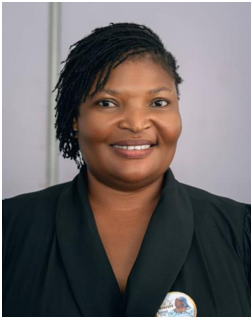
Bridget Mensah is a PR, Marketing & Communications professional and General Secretary of the Network of Women in Broadcasting (NOWIB). A dedicated feminist and advocate for women in media, she champions workplace excellence whilst empowering voices and building bridges across the industry. Bridget is passionate about amplifying women’s stories and driving positive change in Ghana’s media. She can be reached via email at [email protected]
Post Views: 1
Discover more from The Business & Financial Times
Subscribe to get the latest posts sent to your email.