

Oliver Barker-Vormawor, convener of the FixTheCountry Movement, has stated that Ghana’s constitutional amendment process grants significant power to the parliamentary minority, making unilateral changes by any governing party virtually impossible. Speaking on JoyNews’ Newsfile on Saturday, December 27, 2025, the activist and lawyer emphasized that constitutional reforms must navigate stringent parliamentary procedures that cannot bypass legislative scrutiny.
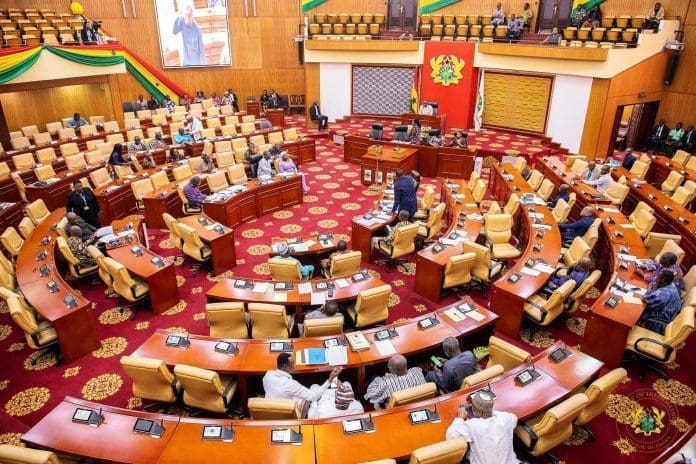
Barker-Vormawor explained that any attempt to amend the Constitution requires support from at least 75 percent of Members of Parliament (MPs), creating a threshold he described as effectively preventing single political blocs from unilaterally driving changes. This supermajority requirement transforms the minority into a critical player in any reform process, regardless of its numerical strength in the chamber.
The legal framework outlined in Ghana’s 1992 Constitution establishes two distinct pathways for amendments. Non-entrenched provisions require approval by at least two thirds of all MPs, while entrenched provisions demand an additional step: a national referendum where at least 40 percent of eligible voters must participate, and at least 75 percent of those who vote must approve the change. These stringent requirements have historically complicated reform efforts and contributed to the failure of previous amendment attempts.
Barker-Vormawor emphasized that every constitutional conversation and discussion must proceed through Parliament, noting that once the public approves proposals, all changes face parliamentary deliberation at elevated thresholds. He characterized this structure as fundamentally empowering the minority, stating that their relevance becomes magnified irrespective of their size within the legislative body.
The activist directly addressed speculation about the ruling National Democratic Congress (NDC) potentially reshaping constitutional provisions independently. He stated categorically that the NDC cannot meet the required threshold for amendments without minority participation, meaning no single party can claim authority to change everything without cross-party cooperation. This reality, he argued, compels broader consensus and negotiation across political divides.
His remarks come as national attention intensifies around the Constitution Review Committee (CRC) report, which was presented to President John Dramani Mahama on Monday, December 22, 2025. The committee, chaired by Professor Henry Kwasi Prempeh, conducted nationwide consultations over several months and incorporated expert contributions into proposed amendments aimed at strengthening governance and promoting citizen participation.
The CRC report contains far reaching proposals that would reshape Ghana’s political landscape if implemented. Among the key recommendations is extending the presidential term from four to five years, with Professor Prempeh emphasizing that the proposal deliberately excludes any provision for a third term. The committee argued that presidents currently lose significant governing time to administrative transitions and campaign activities, with approximately six months spent settling into office and nearly a year devoted to reelection efforts.
Additional proposals include separating executive powers from the legislature to enable Parliament to focus fully on its constitutional responsibilities, expanding the authority of the Council of State, and establishing constitutional oversight for state owned enterprises through mechanisms similar to the State Interests and Governance Authority. The committee also recommended holding presidential elections in the first week of November rather than December, providing a longer transition period between results declaration and inauguration.
Barker-Vormawor’s analysis underscores political realities that will shape the reform process moving forward. He urged President Mahama to take an active role in steering the constitutional reform process to ensure its success, suggesting that for constitutional review to become a lasting legacy of the current administration, the President must personally supervise the implementation phase rather than merely showing supportive signals.
The activist called for establishing an implementation committee that builds on the work of the existing review committee rather than starting fresh with entirely new membership. He emphasized the importance of continuity and institutional memory, noting that previous efforts required months of work helping committee members understand the direction and rationale behind various proposals. Creating a new committee without context, he warned, could undermine momentum and waste the expertise already developed.
Ghana’s history with constitutional amendments reveals the practical challenges ahead. In 2010, an extensive and participatory reform process produced proposals that remain unimplemented. More recently, in 2019, efforts to amend provisions related to local government elections collapsed after the opposition NDC withdrew support despite initial commitments. The government subsequently withdrew amendment bills from Parliament, fearing they lacked sufficient popular support to cross constitutional thresholds.
The current parliamentary composition presents both opportunities and constraints. The NDC secured a supermajority in the most recent elections, controlling more than two thirds of parliamentary seats. However, even this substantial majority falls short of the 75 percent threshold required for constitutional amendments, confirming Barker-Vormawor’s assertion about minority leverage.
Constitutional reform advocates emphasize that amendments require genuine consensus rather than partisan maneuvering. The stringent voting requirements exist precisely to ensure that fundamental changes to Ghana’s supreme law reflect broad political agreement and public support rather than temporary electoral advantages. This design protects constitutional stability while creating space for evolution when society reaches sufficient consensus.
Barker-Vormawor also advocated for creating a dedicated parliamentary committee to study proposed constitutional changes, ensuring the process avoids retreating into partisan echo chambers. He expressed belief that if Parliament examines the document collectively, members will recognize provisions that liberate Parliament itself, suggesting potential common ground transcending party lines.
The activist brings significant credibility to constitutional discussions through his academic and professional background. A doctoral researcher at the University of Cambridge Faculty of Law focusing on international law, Barker-Vormawor previously worked as a senior associate at Covington & Burling, one of the world’s most prestigious law firms, where he advised Fortune 500 companies and governments on anticorruption and regulatory matters. He also teaches at the University of Ghana School of Law.
Beyond his professional credentials, Barker-Vormawor cofounded and convenes Democracy Hub and the FixTheCountry movement, which have mobilized young Ghanaians around governance reform, accountability, and constitutional justice. These movements have shaped national discourse on corruption, unemployment, and abuse of state power, coordinating rapid response legal support for protesters and strengthening civil liberties defense capacity.
President Mahama indicated that an implementation committee will be announced early in 2025, with some members of the Constitutional Review Committee invited to serve based on their institutional knowledge. He acknowledged that while Ghana’s 1992 Constitution has proven durable, serving the nation longer than previous constitutional frameworks, periodic adjustments become necessary to ensure continued relevance and effectiveness.
The President promised to publish the full CRC report soon, stating he did not want it kept as a nuclear secret, though he provided no specific publication date. This transparency commitment signals potential openness to public debate about proposed reforms, though skeptics note that previous reform reports have languished without implementation despite similar promises.
Barker-Vormawor’s analysis highlights a fundamental tension in Ghana’s constitutional architecture. The high thresholds for amendment protect against hasty or partisan changes, preserving constitutional stability and requiring broad consensus. However, these same protections can also enable obstruction and gridlock, preventing reforms that might command substantial but not supermajority support.
The coming months will test whether Ghana’s political class can bridge partisan divisions to advance constitutional reforms. Success requires more than parliamentary arithmetic; it demands genuine dialogue, compromise, and willingness to prioritize national interest over party advantage. The minority’s structural leverage, as Barker-Vormawor observed, ensures they cannot be ignored or bypassed, forcing engagement across political lines.
Whether this forced engagement produces constructive reform or continued stalemate remains uncertain. Previous attempts foundered on partisan disagreements, lack of public support, or fears about unintended consequences. The current effort benefits from fresh electoral mandates and renewed political will, but faces familiar obstacles including partisan mistrust, competing visions for Ghana’s democratic future, and the challenge of building consensus on contentious issues.
Constitutional amendment processes worldwide demonstrate that formal requirements represent only part of the challenge. Informal factors including political culture, media dynamics, civil society engagement, and public opinion significantly influence outcomes. Ghana’s vibrant democracy features robust public debate and active civil society, creating conditions where constitutional reforms must withstand scrutiny from multiple directions.
The 75 percent threshold for parliamentary approval ensures that constitutional changes cannot result from bare majorities or temporary political alignments. This protection serves Ghana’s long term stability by requiring reforms to command broad political support across party lines. As Barker-Vormawor emphasized, this architecture fundamentally empowers the minority, giving them effective veto power over constitutional changes regardless of election results.