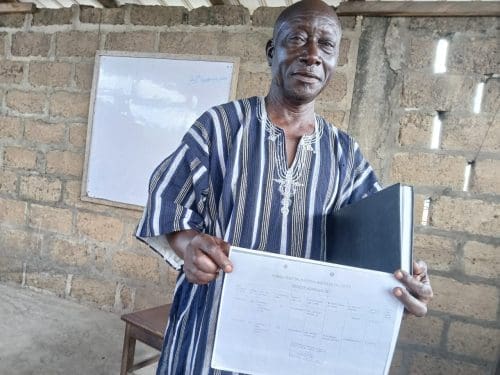
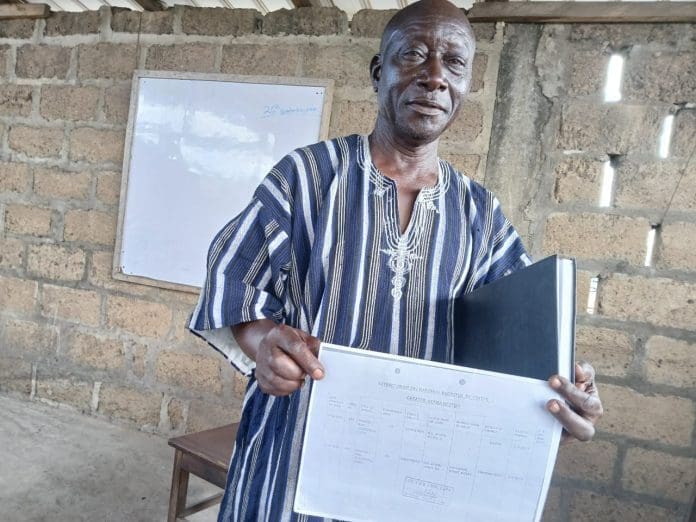

A decades-long land and chieftaincy dispute in the Ga Central Municipality has intensified, as rival traditional authorities lay competing claims to the custodianship of vast lands in Sowutuom and surrounding communities, raising concerns about stability, development, and law enforcement in the area.
At the heart of the dispute are three powerful factions—the Nikoi Olai family of the Asere Djorshie Stool, the Sempe Stool, and the Abola Piam Tunma Dynasty Family—each asserting legal and historical rights over the contested lands spanning Sowutuom, Chantan, Kwashiebu, Lomnava, Israel, Olebu, Omanjor, parts of Ofankor, Tantra Hill, and beyond.
Nikoi Olai Family Asserts Legal Supremacy
Speaking to journalists, the embattled but gazetted Chief of Sowutuom, Nii Afutu Kotei III, reaffirmed that the Nikoi Olai family of the Asere Djorshie Stool is the rightful custodian of the disputed lands, dismissing rival claims by the Sempe Stool and Abola Piam Tunma family as “historically inaccurate” and “legally baseless.”
“We have secured legal victories in consolidated cases dating as far back as 1919 and enshrined in the National Archives under Act 535. Our intention is to repossess all encroached lands through legal means,” the chief stated.
He added that formal registration of the lands is underway at the Lands Commission, after which his family would initiate court processes to reclaim properties allegedly sold or occupied by rival factions.
Abola Piam Elders Reject Chieftaincy in Sowutuom
But in a press statement dated September 23, 2025, the Abola Piam Tunma Dynasty Family vehemently denied that any individual—especially Nii Afutu Kotei III—has legitimate authority to claim the Sowutuom chieftaincy, calling him an “imposter.”
“Sowutuom has no chief. Anyone parading himself as such does so without lawful authority,” said Daniel A.L. Lamptey, head of the dynasty.
The family claimed ownership of not only Sowutuom but several adjoining communities, citing a High Court (Land Division) judgment, affirmed by the Court of Appeal, that confirmed their custodianship of the lands.
They also pointed to the installation of Nii Ayitey Tackie I as chief of Omanjor-Dwenewoho under their traditional jurisdiction as precedent for their role as landowners and kingmakers in the area.
Escalating Accusations and Historical Rebuttals
In a rebuttal, Nii Afutu Kotei III dismissed the statements by the Abola Piam family as part of a “calculated misinformation campaign,” asserting that historical and judicial records favour his lineage.
“These individuals are strangers from the Central Region with no ancestral or legal ties to Sowutuom. We will not allow them to rewrite history for personal gain,” he declared.
He accused both the Sempe Stool and Abola Piam family of illegally installing sub-chiefs on lands belonging to the Nikoi Olai family and warned of consequences if what he described as “criminal encroachments” continue.
National Recognition Adds Weight to Claim
Backing his position, the National House of Chiefs (NHC) confirmed Nii Afutu Kotei III as the gazetted and legally recognised chief of Sowutuom under the Asere Stool. The gazzette—serial number 494—was issued in 2011, confirming his installation by accredited kingmakers in 2006.
“All truth-loving Gas must rally behind me to defend and transform Sowutuom,” the chief urged, pledging to champion infrastructure development and defend the community’s interests.
Implications for Peace and Development
The intensifying rivalry has raised concerns among residents, land developers, and local authorities about the risk of conflict, illegal land sales, and the broader impact on community development and investor confidence.
Sowutuom and its surrounding areas have seen rapid urbanisation in recent years, making land ownership both lucrative and highly contested. Experts warn that lack of clarity in traditional land ownership—compounded by overlapping claims and historic court cases—could fuel litigation, unrest, and possible violence if left unresolved.
Call for Dialogue and Legal Resolution
Local observers are calling for the Ministry of Chieftaincy and Religious Affairs, the Lands Commission, and the Ga Traditional Council to intervene, mediate, and ensure a clear, enforceable resolution to avoid escalation.
“This is no longer just a land issue. It’s a potential security threat,” said one community leader who preferred anonymity. “We need lawful, peaceful resolution before things get out of hand.”