

The Ghana Infrastructure Investment Fund (GIIF) Sky Train trial took a dramatic turn on Tuesday when defence counsel accused the prosecution’s first witness of testifying against the accused persons to avoid his own liability in the alleged unauthorized investment.
Victoria Barth, counsel for former GIIF Chief Executive Officer Solomon Asamoah, suggested to witness Yaw Odame-Darkwa that he agreed to become a prosecution witness only to escape liability for the alleged lack of approval for the Sky Train project.
The accusation emerged during cross-examination at the High Court in Accra, presided over by Justice Audrey Kocuvie-Tay, where Asamoah and former GIIF Board Chairman Professor Christopher Ameyaw-Akumfi face charges relating to the alleged unauthorized disbursement of two million dollars for the Accra Sky Train project.
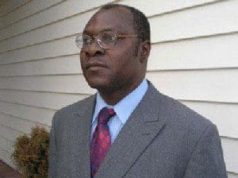
Odame-Darkwa, a former member of the GIIF board and head of its Audit Committee, denied the suggestion, stating simply, “That is not true.”
Witness Was Under Investigation
Barth made the accusation after the witness admitted that he was under investigation by the National Intelligence Bureau (NIB) for stealing and causing financial loss to the state when he gave his cautioned statement to officers.
The defence lawyer had earlier suggested to the witness that the only reason he became a prosecution witness was that he denied board approval for the Sky Train project and its related disbursement.
Deputy Attorney General Dr Justice Srem-Sai objected to this line of questioning, arguing it was unfair to the witness.
“Who becomes an accused person is a matter of prosecutorial discretion to be exercised by the Attorney General, not by a potential accused person,” Dr Srem-Sai submitted. “The witness is not in a position to say the factors that the Attorney General considered in not charging him. It is deemed that there was no evidence against him, and that is exactly why this question is unfair.”
Defence Challenges Objection
Barth opposed the objection, arguing that the prosecution exercises discretion in deciding whom to field as witnesses, but those witnesses make independent decisions whether to serve.
“This court has before it documentary evidence tendered without objection as to their authenticity as this witness has agreed, for instance, that signed minutes of a board are the evidence of what transpired at the meetings covered by those minutes and not the individual recollection of members who attended those meetings,” she said.
Barth noted that financial statements in evidence before the court contain disbursements on the Sky Train project, which form part of audited financial statements approved by the same GIIF board of which the witness was a member.
“The fact that a witness says I do not remember does not change the documentary effect of the evidence before the court,” she added.
The lawyer argued that when a witness transitions from suspect to prosecution witness in the face of admitted facts before the court, it is appropriate to question what accounts for the change in status.
“I’m not asking him to tell me what accounts for the prosecution’s reasoning. I’m asking about him being used as a prosecution witness because he is telling a story that supports the prosecution’s charges,” Barth said.
Court Overrules Objection
Justice Kocuvie-Tay overruled the objection and directed the witness to answer the question.
Odame-Darkwa responded, “As I sit here, I don’t know why I was made a prosecution witness.”
Barth then suggested that the witness’s denial of board approval for the Sky Train project was partly because he did not understand the structure of the project. The witness disagreed, saying, “That is your position, not mine.”
The defence counsel further suggested that the witness’s denial of recorded statements in the minutes before the court was because he did not pay attention when the events recorded in those minutes took place. The witness again disagreed.
Barth also suggested that the witness’s alleged lack of knowledge of the approval for the disbursement of two million dollars for the Sky Train project was because he failed to carefully review board packs sent to him via email. The witness rejected this assertion.
The defence lawyer finally put it to the witness that he had told half-truths to the court. “No, my Lady,” the witness responded.
Case Background
In 2019, GIIF invested two million dollars for a 10 percent stake in Africa Investor Skytrain Consortium Holdings, the company developing the Accra Sky Train light railway project.
The Africa Investor Group was selected and granted rights to develop the project by the Government of Ghana through the Ministry of Railways Development.
Following the change of government in December 2024, the state, through the Attorney General’s office, alleges the investment was made without board approval, resulting in willful financial loss to the state because no railway has been built.
No allegations of personal gain or diversion of funds appear in the charges. The state has not charged anyone from the Ministry of Railways Development or the government-selected sponsors, only the GIIF Chairman and Chief Executive Officer.
The case has been adjourned to Wednesday, February 5, 2026, for counsel for Professor Ameyaw-Akumfi to cross-examine the witness.