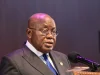



The “Big push”, which is President John Mahama’s policy initiative to address the shortfalls in the road sector appears to be conflicting with the Procurement Act 2023.
While in opposition, the National Democratic Congress (NDC) communicators led by candidate John Mahama made huge electoral gains by trumpeting what they described as the abuse of sole sourcing by the Akufo-Addo administration.
The most essential provision of Ghana’s Public Procurement Act, 2003 (Act 663) is the mandatory requirement for competitive, transparent, and fair procurement processes. The Act, mandates all public contracts be awarded through competitive tendering (Sections 35-46), to ensure value for money, accountability, transparency and equity in the use of public funds.
Sole sourcing and elections
Both the NDC and the New Patriotic Party (NPP) have taken turns in using the abuse of single sources as campaign messages to appeal to the electorate. In 2016, the NPP raised the red flag over the NDC government’s exploitation of the sole sourcing, which was one of the reasons why NDC lost the 2016 elections.
Then in 2020 and 2024, NDC now in opposition and desperately needing to snatch power used sole sourcing to castigate NPP. Many analysts believe that like NDC, NPP’s massive loss in the 2024 elections was partly due to the sole sourcing tag NDC hanged around the neck of NPP. Either way, both NDC and NPP have admitted that sole sourcing is a huge economic issue which causes massive leakage of the taxpayers’ money.
What is intriguing is the zeal with which NDC used the sole sourcing a campaign message, yet it appears to be faltering on its implementation. During the 2024 campaigning Candidate Mahama promised to stop sole sourcing to save the public purse.
Similarly, in a radio programme in 2024, Samuel Okudeto Ablakwa, now Ghana’s foreign minister reminded Ghanaians that NDC would amend the Procurement Act and abolish sole sourcing. He claimed that single sources had been abused by the Akufo-Addo government.
Furthermore, the former communications director of NDC, Mr. Sammy Gyamfi at a press conference wondered why the previous government awarded a 12-kilometer asphalt runway for the Sunyani Airport through sole sourcing. He described sole sourcing as a new type of corruption that the Akufo-Addo government had unleashed on Ghanaians.
He then accused the previous government of awarding single source contracts behind closed doors. “What is so special about minimal innovations that the previous government awarded under sole sourcing”, Mr. Gyamfi asked. Currently Sammy Gyamfi’s government has sole sourced the upgrading of the Apeguso-Mpakadan Feeder Road surface redressing at the cost of GHC146.5 million. What was the overriding reason for awarding it under sole sourcing?
Negative effects
As indicated earlier, sole sourcing has profound negative effects on the economy, primarily by undermining transparency, inflating project costs, and causing significant revenue leakage. Its frequent misuse in Ghana to bypass competitive bidding for political or personal interests leads to several detrimental consequences to the economy as outlined below.
- Inflated Contract Values: Sole-sourced contracts are often rewarded without competitive pressure, leading to higher, inflated costs compared to market rates, which places a heavy burden on the national budget.
- Revenue Leakages: Critics and experts have identified abused procurement processes, particularly sole sourcing, as a major source of revenue leakage, contributing to Ghana’s high public debt and fiscal deficits.
- Judgment Debts: Unjustified sole-sourced contracts often lead to legal disputes and “judgment debts,” where the state is forced to pay significant penalties, draining public funds.
- Lack of Competition: Without competitive bidding, government agencies often fail to select the most capable or cost-effective contractors, resulting in lower-quality infrastructure or “white elephant” projects.
Alarming proportion
If indeed the previous government doled out contracts under sole sourcing, today we are witnessing alarming proportions of sole sourcing under a government which promised to ban the practice. An investigative journalism undertaken by the Fourth Estate, a subsidiary of the Media Foundation for West Africa, has revealed the award of 107 contracts through sole sourcing.
According to Fourth Estate, 81 percent of the 107 were awarded through sole sourcing, while the remaining 26 were awarded through selective tendering, totaling GHS73 billion ($10 billion). This translates to 80 percent of money expected to be spent under the “Big Push” road construction initiative. In all, over the last seven months the Ministry Roads and Highways, under the watch of Mr. Kwame Governs Agbodza has awarded 107 sloe sourced road contracts to political allies
Undoubtedly, the Fourth Estate was apt in branding the Ministry of Roads and Highways as the “sole sourcing factory”, which doles out an estimated 12 sole source contracts a month. If the allegations are true, then what is unfolding might be the biggest source of the leakage of taxpayers’ money into private pockets under the current dispensation.
On the defensive
Since the Fourth Estate divulged the news, Mr. Agbodza has been on the defensive trying to justify what is obviously a breach of the procurement processes. As soon as politicians spend time and resources justifying a trending potentially corrupt practice, it means they have something to hide.
Ideally, if there was nothing to hide the minister should have publicly announced the sole sourcing. It is now public knowledge that the Fourth Estate invoked the provisions of the Right to Information Act to obtain details of the 107 selective contracts in public interest.
The Akufo-Addo government passed the Freedom of Information Act to compel public officials to disclose information deemed to be in the public interest. The Act also provides for the right of citizens to know what government is doing with their money. The previous Kufuor, Mills-Mahama and Mahama administrations played hide and seek with the Bill.
Thus, Ghanaians are now witnessing the full benefit of Akufo-Addo’s bold decision to pass the Freedom of Information Act. The Act now makes it easier for citizens to demand accountability and transparency from duty bearers as we are witnessing now. To fight corruption and nepotism good leadership and the promotion of good governance are essential.
Double speak
In 2024 NDC promised to reset the economy as contained in their “Resetting Agenda Manifesto.” A major agenda in the manifesto was banning sole sourcing, except for emergencies. Recently, in a 2026 State of the Nation’s Address, President Mahama told Parliament that he would ban sole sourcing. He promised to prioritize Ghana’s infrastructure to address the gaps in the road sector.
This was in tandem with his “Big Push” initiative to deliver the roads. He was categorical that his government will minimize sole sourcing of road contracts to encourage competitive bidding and to promote transparency. Mr. Speaker, he said “we are bringing legislation to this House to tighten our procurement processes by banning sole source contracts, except in exceptional circumstances.”
A few days later, the President repeated his promise to combat sole sourcing while addressing the National Economic Forum in Accra. He described the excessive abuse of sole sourcing as a practice that leads to inflated contracts, which in turn causes a major drain on Ghana’s finances. “Single source procurement must be the rare exception, rather than the norm”, he assured his audience.
However, after a little over one year in office, Mr. Mahama’s promises appear to be conflicting with his actions. Regarding the promise to ban or minimize sole sourcing, several questions are begging for answers. Was the President aware that back in November, his minister of Roads and Highways had awarded 107 sole source contracts before he addressed Parliament in February? Was it the case that the minister flouted the President’s authority and unilaterally awarded the contracts? Were the contracts worth GHS73 billion? Is that all the resetting agenda can offer Ghanaians?
It is obvious that sole source contracts worth GHS73 billion was discussed at the cabinet level with President Mahama possibly in the driver’s seat. This creates a strong assumption that the President knew that his government had breached the procurement processes, at the time he boldly told Parliament of his plans to ban sole sourcing.
Government apologists
Despite the obvious abuse of procurement and tendering processes, the Majority Leader, Mr. Mahama Ayariga on March 11, 2026 boldly stated in Parliament that “the era of sole source contract is dead.” Like President Mahama, was Mr. Ayariga aware of the 107 sole source contracts before making his emphatic statement? Was his statement a ploy to divert public attention from the scandal that is unfolding at the Ministry of Roads and Highways?
Other government apologies have tried to justify the breach of tendering process. They claim there is nothing wrong with single sourcing, on condition that the beneficiaries have no relation with any government official that could amount to the conflict of interest. Another argument is that sole sourcing is justified provided the contract amount is not inflated. The two issues used by government apologists are too simplistic and nothing but attempts to sweep the alleged corruption under the carpet.
Will an NDC government award contracts to NPP contractors or relatives of ex-presidents Kufour and Akufo-Addo? It is not a secret that most contractors are card-bearing members of the two biggest political parties. Moreover, once the contract figures have not been published, Ghanaians have every right to conclude that the figures might be inflated for the purpose of “rent seeking”, or what Justice Jones Dotse described as “create, loot and share.”
Therefore, Beatice Annan’s argument that the infractions on the procure process is an opportunity to strengthen procurement legislation does not make sense. What legislation on procurement is more authoritative than the Procurement Act 2003? We do not need new laws on procurement; we need enforcement of the existing laws based on which NDC promised to ban sole sourcing.
Political capital
It is sad that those who decried sole sourcing and made political capital out of it are the very people who are violating it or neck-deep in it. Mr. John Mahama and his government must ban sole sourcing as they promised. They must stop the leakage of the taxpayers’ sweat into private pockets under the guise of exceptional sole sourcing.
For a reminder cocoa farmers are still waiting for the over GHS11 billion Cocoa Board owes them. New teachers and nurses are still waiting for their salaries and allowances. Hospitals have no beds and women are giving birth to children on the floor. Several children have dropped out of school because their parents cannot pay school fees.
There are pressing social issues that the taxpayers’ money can be used to addressed for the benefit of all Ghanaians. Enough of the cronyism and pillaging of the national cake for a few people wielding political power.
Post Views: 37
Discover more from The Business & Financial Times
Subscribe to get the latest posts sent to your email.