

Daniel Yao Domelevo, Board Chairman of the Economic and Organised Crimes Office, has clarified that his recent comments about Ghana’s anti-corruption efforts were misunderstood and taken out of context.
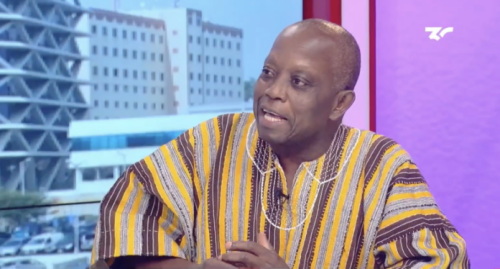
Speaking in a follow-up interview with JoyNews, Domelevo explained that portions of his conversation with KSM that circulated online represented only a small excerpt of the full interview, which aired on The KSM Show on Tuesday, October 7, 2025.
“I think what I said has been taken out of context because almost all of what you have listened to is an excerpt that KSM put out, not the full interview,” he stated.
The clarification comes after public reactions to comments he made expressing frustration with what he described as the slow pace of ongoing anti-corruption prosecutions under Operation Recover All Loots. In that interview, Domelevo said he was “not satisfied at all” with the progress made so far by the initiative.
“Because when I look at the quantum of money we should recover and the snail speed at which we are moving, I wonder when we are going to get there,” he had said during the original interview.
Domelevo noted that the full interview included acknowledgment of work being done by key institutions such as the Attorney-General’s Department, EOCO itself, and the Office of the Special Prosecutor. He emphasized that his dissatisfaction stemmed not from expecting immediate convictions or fund recoveries, but from concerns about the legal framework for fighting corruption.
“If you had listened to the full interview, I acknowledged the work being done by AG, EOCO, OSP and all others. And I even said that I am not satisfied, not because I was expecting that convictions would have been made by now or monies would have been recovered by now, but my dissatisfaction is about the legal system, the framework of fighting corruption,” he explained.
The former Auditor-General, who now chairs the EOCO board, had also lamented in the original interview that nine months into the Mahama administration represents substantial time. “The procedure currently being used is very slow. Nine months is not small. Before we realise, we’ll be done with the quarter,” he said.
Operation Recover All Loots was launched by President John Dramani Mahama in December 2024 as a key anti-corruption initiative. The five-member team presented its final report to the president in February 2025, identifying cases involving an estimated $20.49 billion in potential recoveries.
Since then, the Attorney-General’s Department has been conducting investigations and building cases for prosecution. Attorney-General Dominic Ayine has briefed the media multiple times on progress, including a March 2025 update on ongoing investigations and recovery efforts.
The initiative has generated significant public interest and debate. While some citizens express impatience for visible results, including arrests and fund recoveries, legal experts note that building solid prosecutable cases requires thorough investigation and cannot be rushed without risking procedural failures that could allow cases to collapse in court.
Domelevo’s position as both a member of the original ORAL team and now EOCO Board Chairman gives him unique insight into both the investigative and prosecutorial sides of anti-corruption work. His comments, even when clarified, reflect tensions between public expectations for swift action and the deliberate pace required for legally sound prosecutions.
In his clarification, Domelevo reaffirmed his commitment to supporting anti-corruption institutions while encouraging a more efficient and transparent system for delivering justice. “My focus has always been on improving the framework, not attacking personalities,” he concluded.
The episode highlights challenges facing Ghana’s anti-corruption efforts. While the government has signaled strong political will through initiatives like ORAL, translating investigations into convictions requires navigating complex legal procedures, gathering admissible evidence, and ensuring due process protections.
Critics of the current approach argue that nine months should have produced more visible prosecutions given the severity of allegations involved. Defenders counter that rushing cases could be counterproductive if procedural shortcuts provide grounds for legal challenges that ultimately protect rather than punish wrongdoers.
Domelevo’s clarification appears aimed at shifting focus from perceived criticism of specific institutions to broader structural issues affecting Ghana’s anti-corruption architecture. His previous calls for merging overlapping anti-corruption agencies suggest he sees systemic inefficiencies rather than individual failures as the primary obstacles to effective corruption fighting.
As Ghana approaches the one-year mark of the Mahama administration, pressure will likely intensify for tangible outcomes from ORAL and related initiatives. Whether the legal framework Domelevo critiques can be reformed while simultaneously prosecuting existing cases remains an open question that will shape public perception of the government’s anti-corruption commitment.