


Industry leaders have argued that the era of relying on transient external funding is giving way to a more resilient model driven by strong local expertise in terms of innovative and blended finance.
This argument is happening at a time when global markets navigate the fallout of the current U.S administration, the Persian Gulf and Middle East crisis and shifting interest rates.
These developments are beginning to build a new consensus among players in Ghana’s financial sector.
To this end, the focus has shifted toward domestic capital mobilisation, a strategy centred on activating local institutional assets; specifically, pension funds and insurance pools, to anchor national economic growth.
So, Ghana’s economic development, which has long been anchored on foreign direct investments, while ignoring the huge US$600 billion domestic capital opportunity and local investment expertise, should not be the case at this critical juncture.
It is against this backdrop that domestic investors including venture capital and private equity, pension fund managers said they are poised to fund the country’s private sector and infrastructural development businesses under the new government’s Big Push programme.
During a recent Deloitte UK-Ghana Chamber of Commerce (UKGCC) Investor and Economic Outlook webinar, a technical framework was provided for evaluating this transition.
Recalibrating the economy and funding focus
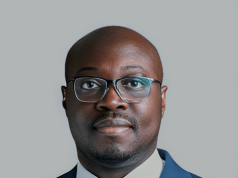
Partner at Deloitte and Africa Infrastructure Lead, Yaw Appiah Lartey, characterised Ghana’s current economic phase as a recalibration.
This shift is forcing government agencies, businesses, and investors to build stronger institutional foundations.
Mr. Lartey noted that the effects of these economic shifts are visible across all levels of society.
According to him, over the past two years, Ghana has navigated rising oil prices, inflationary pressures, and currency fluctuations.
These factors have direct consequences for households and investor sentiment alike. The objective of the current reset is to move the economy toward a strategic framework where growth is driven by discipline and institutional strength.
The Chief Executive Officer of the Ghana Venture Capital and Private Equity Association (GVCA), Amma Gyampo, addressed the group of investors and policymakers with a clear directive.
She argued that for the country to establish itself as a private funds hub for the West African sub-region, it must first incentivise and build its own.
Gyampo, who has been credited with originating catalytic grants, innovative finance and technical assistance facilities for the impact investing and private equity ecosystems, warned that a fixation on debt and foreign direct investment (FDI) at the expense of local capital investment creates a fragile economy often remaining sensitive to global shocks and geopolitical volatility.
She maintained that domestic capital remains in the market during downturns.
She went to emphasise that by prioritising local investors and diversification through productive sectors, Ghana could start sustaining jobs, tax contributions and pension assets under management (AUM); develop a self-sustaining foundation for the real economy.
Regulatory stability for private equity
The vision for Ghana to serve as a regional base for private equity and venture capital depends on structural reform rather than mere capital availability.
She, therefore, outlined the need for a stable regulatory regime, legal framework and a competitive fiscal framework.
The GVCA CEO explained that a stable regulatory regime provides the predictability required for fund managers to execute ten-year investment cycles.
“Without this, sudden shifts can disrupt and deter long-term asset allocation for private sector development finance. Simultaneously, tax incentives reward long-term commitments to high-impact sectors like infrastructure, logistics and agribusiness, which are all aligned with investment in the government’s Big Push programme”.
The role of strategic positioning for SMEs
For small and medium-sized enterprises (SMEs), the post-crisis economy demands a move away from generic optimism.
Senior Manager for Infrastructure, Capital, and Real Estate Projects at Deloitte Ghana, Peter Nii Charway, argued that businesses must make deliberate decisions about their positioning.
As sector dynamics diverge, the market will reward those demonstrating financial discipline and adaptability in key sectors like Services, Financial Technology (FinTech), Export and Logistics, he said.
Accessing capital in this new environment requires more than a viable business model. The webinar series emphasised that transaction advisory services covering governance, legal structuring, and Sustainability alignment are essential for businesses seeking to bridge the investment gap.
Institutional investors are increasingly looking for companies that meet rigorous standards and professional management benchmarks.
Post Views: 2
Discover more from The Business & Financial Times
Subscribe to get the latest posts sent to your email.