

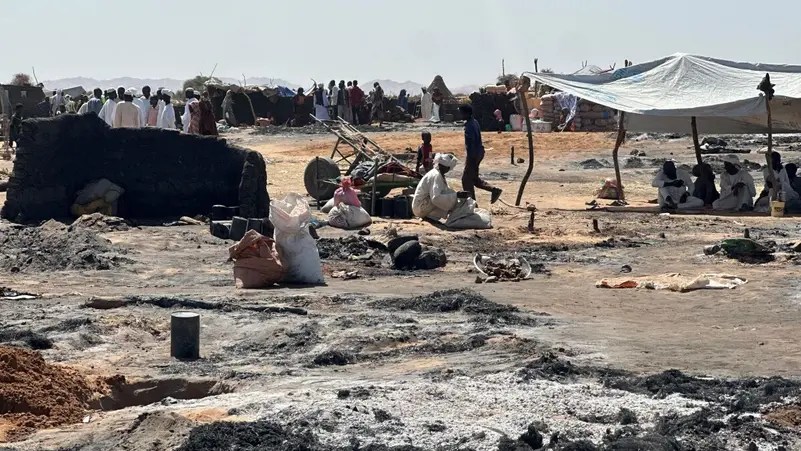
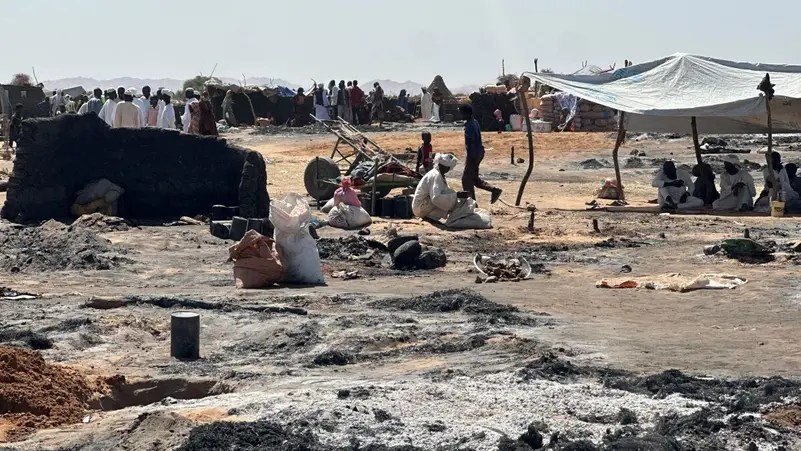
A drone strike devastated a wedding celebration in the town of Kutum on Wednesday. The attack killed at least 30 civilians in the North Darfur region, with local sources in the Al-Salam neighbourhood now reporting the death toll may exceed 40. Women and children were among the victims of the explosion. United Nations officials confirmed the mass casualty event during a Thursday briefing.
Details of the Al-Salama strike
The Sudanese Alliance for Rights reported that the strike occurred on April 8, 2026, at approximately 11:00 p.m. near Al-Awm School. The drone targeted a gathering in the Al-Salama neighbourhood, where an eyewitness stated a large crowd had assembled inside a house for the ceremony, contributing to the high casualty count. Residents reported that the explosion completely destroyed the host’s home and damaged at least four nearby houses. The impact was so severe that some victims remain unidentified, deepening the distress for a community reeling from what activists described as an unimaginable tragedy in a protected civilian space.
United Nations Condemns Civilian Toll
Stéphane Dujarric addressed the incident from the global stage. He serves as the spokesperson for the U.N. secretary-general. “We condemn this and all attacks against civilians. Attacks using drones against civilians and civilian objects are unacceptable,” said Dujarric of the attack. The international body remains deeply concerned by the rising death toll in the region.
Allegations Against the Sudanese Armed Forces
Local monitors quickly identified the suspected source of the strike. The Emergency Lawyers and the Resistance Committees in el-Fasher released statements on social media. Both grassroots groups blamed the Sudanese Armed Forces for the Wednesday assault, noting that Kutum has been under RSF control since the early months of the conflict. The army did not immediately respond to requests for comment regarding the strike in Kutum.
Demands for Accountability and Legal Oversight
Rights groups argue the strike violated the Geneva Conventions, specifically the principles of distinction, proportionality, and precaution. The Sudanese Alliance for Rights is calling for an immediate, independent investigation. They have urged the African Union and the United Nations Human Rights Council to deploy fact-finding missions to identify those responsible. The group emphasised that such indiscriminate targeting may constitute war crimes under the Rome Statute.
Escalation of Drone Warfare
Sudan is currently gripped by an intensifying drone war between the army and the paramilitary Rapid Support Forces. This conflict has raged since April 2023, with recent data showing a sharp increase in aerial attacks across South Kordofan and the Blue Nile. The United Nations reported that more than 500 civilians were killed in drone strikes between January and mid-March 2026 alone, primarily in Kordofan and Darfur. These technological escalations have displaced thousands of additional people and fueled a sharp rise in civilian deaths documented by the UN Human Rights Office.
Humanitarian Crisis and Casualties
The human cost of the Sudanese war is staggering and difficult to track. U.N. figures suggest the nearly three-year conflict killed more than 40,000 people. However, independent analysts and humanitarian groups now suggest the true toll could exceed 150,000 when accounting for famine and secondary health crises. Humanitarian operations now face extreme danger due to the surge in drone strikes in the Kordofan region.
Targeting of Medical Facilities
The violence frequently spills into protected civilian infrastructure. A drone attack hit a hospital in the south-central part of the country last week. That strike killed at least 10 people and targeted sensitive areas. Doctors Without Borders reported that the RSF launched two drone strikes on al-Jabalain Hospital. The hits damaged an operating theatre and a maternity ward.
Global Demands for Protection
Medical organisations are demanding an immediate end to the targeting of healthcare workers. “MSF is outraged by these repeated attacks on health care, which have escalated dangerously in recent weeks,” said Esperanza Santos, MSF head of emergencies for Sudan, at the time. She emphasised that health facilities and patients must always be protected. Santos added, “We call on RSF and SAF to immediately stop this spiral of violence against medical facilities.”
As the conflict nears the three-year mark, the systematic use of remote-warfare technology continues to erode the distinction between combatants and non-combatants. Without a renewed commitment to international humanitarian law from both the SAF and RSF, the cycle of aerial strikes on civilian gatherings and hospitals risks becoming a permanent, lethal feature of the Sudanese landscape.
DISCLAIMER: The Views, Comments, Opinions, Contributions and Statements made by Readers and Contributors on this platform do not necessarily represent the views or policy of Multimedia Group Limited.
DISCLAIMER: The Views, Comments, Opinions, Contributions and Statements made by Readers and Contributors on this platform do not necessarily represent the views or policy of Multimedia Group Limited.