

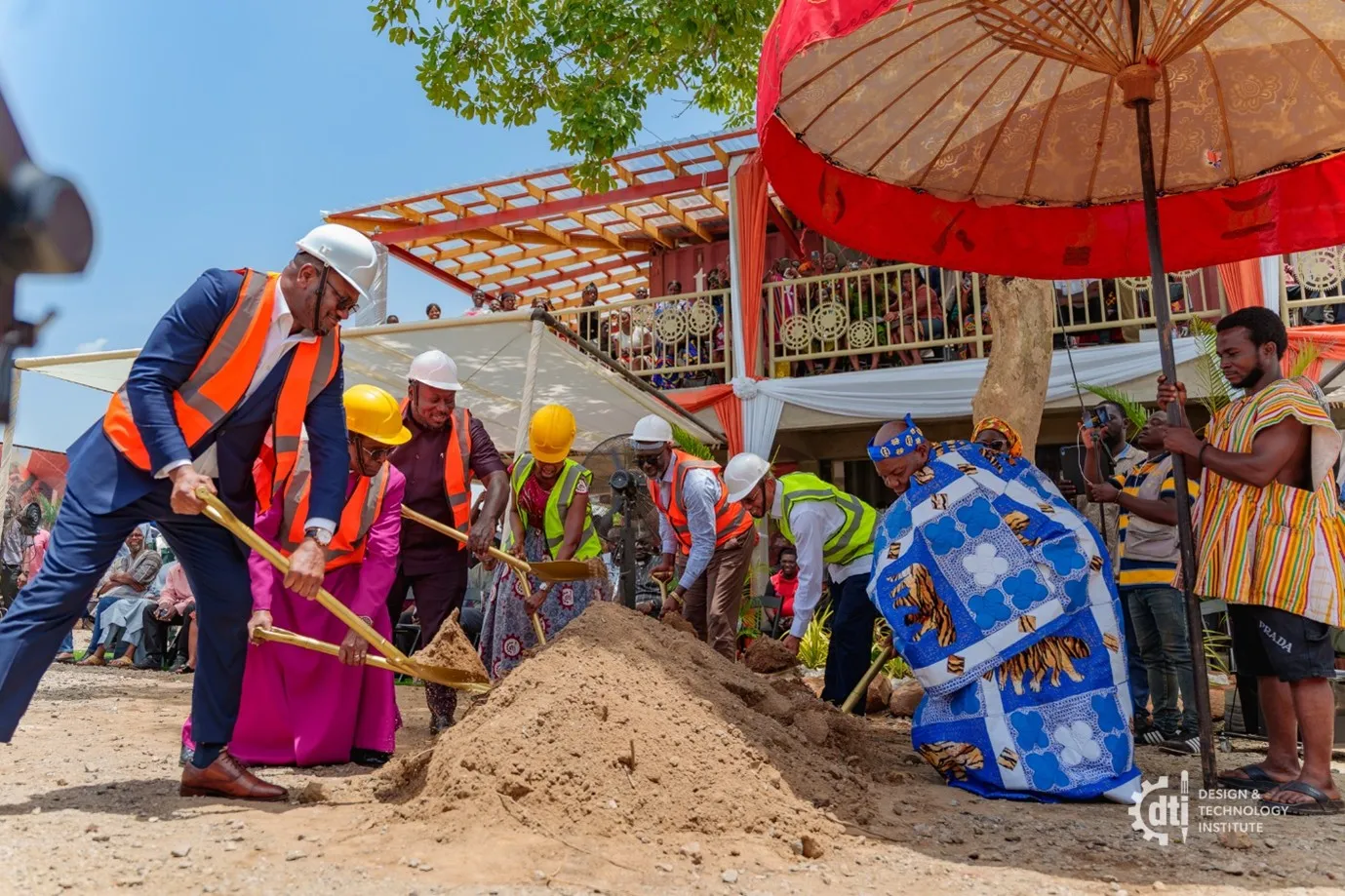

Ghana’s human capital development drive received a major boost on Tuesday as the Design and Technology Institute (DTI) broke ground for a US$28 million Berekuso Multi-Skills Campus at Berekuso in the Eastern Region.
The investment positions DTI to scale up its industry-led training model and respond to growing demand for skilled labour in an economy increasingly shaped by automation, artificial intelligence and digitalisation.
Founder and Chief Executive Officer, Constance Swaniker, said the campus represents a strategic response to Africa’s widening skills gap and a deliberate effort to build globally competitive talent.
“With over 60 per cent of Africa’s population under 25, the opportunity is immense but only if we equip our youth with relevant, industry-ready skills,” she said.
The facility, sited on 11.29 acres opposite Ashesi University at Berekuso, will accommodate 1,500 residential students annually and anchor a broader ecosystem including instructor training, applied research and industrial production. DTI is targeting the training of 50,000 young people over the next three years through the expanded campus and new programme offerings.
The first phase, backed by a €3 million grant under the African Union’s Skills Initiative for Africa and financing support from KfW, will feature advanced training infrastructure, including a 160-booth welding and fabrication workshop — the largest in the country.
Founded in 2016, DTI is a private TVET institute offering high-demand technical training in Precision Welding and Fabrication (AWS SENSE-aligned), Design Innovation — encompassing 3D design and digital marketing — and Entrepreneurship and Small Business Start-Up. Its model integrates industry partnerships into training delivery, with over 160 companies currently supporting internships, curriculum development and job placement.
Managing Director of Fidelity Bank Ghana, Julian Opuni, whose institution committed $100,000 to the project, highlighted the global mismatch between education and employment.
“DTI builds capability, not just credentials,” he said, noting that such models are critical as one billion young people enter the global workforce in the next decade, with significantly fewer jobs available.
The groundbreaking ceremony, hosted by Constance Swaniker, drew government officials, including the Minister for Youth Development and Empowerment, George Opare Addo, industry leaders, traditional rulers including the Chief of Berekuso, and international partners, among them the Mastercard Foundation.
Mr Opare Addo described the project as a “long-overdue investment” in workforce readiness and productivity.
Analysts say the project aligns with Ghana’s broader industrialisation agenda and could improve labour market efficiency if effectively integrated into national policy frameworks.
Post Views: 1
Discover more from The Business & Financial Times
Subscribe to get the latest posts sent to your email.