
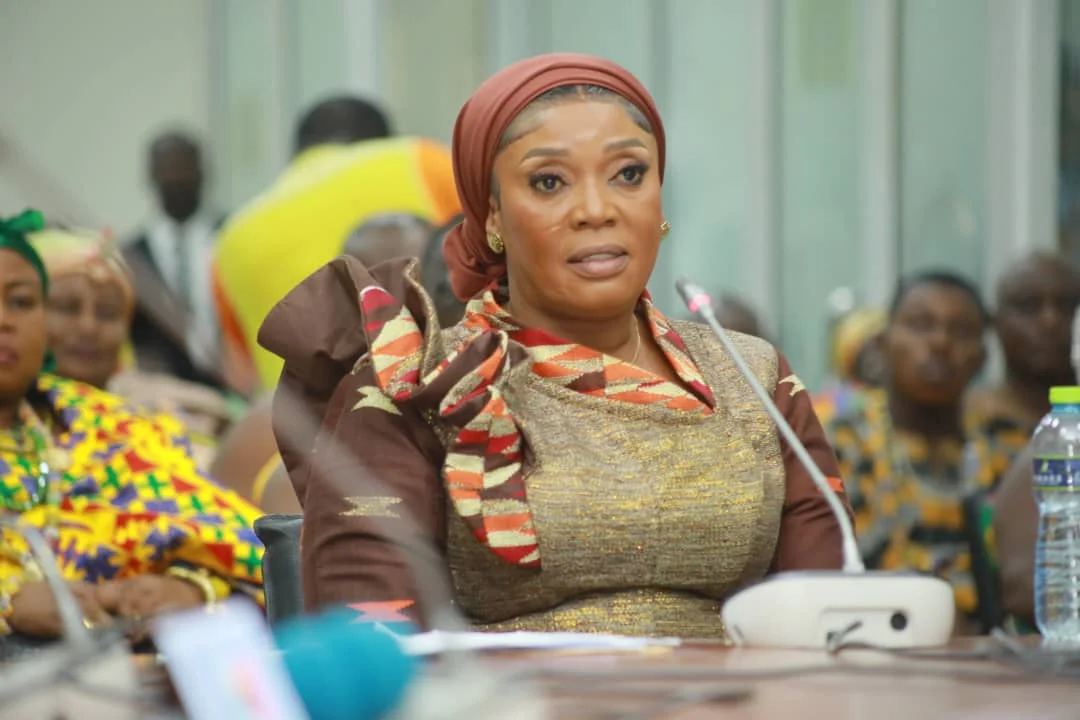
Eastern Regional Minister Rita Akosua Adjei Awatey has issued a warning to Municipal and District Chief Executives (MMDCEs), stating she will hold them personally accountable if the government’s flagship poultry revitalisation initiative, “Nkoko Nketenkete,” fails in their jurisdictions.
The warning came during a brief handing-over ceremony at the Eastern Regional Coordinating Council on Tuesday, where day-old chicks and related support were distributed to beneficiaries under the program.
Awatey charged the MMDCEs to treat the initiative with utmost seriousness by providing necessary technical assistance to farmers, closely monitoring implementation, and ensuring high survival rates and long-term sustainability.
The goal, she emphasised, is to bolster the poultry industry, achieve greater food self-sufficiency, and improve livelihoods across the region. Highlighting the importance of the poultry sub-sector, the minister described it as a vital component of Ghana’s agriculture, offering nutritional benefits, employment—particularly for women and youth—and significant potential to cut reliance on imported poultry while conserving foreign exchange.
Citing Ministry of Food and Agriculture data, Awatey noted that Ghana consumes approximately 400,000 metric tonnes of poultry annually, yet local production stands at only about 15,000 metric tonnes. This massive shortfall forces the country to spend around US$400 million yearly on imports, a situation she said disadvantages local farmers and hampers domestic industry growth.
In response, President John Dramani Mahama launched “Nkoko Nketenkete” as part of his Resetting Agenda and the broader Feed Ghana Programme.
The initiative supports farmers, households, youth, and agripreneurs with birds, feed, and logistics to ramp up local production, rebuild confidence in the sector, create sustainable jobs, and enhance food security.
“Today’s distribution of birds is therefore not just a mere presentation of birds or chicks but we present to you sustainable investment in livelihoods; an investment in local enterprise, and an investment in Ghana’s economic resilience,” Awatey stated.
“When we strengthen local poultry production, we reduce imports. When we reduce imports, we protect our foreign exchange.”
She urged beneficiaries to adhere to bio-security measures, veterinary guidelines, proper housing, and feeding practices to grow their enterprises beyond the initial support. The minister challenged them to expand operations, employ others, and aspire to become leading poultry farmers in Ghana and Africa.
Eastern Regional Director of Agriculture Hajia Abiba Yissif acknowledged the directorate’s efforts in facilitating distribution despite challenges such as logistical constraints, delays in feed and vaccine supply, transportation issues in remote areas, and some mortalities during transit.
She called for better coordination among partners, improved planning for input delivery, timely communication, and stronger district-level monitoring and supervision to enhance future phases. Dean of MMDCEs and New Juaben South Municipal Chief Executive Ransford Owusu Boakye assured full commitment from the assembly heads, pledging to do everything possible for the program’s success.
The “Nkoko Nketenkete” initiative, launched nationally in November 2025, forms a core part of Feed Ghana’s strategy to revitalise poultry through household and commercial interventions, targeting millions of birds to boost self-sufficiency and reduce the import bill.
Distribution is ongoing across regions, with Eastern Region beneficiaries now equipped to contribute to this national push for agricultural transformation.