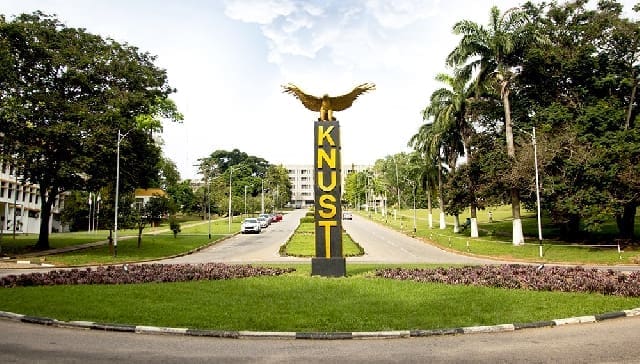
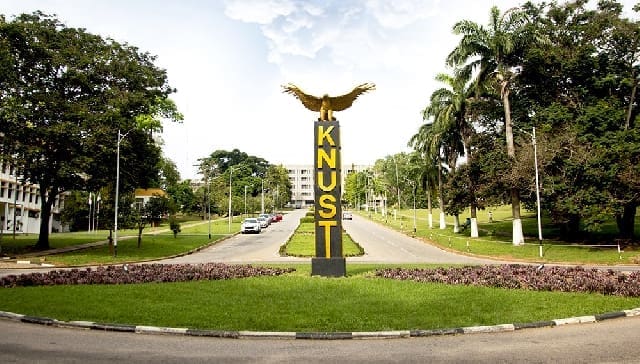

The Electricity Company of Ghana’s Ashanti Sub Transmission Region has donated two high voltage substation panels to the Kwame Nkrumah University of Science and Technology’s Electrical Engineering Laboratory in a move aimed at strengthening practical training for students.
The donation comprises a 33kV Gas Insulated Switchgear panel and an 11kV panel, equipment that will allow engineering students to gain hands on experience with real world power distribution systems. The presentation bridges classroom theory with actual engineering practice used in Ghana’s electricity transmission network.
The high voltage panels represent significant additions to KNUST’s training infrastructure, giving students access to the same type of equipment they will encounter in professional practice after graduation. Gas Insulated Switchgear technology is commonly used in modern substations due to its compact design and reliability.
For KNUST’s Electrical Engineering Department, the donation addresses a critical need for practical training equipment. Students pursuing degrees in electrical and electronic engineering require exposure to actual power systems equipment to complement their theoretical knowledge and prepare them for the workforce.
The 33kV and 11kV voltage levels donated are standard in Ghana’s power distribution network. The 33kV equipment is typically used in primary transmission systems, while 11kV panels are common in secondary distribution that delivers power to communities and industrial areas.
ECG’s Ashanti Sub Transmission Region oversees significant portions of the power infrastructure serving Kumasi and surrounding areas. The donation of decommissioned or surplus equipment to educational institutions represents a valuable way to support technical education while giving new life to functional training equipment.
The collaboration between ECG and KNUST reflects growing recognition of the need for stronger partnerships between industry and academia. Such donations help ensure that graduates have practical skills that match industry requirements, potentially reducing the gap between academic training and job market needs.
KNUST’s College of Engineering is one of Ghana’s premier institutions for training engineers, producing graduates who go on to work in various sectors including power generation, transmission, and distribution. Hands on experience with industry standard equipment can give these graduates a competitive advantage in the job market.
The donation comes at a time when Ghana’s power sector is undergoing significant reforms and expansion. Training engineers who understand modern power systems equipment and can work safely with high voltage installations remains crucial for the sector’s development.
Access to such specialized equipment can also support research activities at the university level. Faculty and graduate students conducting research on power systems, grid stability, and electrical safety can use the panels for experimental work and testing.
While the exact timing and ceremony details were not immediately available, the donation represents a positive development in the relationship between Ghana’s power utility and the country’s leading technical university.
For students at KNUST, the new equipment means enhanced learning opportunities and better preparation for careers in Ghana’s electricity sector. The ability to work with actual substation equipment under supervised conditions provides invaluable experience that cannot be replicated through simulations alone.