The Economic Community of West African States (ECOWAS) has begun steps to operationalise its Economic, Social and Cultural Council (ECOSOCC) to strengthen citizen participation and deepen regional integration.
The initiative forms part of efforts to enhance inclusive governance and reinforce the role of citizens in the regional integration process.
Dr Abdel-Fatau Musah, ECOWAS Commissioner for Political Affairs, Peace and Security, said the move would help ensure that regional integration efforts were anchored in the participation and ownership of the people of West Africa.
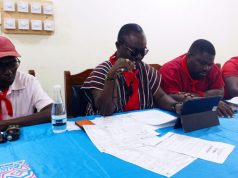
He made the remarks during the opening of a two-day Validation Meeting of Experts and Ministers on the Operationalisation of the ECOWAS Economic, Social and Cultural Council (ECOSOCC) in Accra.
The meeting is expected to review and validate the proposed institutional and legal framework, consider the draft roadmap and budget for the initial phase, and finalise a communiqué capturing the collective recommendations.
Dr Musah noted that the Council, envisioned in the 1993 Revised Treaty of ECOWAS, had remained non-operational despite its importance to the organisation’s institutional structure.
He said operationalising ECOSOCC had become necessary at a time when the region faced political transitions, military coups, terrorism, maritime insecurity, and food and energy vulnerabilities.
The Commissioner also cited the impacts of climate change and shifting global geopolitical dynamics as challenges requiring stronger regional cooperation.
Dr Musah said citizens, particularly young people and women, were increasingly demanding greater inclusion, accountability, economic opportunity and transparent governance.
He explained that ECOSOCC would provide a platform for engagement between ECOWAS institutions and non-state actors, including civil society, the private sector, traditional authorities, academia and community leaders.
Dr Musah noted that experts had developed draft legal instruments, a three-year work programme, budget proposals and an implementation roadmap for the Council.
Mrs. Nelly Mireku, Director of Research at the Ministry of Finance, said the ongoing meeting of experts from ECOWAS Member States in Accra represented a key milestone in efforts to operationalise the institution.
She said the meeting offered participants the opportunity to review and validate the proposed operational framework, legal instruments and institutional arrangements that would guide the establishment and functioning of ECOSOCC.
Mrs. Mireku emphasised that the role of experts in the process was critical to ensuring that the framework was technically sound and institutionally coherent.
She urged participants to ensure that the arrangements developed aligned with the broader objectives of ECOWAS and supported the region’s integration agenda.
Mrs. Mireku expressed confidence that the expertise gathered at the meeting would contribute significantly to shaping a framework that reflected the collective aspirations of the ECOWAS Community.
She noted that strengthening participatory governance would further enhance regional cooperation and deepen integration among Member States.
Mrs. Mireku said the Government of Ghana remained committed to supporting initiatives that advanced the goals of ECOWAS and promoted inclusive regional development.
Source: GNA