

Urgent action is needed to safeguard Ghana’s fisheries, a new report by the Environmental Justice Foundation (EJF) implies.
EJF reveals that the country’s industrial trawl fleet continues to harvest large volumes of illegal bycatch, including juvenile fish vital to artisanal fisheries.
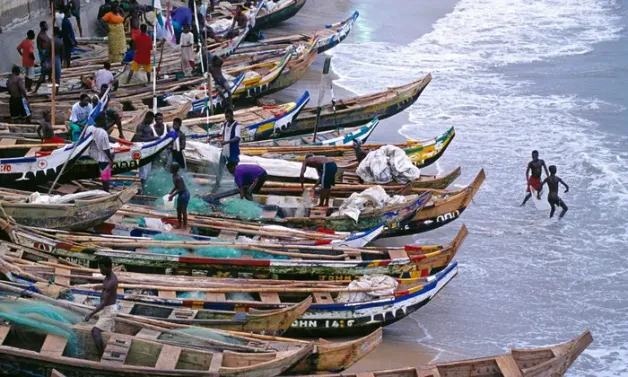
The report indicates that artisanal fishing communities are paying a heavy price with 94 percent of those surveyed by EJF reporting declining catches.
According to the report, 87 percent of fishers said their incomes have fallen in recent years while fish processors and traders face soaring prices, as capital that should sustain local livelihoods is diverted into the hands of industrial operators – many of which are ultimately owned by foreign interests.
Titled ‘Breaking the Vicious Circle’, the report documents systematic use of illegally modified nets, routine landing of undersized fish and continued, though reduced, practice of illegal fish exchanges – transshipments – at sea.
EJF estimates that between 53 and 60 percent of trawlers’ landings consist of bycatch. It noted that 96 percent of chub mackerel and 97 percent of round sardinella found in landed samples – important small pelagic species that should not appear in these catches at all – were below the minimum legal size.
This is fuelling the collapse of fish populations, devastating coastal livelihoods and undermining food security.
Despite these stark findings, government has taken bold steps toward reform. EJF indicated that a recent expansion of the Inshore Exclusion Zone to 12 nautical miles offers artisanal fishers greater protection from destructive trawling.
Also, at the UN Ocean Conference held in France last year Ghana committed to unmasking the true beneficial owners of fishing vessels and has since endorsed the Global Charter for Fisheries Transparency.
EJF believes these measures are vital steps to expose corruption and prevent foreign interests from exploiting Ghana’s seas in secrecy.
The civil society group says the reforms must build on a series of decisive actions – noting that illegal saiko transshipments have virtually ceased, sanctions against offending vessels have escalated from fines to licence suspensions and new gear directives have already delivered measurable improvements in catch selectivity.
More must be done to break the vicious circle of illegal bycatch and restore Ghana’s collapsing small pelagic fisheries.
Post Views: 1
Discover more from The Business & Financial Times
Subscribe to get the latest posts sent to your email.