
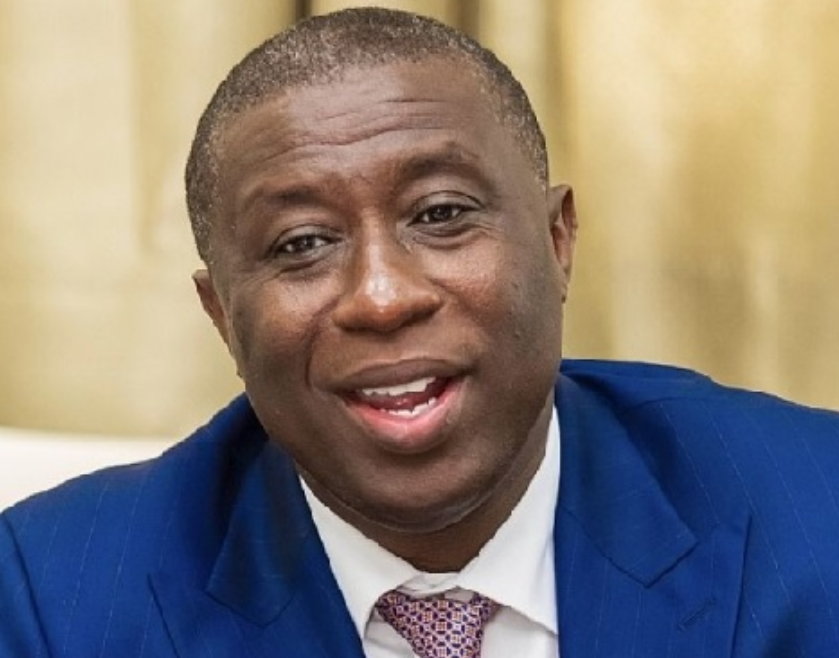

Member of Parliament for Okaikor Central, Patrick Yaw Boamah, has raised a very poignant observation; saying if successive governments had adopted long-term national programmes protected by law rather than frequently introducing new initiatives that disrupt continuity, the country’s development would have been smooth and not lopsided.
After nearly seven decades post-independence, the country’s development trajectory has been topsy-turvy to say the least.
Ghana’s development plans since independence have been shaped by various historical and political factors. The first comprehensive development plan was initiated in 1919, followed by the 1951 10-year development plan, the Seven-Year Development Plan for National Reconstruction and Development and the 40-Year Development Plan.
The National Development Planning Commission (NDPC) has been instrumental in these efforts, preparing long-term development plans such as Ghana Vision 2020, the 7-Year Development Plan and draft 40-Year Development Plan.
Despite these efforts, challenges such as limited capacity, political interference and lack of ownership have hindered the impact of development planning.
In inaugurating the 8th National Development Planning Commission (NDPC), President John Dramani Mahama highlighted the existence of multiple long-term development frameworks including the Ghana Beyond Aid Charter, Ghana@100 Long-term Development Framework and Vision 2057 Perspective Framework.
He consequently charged Dr. Nii Moi Thompson, the NDPC chair who led development of the 40-Year National Development Plan in 2017, to consolidate these efforts into a single, coherent plan.
Indeed, the Member of Parliament for Okaikor Central said Ghana’s pace of economic and infrastructural transformation has been constrained by political transitions, policy resets and shifting ideological priorities across administrations.
He argued that stability provided by the Fourth Republic of Ghana should have been used to design national development programmes that every political party would be required to pursue once in government.
Major infrastructure and social investment programmes should be supported by legislation and ring-fenced budgetary allocations to ensure they are implemented consistently regardless of changes in government.
While each initiative may have its own objectives, frequent policy changes can create implementation gaps and weaken long-term planning.
Improving macroeconomic environment can spur SME expansion if…
The country’s improving economic outlook presents fresh opportunities for small and medium enterprises (SMEs) to expand, formalise and attract investment.
A Senior Manager at Deloitte Ghana, Peter Nii Charway, highlighted this during a UK-Ghana Chamber of Commerce (UKGCC) and Deloitte Ghana webinar on ‘Ghana’s Economic Reset: What it means for Investors and SMEs’.
For SMEs, the improving conditions present both opportunity and urgency – especially in the economy’s agriculture, manufacturing and service sectors. He advises SMEs to improve financial discipline, maintain proper records and align their operations with these sectors to benefit from the improved conditions.
SMEs face diverse issues ranging from regulatory and policy bottlenecks to weak fundamentals. With interest rates still relatively high, banks continue to view SMEs as high-risk due to weak financial records, lack of collateral and inconsistent cash flows.
Formal financial institutions, such as traditional banks, often view SMEs as high-risk borrowers due to low capitalisation and lack of adequate collateral, resulting in high loan rejection rates.
Weak business models, limited scalability and lack of integration into value chains are impediments which inhibit SMEs from reaching their potential. Also, poor financial literacy among owners leads to poor cash flow management, improper record-keeping and mingling personal and business finances.
Several SMEs are owner-managed, often lacking formal training in accounting, human resources and strategic planning. Over 60% of SME owners consider bureaucratic hurdles – including high start-up costs, complicated licencing procedures and excessive tax rates – as major obstacles to growth.
Small businesses often have limited capacity to expand their market beyond their immediate community, or secure international trade contracts.
Governments of both developed and developing economies attach great importance to MSMEs in their economies. However, most of these micro-small businesses receive little and uncoordinated support from their governments.
Post Views: 1
Discover more from The Business & Financial Times
Subscribe to get the latest posts sent to your email.