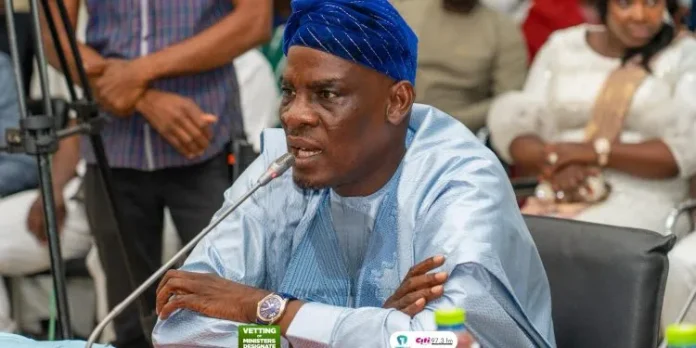

Education Minister Haruna Iddrisu is leading a comprehensive review of Ghana’s education curriculum aimed at equipping learners with skills needed for global competitiveness, with stakeholder consultations currently underway before the revised framework is finalized.
The Ministry has been actively gathering input from key education stakeholders throughout 2025 as part of efforts to modernize Ghana’s learning system. Once the curriculum revisions are completed, new textbooks reflecting the updated content will be printed and distributed to schools across the country.
The curriculum review focuses heavily on integrating 21st century competencies into Ghana’s education system from kindergarten through tertiary level. Speaking at various education forums this year, Iddrisu has outlined several key initiatives designed to transform how Ghanaian students learn and prepare for the future.
At a School for Life National Convening on the State of Public Basic Education in Tamale, the minister announced plans to introduce financial literacy, ethical integrity, and Artificial Intelligence learning in basic schools. He explained that financial literacy would help students develop business transaction skills, ethical integrity would foster responsible citizenship, and AI learning would prepare them for digital opportunities.
In a March interview on Joy FM, Iddrisu emphasized the need to introduce digital skills training at the kindergarten level, stating that early exposure to technology would prepare students for modern workplace demands and improve learning outcomes overall.
The curriculum revisions also address practical concerns that have emerged in current teaching materials. Iddrisu acknowledged in March that many textbooks remain outdated, noting that some geography texts still recognize only 10 regions instead of Ghana’s current 16 regions. The Ministry has also identified a critical shortage of teaching materials for local languages including Ga, Twi, Ewe, Hausa and Dagbani.
The 2025 Budget allocated GH¢564.6 million for procuring new curricula based textbooks, including revised subject materials and local language books. An additional GH¢145.5 million was set aside for the Capitation Grant to support basic education, while GH¢1.788 billion went to the School Feeding Programme.
President John Dramani Mahama announced in March that the textbook shortage would be resolved this year, with Iddrisu ensuring that new books would be printed by Ghanaian printers to keep resources in the country.
In April, Iddrisu inaugurated a 13 member steering committee chaired by Professor Amina Plummer to review the curriculum from Kindergarten to Basic Six. The committee includes senior education officials such as Mamle Andrews, Chief Director at the Ministry of Education, Professor George K.T. Oduro, Technical Advisor to the Minister, and Professor Yayra Dzakadzie, Director General of the National Council for Curriculum and Assessment.
Speaking at the committee’s inauguration, Iddrisu urged members to develop comprehensive policies to meet 21st century learning needs and produce ethical, responsible learners. He stressed that education holds the key to national success and that getting the foundation right would ensure everything else falls into place.
The minister has also announced plans to introduce a “Beyond Academic Skills” initiative. This program would allocate at least one hour for learners to undertake practical national exercises like farming or painting, building mental aptitude for practical tasks and developing assertiveness and responsibility.
For Senior High Schools, Iddrisu revealed that Form Two students would have the option to choose one major foreign language including French, Spanish, German, Chinese or another compulsory language to complement their area of study. This initiative aims to prepare students for a globally competitive world where business is increasingly conducted in widely spoken international languages.
The curriculum review addresses Ghana’s founding history controversy as well. Iddrisu expressed disappointment that 68 years after independence, confusion persists about Ghana’s founders. He tasked the review committee with settling the matter definitively in educational materials.
In Parliament last month, the minister announced plans to introduce integrity and ethics into the kindergarten curriculum as part of efforts to combat examination malpractices, particularly during the West African Senior School Certificate Examinations. The Ministry hopes that nurturing integrity early will build a culture of discipline throughout the education system.
At technical universities, Iddrisu has urged administrators to ensure hands on skills remain central to academic delivery. Speaking at Koforidua Technical University’s 22nd Congregation over the weekend, he challenged institutions to collaborate with industry in developing transformational curricula that will strengthen the economy and improve living standards.
Most recently, at this year’s National Conference of Principals of Colleges of Education in Ho, the minister called on teachers to embrace Artificial Intelligence and digital solutions to develop modern pedagogies. The week long conference, which concluded this week, focused on leveraging AI technology in colleges of education for improved teacher education.
In July, while inaugurating governing boards for the National Schools Inspectorate Authority and the National Council for Curriculum and Assessment, Iddrisu emphasized that curriculum reforms are critical to preparing Ghanaian students to thrive in the global economy. He specifically prioritized strengthening Science, Technology, Engineering and Mathematics education alongside Technical and Vocational Education and Training.
The comprehensive curriculum review represents the government’s broader reset agenda for education, aiming to make learning not only accessible and inclusive but also more meaningful and impactful. The Ministry expects stakeholder consultations to conclude soon, paving the way for implementation of the revised curriculum and distribution of updated teaching materials throughout the education system.