

The European Union (EU) and the German government have concluded the “Resilience against Climate Change – REACH” project in Northern Ghana.

Launched in 2020, the programme aimed at strengthening the capacity of smallholder farmers and vulnerable communities to cope with the effects of climate change.
It supported about 200 communities across Northern Ghana with climate-resilient agricultural infrastructure, training and improved farming practices.
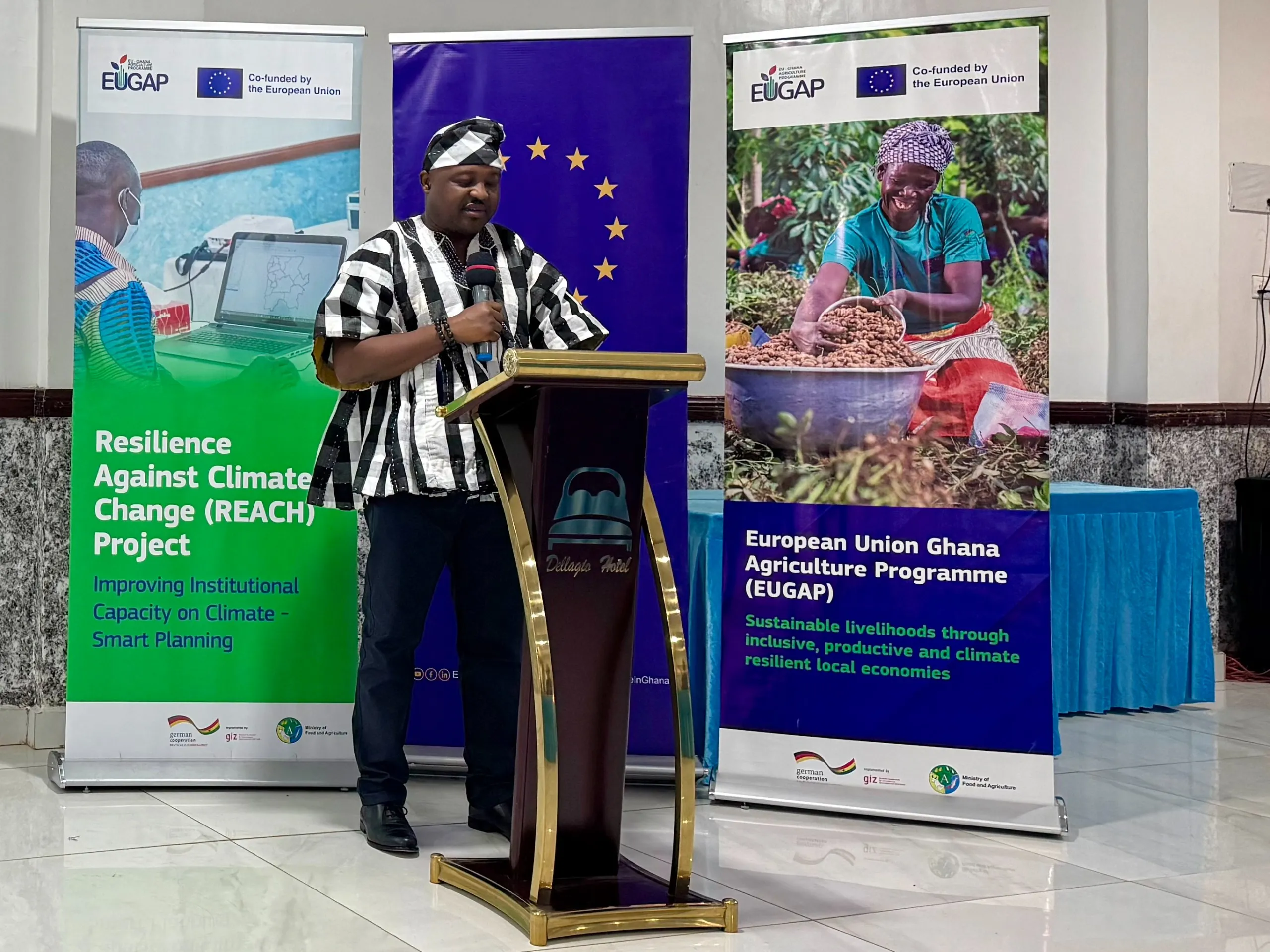
At a closing ceremony held in Wa in the Upper West Region, representatives of the European Union, the regional administration and the Ministry of Food and Agriculture highlighted the programme’s contribution to strengthening livelihoods and improving food security in the region.

Head of Infrastructure and Sustainable Development at the European Union Delegation to Ghana, Paulina Rozycka, said the initiative formed part of the EU’s broader support for climate-resilient agriculture in Northern Ghana.
“Climate change does not respect borders, and its effects are felt most by those who depend directly on the land,” she said, adding that the EU is proud to have supported farming communities in the Upper West Region.
One of the key interventions was in the Duori community, where a 200-metre irrigation canal was constructed to draw water from a local dam. The facility now allows farmers to cultivate about 100 acres of land during the dry season.
Before the irrigation system was built, farming activities stopped once the rains ended. Today, around 100 households are able to grow vegetables such as cabbage throughout the year, improving incomes and food availability.

The project also supported post-harvest management in Duang community with the installation of a solar-powered cold storage facility capable of preserving up to 10 tonnes of vegetables annually, including tomatoes, okra, green pepper and onions. The facility enables farmers to store produce and sell when market prices are favourable.
In addition, the project upgraded the Babile Agriculture Station in the Lawra District into a training hub for agricultural extension officers and farmers.
The facility now includes a 12-bed hostel, a 15-acre conservation agriculture demonstration site and three solar-powered mechanised boreholes. It is also equipped with tractors and conservation farming tools to support practical training.
More than 1,000 farmers and extension officers have so far received training at the centre in sustainable farming techniques.
The REACH project was implemented by Deutsche Gesellschaft für Internationale Zusammenarbeit under the EU-Ghana Agriculture Programme and funded by the EU and the German Federal Ministry for Economic Cooperation and Development.
Although the project has officially ended, the infrastructure and facilities will continue to be managed by local communities, district assemblies and the Ministry of Food and Agriculture. Officials say the initiative demonstrates the impact of collaboration between development partners and the government of Ghana in supporting agricultural resilience in Northern Ghana.
Post Views: 3
Discover more from The Business & Financial Times
Subscribe to get the latest posts sent to your email.