
The Environmental Protection Authority (EPA) says an estimated $35 million is required to fully restore the Birim River, which has been severely polluted by illegal small-scale mining (galamsey) activities.
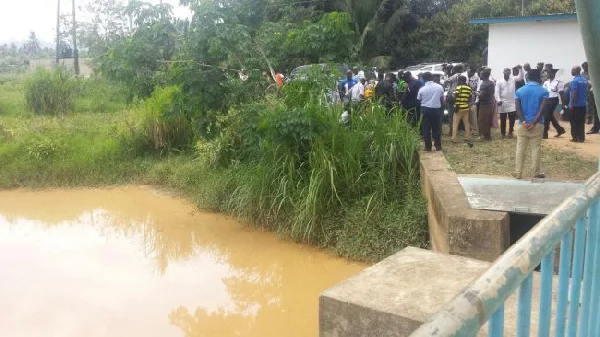
EPA Chief Executive Officer, Professor Nana Ama Browne Klutse, disclosed this figure while speaking to Citi News during a pilot demonstration of ionic nano copper technology at Kyebi-Adukrom in the Eastern Region on Tuesday.
According to Prof. Klutse, the technology has shown visible improvements in treated sections of the river in a short time, but scaling it up to cover the entire length of the Birim River will require significant investment.
She explained that approximately $200,000 is needed to procure enough of the ionic nano copper solution to treat one kilometre of a flowing river body.
“The Birim River is about 175 kilometres long, so you can do the mathematics, we are talking about $35 million,” she said.
Prof. Klutse noted that while the pilot intervention has produced promising early results, a sustained and substantial financial commitment from government and partners will be essential to return the river to acceptable environmental and health standards.
The Birim River, a major water source in parts of the Eastern Region, has been heavily degraded in recent years due to widespread illegal mining operations. The activities have led to high levels of turbidity, heavy metal contamination, destruction of aquatic habitats, and reduced access to safe drinking water for communities along its banks.
The deployment of ionic nano copper technology forms part of ongoing efforts by the EPA and other stakeholders to rehabilitate polluted water bodies and promote sustainable water resource management across Ghana.
Environmental experts and civil society groups have repeatedly called for increased funding and stronger enforcement measures to combat galamsey and prevent further damage to vital river systems.