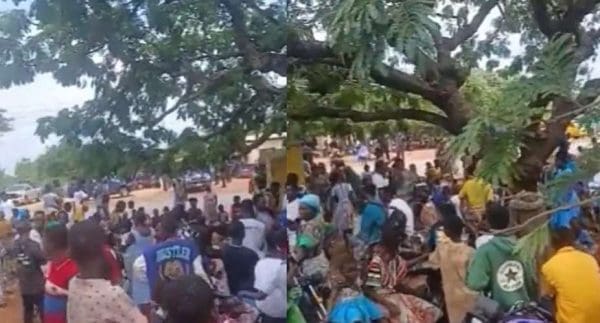

Foreign Affairs Minister Samuel Okudzeto Ablakwa has called on the remaining 5,309 Ghanaians in Côte d’Ivoire to return home following a deadly ethnic conflict that claimed 31 lives and displaced nearly 50,000 people in Ghana’s Savannah Region.
The appeal comes after approximately 8,000 Ghanaians successfully returned from neighboring countries, reducing the initial displacement figure from over 13,000 cross-border refugees. Ablakwa disclosed that more than 8,000 out of 13,253 Ghanaians who fled to Côte d’Ivoire due to the Gbiniyiri conflict have safely returned home, while additional displaced citizens sought refuge in Burkina Faso.
The Gbiniyiri conflict, which erupted in late August 2025, represents one of Ghana’s most devastating ethnic clashes in recent years. Deadly clashes between Gonjas and Lobis in the Savannah Region’s Gbeniyiri community have left 31 people dead, marking one of the year’s most devastating ethnic conflicts in northern Ghana. The violence originated from land disputes but quickly escalated across multiple communities.
During his three-day working visit to Côte d’Ivoire, Ablakwa delivered relief supplies and donated 6 million CFA to support thousands still stranded in Côte d’Ivoire. The gesture underscores the Mahama administration’s commitment to supporting displaced citizens regardless of their location.
The minister’s diplomatic engagement extends beyond immediate relief efforts. He emphasized Ghana’s reciprocal relationship with neighboring countries, noting that Ghana hosted approximately 17,000 Ivorian refugees during their civil conflicts in 2010 and 2011. This historical context frames current cooperation as part of established West African solidarity traditions.
Beyond Côte d’Ivoire, Ablakwa engaged Burkinabe authorities regarding 1,455 displaced Ghanaians in the Kpuere area within the South-Western region of Burkina Faso, a reduction from the tally of 2,500 refugees during the peak of the conflict. The declining numbers suggest gradual stabilization, though significant displacement challenges remain.
The conflict’s scale forced authorities to deploy over 700 military and police officers to restore order across affected communities. Some families are sheltering several dozen relatives in cramped rooms, while those in makeshift displacement camps often only have one meal a day, highlighting ongoing humanitarian needs.
President John Dramani Mahama’s administration has positioned the displacement response as demonstrating its commitment to all Ghanaians, regardless of location. Ablakwa’s statement that “every Ghanaian everywhere is valuable to the Mahama Administration” signals a foreign policy approach emphasizing citizen protection as a diplomatic priority.
The cross-border displacement reflects broader challenges facing West African communities where ethnic boundaries often transcend national borders. Land disputes, population pressures, and resource competition create conditions for conflicts that inevitably spill across international boundaries, requiring coordinated regional responses.
The gradual return of displaced persons depends largely on sustained security improvements in affected areas. While military deployment has contained immediate violence, underlying land tenure issues and ethnic tensions require longer-term resolution strategies to prevent recurring displacement.
Ghana’s diplomatic approach to the crisis demonstrates how humanitarian concerns can strengthen regional relationships. The mutual assistance between Ghana, Côte d’Ivoire, and Burkina Faso establishes precedents for future cross-border displacement scenarios, potentially enhancing regional stability mechanisms.
As repatriation efforts continue, success will be measured not only by the numbers returning but by the sustainable reintegration of displaced communities into their original settlements. The remaining 5,309 Ghanaians in Côte d’Ivoire represent both a diplomatic challenge and an opportunity to demonstrate effective crisis management.
The minister’s emphasis on preventing future conflicts while strengthening regional solidarity suggests recognition that displacement crises require both immediate humanitarian responses and long-term conflict prevention strategies to protect vulnerable populations across West African borders.