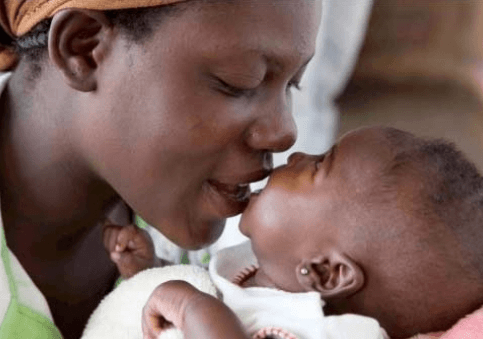

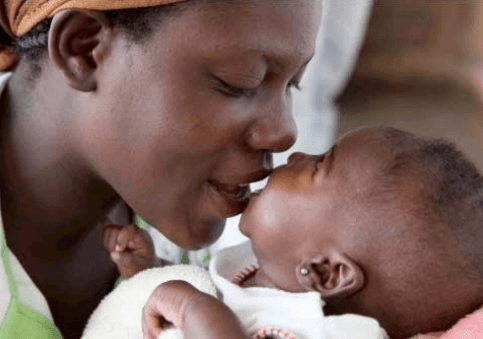
Ghana has launched its first Maternal Mental Health Policy (2026–2037) to integrate mental health services into maternal care nationwide.
The policy seeks to address mental health challenges affecting pregnant women and new mothers by embedding care from pre-conception through at least one year after childbirth.
At the launch in Accra, Mr Kwabena Mintah Akandoh, Minister of Health, in a speech read on his behalf by Dr Hafiz Adam Taher, said maternal mental health was essential to national development and social well-being.
He noted that the policy aligns with national priorities and global commitments, including the Sustainable Development Goals and the WHO Comprehensive Mental Health Action Plan.
“Maternal mental health is no longer optional; it is central to our health agenda and national progress,” he stated.
Supported by the World Health Organization and other partners, the policy is presented as a “national promise” to safeguard mothers’ well‑being, with officials stressing that “the mind of a mother is not a private matter, but a national asset.”
Mr Akandoh outlined plans to integrate mental health services into routine reproductive and child healthcare, strengthen community-based support systems, promote early detection, and build the capacity of health workers nationwide.
He said the Government was working to expand mental health coverage under the National Health Insurance Scheme, while strengthening collaboration with the Ministry of Gender, Children and Social Protection and local authorities.
The Minister said the Mental Health Authority and the Ghana Health Service would provide regular reports to track implementation and ensure accountability.
He urged stakeholders, including health professionals, policymakers, communities and families, to support implementation, reduce stigma, and encourage early care-seeking.
“No mother should suffer in silence. Together, we must ensure every woman receives the care, dignity, and support she deserves,” he said.
Dr Eugene Dordoye, Chief Executive of the Mental Health Authority, said a national analysis conducted with the World Health Organization showed that between 32 and 50 per cent of pregnant and postpartum women in Ghana experienced mental health conditions, mainly anxiety and depression.
He said despite the high prevalence, fewer than 10 per cent of affected women received care.
“This is not just statistic; it reflects a nation that has remained silent where support is needed,” he said.
Dr Dordoye explained that the policy adopted a community-based approach, shifting care from specialised psychiatric facilities to primary healthcare systems, including Community-based Health Planning and Services compounds.
The approach, he said, would equip midwives and community health nurses to identify early signs of emotional distress and provide timely interventions.
Dr Dordoye said maternal mental health extended beyond individual women to include family dynamics, infertility-related distress, and the emotional burden on male partners and healthcare providers.
The policy was developed through consultations with more than 80 stakeholders, including government agencies, academia, civil society, traditional and faith-based leaders, and women with lived experiences.
Professor Titus Beyuo, Member of Parliament for Lambussie Constituency, underscored the need to match policy ambition with adequate funding and legislative oversight.
He noted that mental health historically received less than three per cent of the national health budget.
“We are committed to ensuring that this policy is not just aspirational but fully funded and implemented,” he said.
Prof Beyuo said Parliament would advocate increased budgetary allocations to the Mental Health Authority and consider legal reforms to strengthen protections for mothers.
The policy has also received support from international partners, including the United Kingdom’s Foreign, Commonwealth, and Development Office (UK-FCDO).
Dr Terri Sarch, Development Director at UK-FCDO, said investing in mental health could yield significant economic returns, noting that every Ghana cedi invested could generate up to seven cedis in savings through improved health outcomes and productivity.
She called for a “whole-of-society” and “whole-of-government” approach involving sectors such as health, education, local government and security agencies.
Dr Fiona Braka, World Health Organization Country Representative, urged the Government to ensure effective implementation of the policy, while addressing stigma and encouraging women to seek care without fear or shame.
The Maternal Mental Health Policy provides a framework for integrating services into Reproductive, Maternal, Newborn, Child and Adolescent Health care, strengthening community-based support systems, improving early identification and referral, building workforce capacity, and addressing barriers to care.
Source: GNA