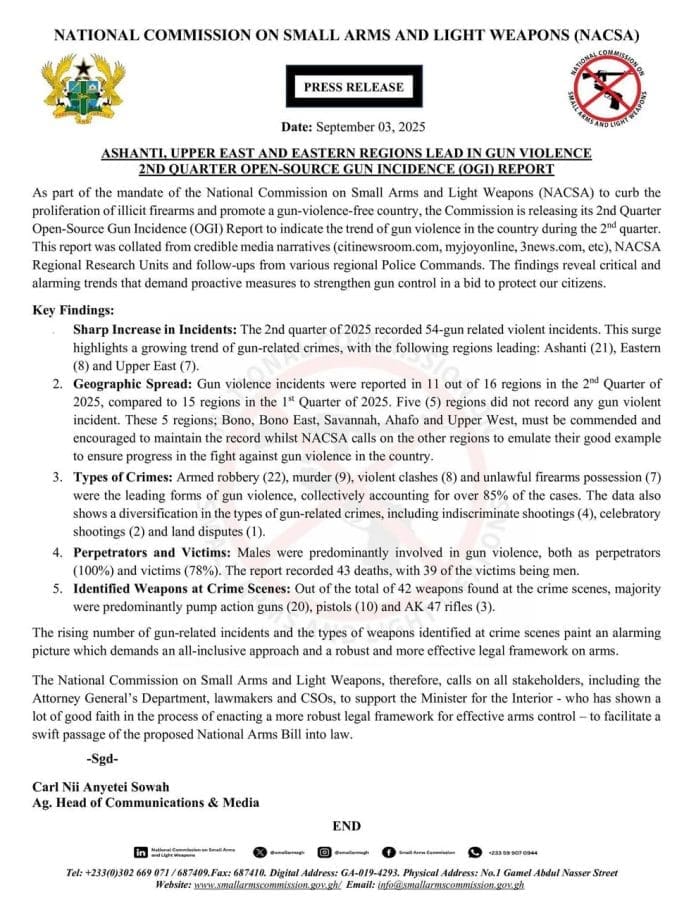

Ghana experienced a dramatic escalation in gun-related violence during the second quarter of 2025, with authorities reporting 54 incidents compared to 15 in the previous quarter, according to a new government report released this week.
The National Commission on Small Arms and Light Weapons (NACSA) published its Second Quarter Open-Source Gun Incidence Report on September 3, revealing the sharp rise in armed violence across the West African nation. The 260% increase has prompted urgent calls for stronger legislative measures and coordinated security responses.
Three regions dominated the violence statistics during the April-June period. Ashanti Region recorded the highest number with 21 incidents, followed by Eastern Region with eight cases and Upper East Region with seven. The data shows gun violence spread across 11 of Ghana’s 16 regions, indicating a nationwide security challenge rather than localized problems.
Despite the concerning trends, five regions—Bono, Bono East, Savannah, Ahafo, and Upper West—reported zero gun incidents during the quarter, offering potential models for successful violence prevention strategies.
The nature of the crimes reveals deeply troubling patterns. Armed robbery, murder, violent clashes, and unlawful firearms possession accounted for more than 85% of all reported cases. Additional incidents included indiscriminate shootings, celebratory gunfire, and land-related disputes that escalated to gun violence.
Demographic analysis of the violence reveals stark gender disparities. Males constituted 100% of perpetrators and 78% of victims in gun violence incidents. Of the 43 fatalities recorded during the quarter, 39 victims were men, highlighting the disproportionate impact on male populations.
Weapons recovery data from crime scenes provides insight into the firearms fueling the violence. Among 42 weapons recovered, pump action guns dominated with 20 seizures, followed by pistols with 10 recoveries and three AK-47 rifles. The prevalence of high-powered weapons suggests organized criminal networks with access to sophisticated armaments.
NACSA characterized the findings as alarming and advocated for comprehensive policy responses. The commission specifically called for an all-inclusive approach involving multiple government departments and civil society organizations to address the escalating crisis.
The report urged collaboration between the Attorney General’s Department, lawmakers, and civil society groups to support the Interior Ministry in developing robust legal frameworks for arms control. This multi-stakeholder approach recognizes that gun violence requires coordinated responses beyond traditional law enforcement measures.
The surge in gun violence comes amid broader security concerns in Ghana and the wider West African region, where arms proliferation has been linked to political instability, cross-border criminal networks, and economic challenges. The data suggests Ghana faces mounting pressure to strengthen both prevention and enforcement mechanisms.
Security experts have previously highlighted the need for community-based interventions alongside legislative reforms to address root causes of violence. The concentration of incidents in specific regions may indicate opportunities for targeted prevention programs in high-risk areas.
The commission’s findings underscore the urgent need for Ghana to enhance its small arms control mechanisms and develop comprehensive strategies that address both the supply and demand factors driving gun violence across the country.