
President John Dramani Mahama has announced bold reforms aimed at achieving greater economic sovereignty, including ending foreign financing for cocoa purchases and phasing out the export of raw mineral ores by 2030.
The President made the declaration at the closing session of his high-level side event titled “Accra Reset’s Addis Reckoning,” held on the sidelines of the 39th African Union Assembly of Heads of State and Government in Addis Ababa, Ethiopia.
In a statement from the Ghana Presidency, Mahama outlined plans to shift cocoa purchases to domestic financing in Cedis, breaking away from long-standing arrangements he described as exploitative.
“One of the key decisions we’ve made is to stop accepting foreign funding for the purchase of our cocoa. We are going to raise domestic bonds. We have enough Cedis in Ghana to pay for our cocoa,” he stated.
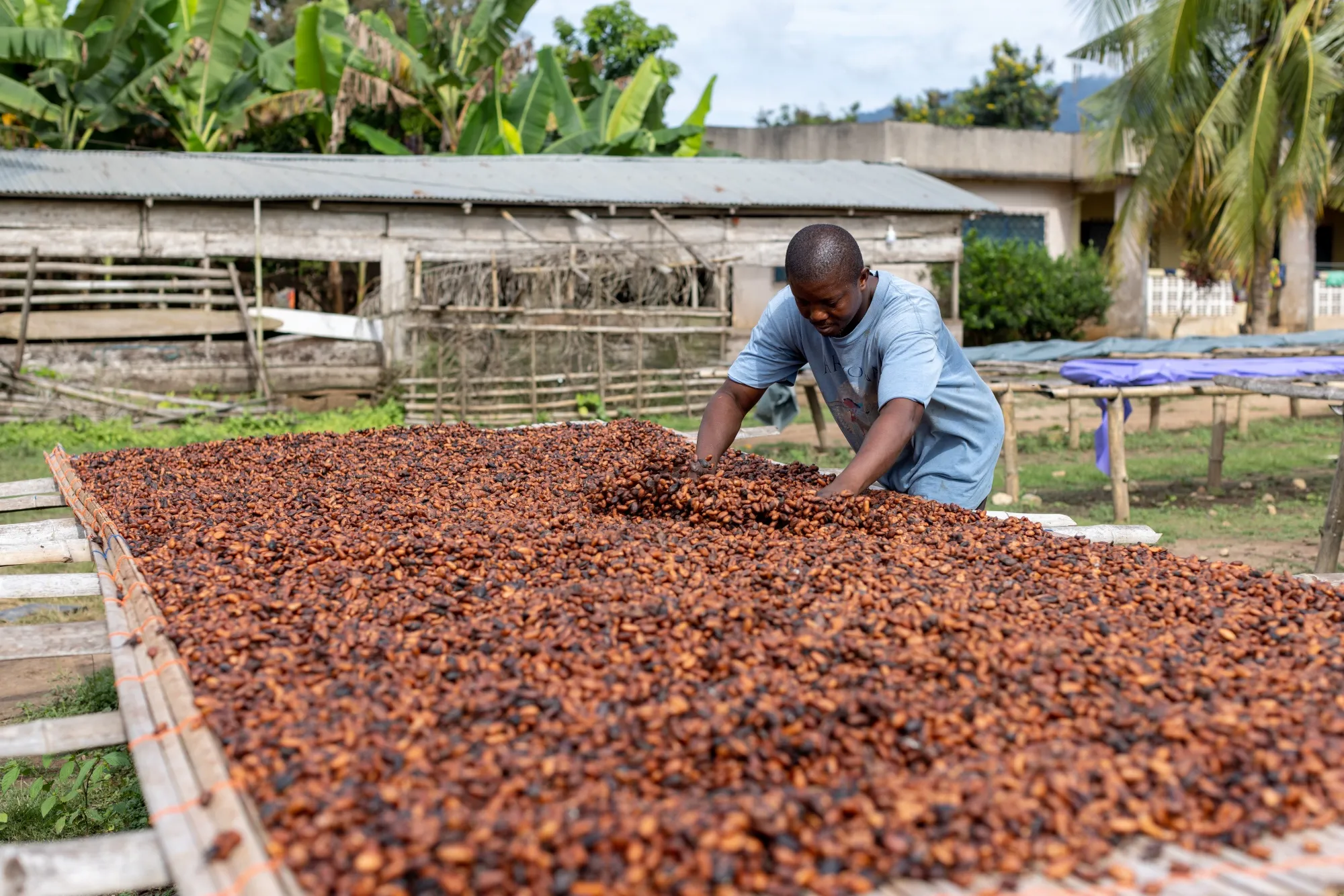
He highlighted how previous foreign financing models used cocoa beans as collateral, forcing Ghana to ship all beans abroad even though the country has the capacity to process up to 400,000 tonnes locally.
Under the current system, beans are pledged to financiers, purchased, shipped, and then sold at international market prices, limiting domestic value addition.
The new approach will allow Ghana to buy cocoa directly from farmers using funds raised through domestic bonds, freeing up significant volumes for local processing. This is expected to create thousands of jobs and retain more economic value within the country.
President Mahama also set a clear timeline for the minerals sector, declaring an end to raw ore exports.
“I say by 2030, there won’t be any raw mineral ores leaving Ghana. You’re not going to ship raw manganese ore out of Ghana. You’re not going to ship raw bauxite ore out of Ghana. You’re not going to ship raw iron ore out of Ghana. You must process all that locally,” he emphasised.
These measures align with the broader Accra Reset initiative, which seeks to restructure Africa’s economic relations by prioritising resource sovereignty, value addition, and industrialisation across the continent.
The President linked the reforms to the growing impatience of Africa’s youth, who demand visible progress and opportunities to curb irregular migration.
“Our young people are less patient than our generation. They want to see that progress and prosperity today,” he said, adding that such changes are essential to prevent young Africans from risking their lives crossing the Sahara and Mediterranean.
He stressed the need for urgency and implementation, urging a “coalition of the willing” to advance if full continental consensus is delayed.
“What is missing is urgency and implementation. We take time. And we behave like time is waiting for us,” Mahama remarked.
The announcements position Ghana as a leader in pushing for continental economic transformation, with the President calling for action over continued discussions.
“From Addis, we must stop talking and start implementing,” he concluded, framing the event as “the Addis reckoning.”