By Seraphine Nyuiemedi
The government’s 2026 budget has earmarked a significant GH¢30.5 billion for the ‘Big Push’ initiative aimed at transforming Ghana’s road infrastructure alongside a GH¢33.3 billion allocation to the education sector.
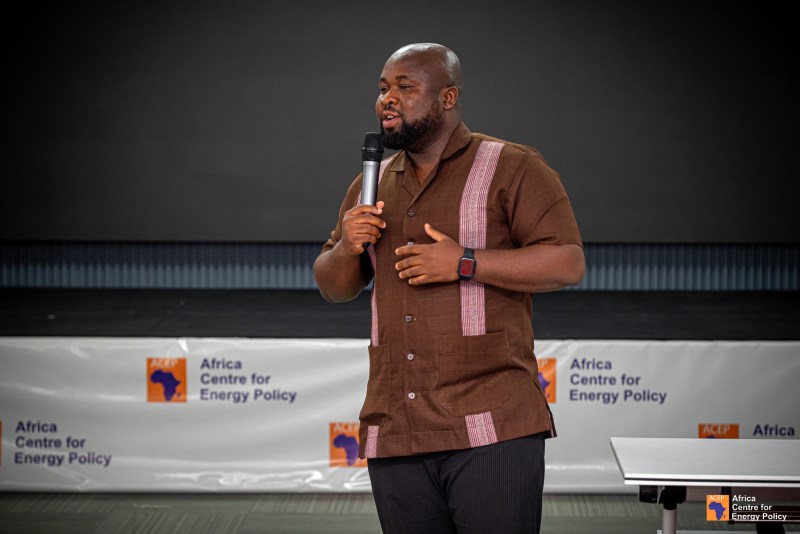
These ambitious investments signal a strong commitment to national development but have also raised concerns among journalists and stakeholders at a budget review workshop organised by the Africa Centre for Energy Policy (ACEP) due to critical gaps, particularly the absence of specific project timelines.
The ‘Big Push’ initiative focuses on key road construction and rehabilitation, including notable projects like the Bolgatanga-Bawku-Pulmakom Road, which is 95 percent complete and poised to strengthen trade links with Burkina Faso, the dualisation of the Accra-Kumasi Expressway at 64 percent completion, and major highways such as the Takoradi-Agona Nkwanta-Elubo, and Eastern Corridor roads, all at varying stages of progress.
Additionally, the government plans to build 50 bridges nationwide, including the Dikpe Bridge over the Tano River, Volivo Bridge across the Volta Lake, and the Adawso-Ekye Amanfrom Bridge, which will open the Afram Plains to large-scale commercial agriculture.

Routine and periodic maintenance is also prioritised, with over 21,000 kilometres of trunk, urban, and feeder roads scheduled for maintenance, plus an additional 25,000 kilometres targeted for upkeep in 2026. These efforts are designed to improve mobility, connectivity, goods movement, reduce road crashes, and boost trade and industry sectors.
Despite the clear scope of the ‘Big Push’ initiative and the fact that most contractors have mobilised and work is actively underway, significant concerns persist regarding the absence of detailed start and completion timelines for these projects.
While officials anticipate that most road projects will be completed by mid-2027, there is a lack of precise scheduling and transparent timelines, especially for bridge construction and extensive road maintenance efforts covering over 21,000 kilometres, with an additional 25,000 kilometres targeted for maintenance in 2026.

This absence of detailed project schedules has raised apprehensions among journalists and stakeholders at the ACEP workshop about potential delays and the sustainability of funding. Such vagueness risks eroding public trust and hampers effective tracking of government accountability, highlighting the need for clearer and more comprehensive implementation plans.
On the education front, the government has pledged robust support to improve infrastructure and quality. The 2026 budget allocates funds for constructing 200 new junior high schools, 200 primary schools, 200 kindergartens, 400 teacher bungalows, and sanitation facilities in underserved communities.

A curriculum overhaul emphasises practical skills like electronics, robotics, and artificial intelligence starting from kindergarten through primary six to prepare learners for the modern economy.
The education budget has risen by 18 percent from GH¢31 billion in 2025 to GH¢33.3 billion in 2026, reflecting the government’s strong commitment to advancing teaching, learning outcomes, and facilities. Nonetheless, concerns similar to those in the infrastructure sector have been raised at the ACEP workshop regarding potential funding shortfalls and the absence of clear delivery timelines.

Together, the infrastructure and education sectors are critical to addressing inequalities and vulnerabilities by unlocking market access, improving food security, increasing school enrollment, and fostering youth employment through relevant skill acquisition.
To maintain momentum and ensure these transformative investments achieve their objectives, the government must prioritise transparent, detailed implementation schedules alongside robust funding mechanisms.
Clear timelines will reinforce accountability, boost public confidence, and ensure these initiatives deliver tangible, measurable impacts throughout Ghana.