
The push to decouple Ghana’s Attorney-General’s Office from the Ministry of Justice has gained momentum as civil society voices warn that the current structure risks enabling political vendettas.
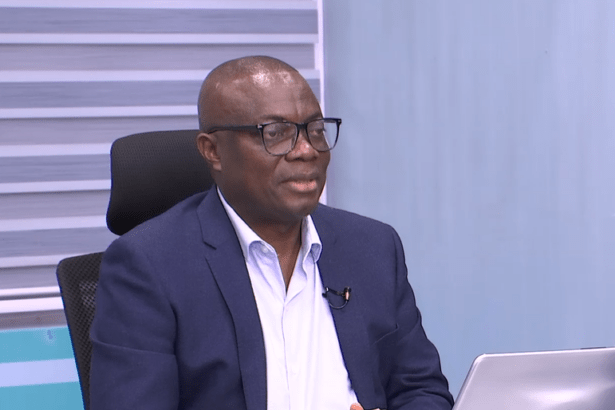
Mussa Dankwah, Executive Director of Global InfoAnalytics, has urged constitutional reformers to prioritize separating the roles, arguing that the existing system allows successive governments to weaponize prosecutions against opponents under the guise of accountability. His comments follow the Attorney-General’s abrupt withdrawal of criminal charges against two senior National Democratic Congress (NDC) officials, reigniting concerns over politically motivated justice.
Dankwah emphasized that merging the Attorney-General’s prosecutorial powers with the Ministry of Justice creates a conflict of interest, where legal decisions risk being swayed by partisan agendas. “Every incoming administration inherits a tool for persecution,” he noted in a recent Facebook post, referencing the withdrawal of cases against former NDC Chairman Samuel Ofosu Ampofo and Communications Officer Anthony Kwaku Boahen. The duo had faced charges linked to a controversial 2019 audio leak allegedly plotting violence against political rivals, accusations they denied. The Attorney-General’s office, now under Dr. Dominic Ayine, discontinued the case without public elaboration, fueling accusations of selective justice.
The controversy underscores a recurring pattern, Dankwah argued, where governments abandon calls for institutional reform once in power, only to decry “witch hunts” when in opposition. He proposed establishing an independent State Prosecution Department staffed by nonpartisan career lawyers to insulate legal proceedings from political interference. “No ruling party will eagerly prosecute its predecessors through an Attorney-General it appoints,” he stated, contrasting the situation with Ghana’s Office of the Special Prosecutor (OSP), which has maintained ongoing cases despite the recent political transition. The OSP’s perceived autonomy, he suggested, offers a model for reform.
The withdrawn case against the NDC officials centered on allegations that Ofosu Ampofo schemed to destabilize the country through kidnappings and arson, framing the then-ruling New Patriotic Party (NPP). Critics have long accused both major parties of exploiting legal machinery to target rivals, with the NDC previously condemning prosecutions under NPP administrations as partisan. Dankwah’s intervention reflects broader frustration over a cycle where “accountability” becomes synonymous with retribution, eroding public trust.
As Ghana debates constitutional amendments, observers warn that failing to address the blurred lines between legal and executive powers could perpetuate a system where justice bends to the whims of incumbents. The Ofosu Ampofo case, now closed without resolution, serves as a stark reminder of the stakes: without structural change, Ghana’s legal battles may remain less about truth and more about who holds the gavel.