


By Juliet ETEFE ([email protected])
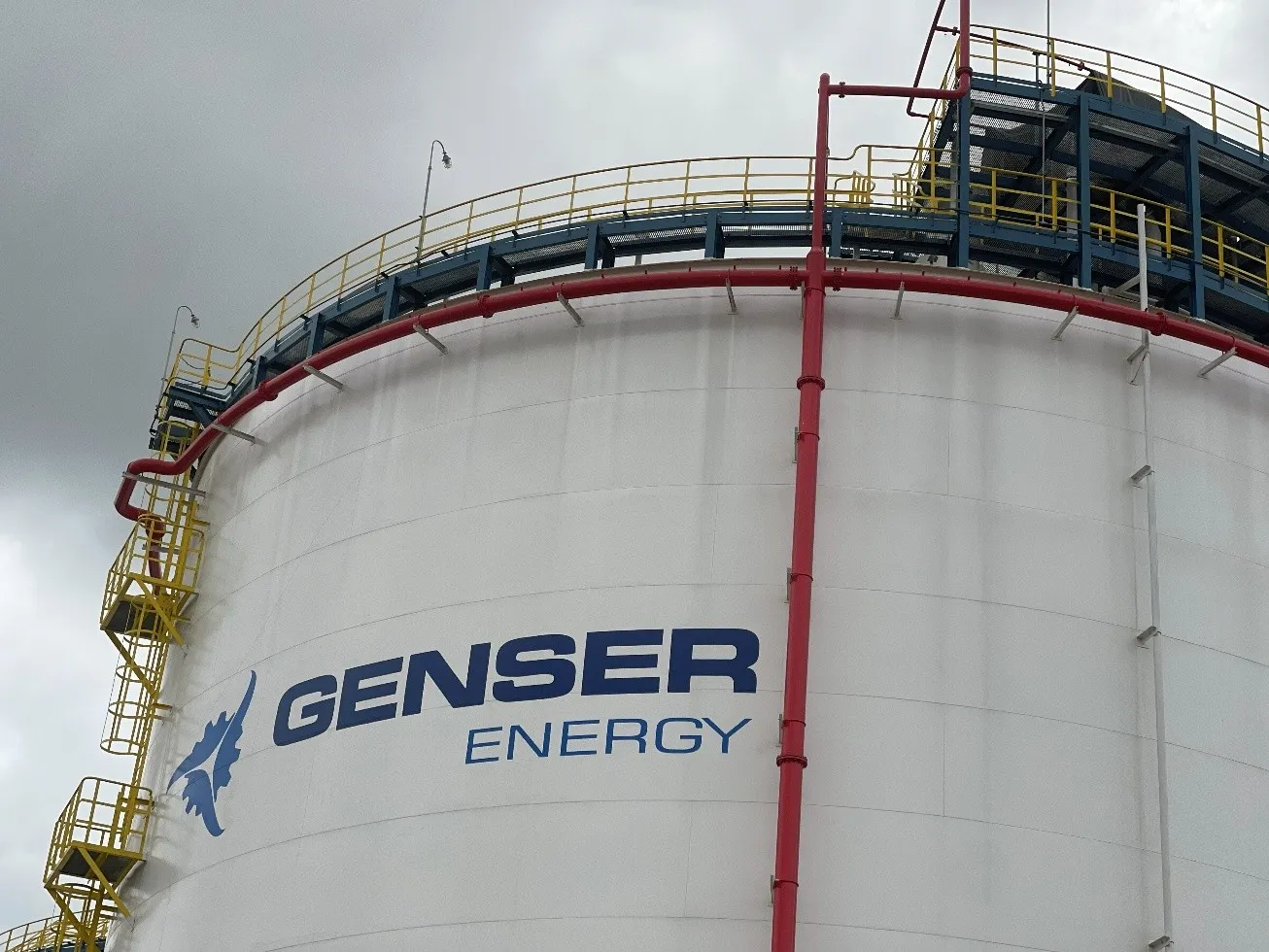
Ghana’s midstream gas sector is set to receive a major boost as Genser Energy edges closer to commissioning its 135 million standard cubic feet per day (MMSCFD) Gas Conditioning Plant (GCP), aimed at transforming local gas processing, enhancing energy reliability and creating new export opportunities.
The plant, located in Prestea in the Western Region, is in the final stages of construction, with full operationalisation expected in the coming months.

Mr. Francois Esterhuizen, GCP Plant Manager, told the Business & Financial Times in an exclusive interview that the project, which began construction three years ago, is about 95 percent complete.
“The last remaining works involve power plant installation and some final commissioning activities. We plan to start the commissioning from the beginning of April, targeting 50 percent operations by June, gradually building up to full capacity by August, 2026,” he said.

The GCP, Mr. Esterhuizen explained, is designed primarily to process and condition natural gas, producing key derivatives including ethane, propane, butane, isopentane and gasoline. The facility also has the potential to blend propane and butane into LPG for both domestic consumption and export driven by Genser Energy’s financing partner Trafigura.
“This plant will not only supply the local market but will also feed our Takoradi Natural Gas Liquids Export Terminal (TNET) storage facility for exports,” he added.
Midstream context
Ghana’s midstream infrastructure has historically centred on the Atuabo Gas Processing Plant operated by the Ghana National Gas Company, which has a processing capacity of about 150 MMSCFD. While Atuabo has supported thermal power generation and industrial supply for over a decade, rising gas demand and upstream output have prompted plans for a second national processing plant to potentially double capacity to around 300 MMSCFD.

Against this backdrop, private investments in gas conditioning, storage and transportation infrastructure such as Genser Energy’s are crucial in expanding the country’s processing footprint and reducing bottlenecks in the value chain.
Economic and Sectoral Impact
For Mr. Esterhuizen, the plant is more than just an industrial project; it is a strategic enabler for Ghana’s energy landscape. “The GCP will contribute to job creation and support the economy through exports of propane and butane, which can generate foreign income. Locally, it will enhance LPG availability, and through our power plants, we can produce electricity from natural gas, with excess energy fed back into the national grid.”
He highlighted the role of GCP in improving the reliability of gas supply for thermal power plants. “Our gas turbines require refined fuel, mainly methane and ethane. By separating higher hydrocarbons like propane and butane, we ensure a more efficient and optimized fuel supply for power generation, which ultimately enhances income generation across the value chain.”

Looking ahead, Mr. Esterhuizen noted future scalability saying: “While we start with 135 MMSCF/day using semi-wet gas, we plan to expand the plant to process wet gas in the future, which will increase product output. This represents a long-term vision for sustainable growth in Ghana’s midstream sector.”
He also stressed the importance of regulatory support. “Transparency and active engagement by regulatory bodies are critical. When regulators are involved, we can identify improvements, build trust, and ensure smooth operations. This fosters private sector investment in Ghana’s energy agenda.”
Inside the GCP: Technical overview
Mr. Nathaniel Nortey, Mechanical Reliability Manager at GCP explained that the plant is organised into six core operational modules, with provision for a seventh in the future.
Mr. Nortey outlined the modular structure of the plant, consisting of: Module 1: Gas reception and pressure regulation station; Module 2: Dehydration, sweetening, and temperature control; Module 3: Fractionation towers separating hydrocarbons; Module 4: Utility station providing power, nitrogen, and hot oil for process regulation; Module 5: Storage tanks for hydrocarbons and LPG.; and Module 6: Loading station for trucks and distribution.
Future modules under consideration include LNG liquefaction facilities for methane, enabling greater export potential. The plant’s construction, which began with extensive earthworks and foundations for cryogenic tanks, has progressed through mechanical and electrical installations, including transformers, instrumentation and switchgears.
“The plant is designed for a 50-year lifecycle, with the flexibility to expand capacity as gas availability increases,” Mr. Nortey noted.

TNET: Complementing the GCP
The TNET facility, Mechanical Reliability Superintendent, Nana Kwame Ohemeng-Mensah emphasised will complement the GCP as a storage and export hub for natural gas liquids, primarily propane and butane.
TNET has a storage capacity of 30,000 cubic metre for propane and 10,000 cubic metre for butane, equivalent to 30 million and 10 million liters respectively.
Mr. Ohemeng-Mensah explained that TNET will enhance Genser Energy’s power plant operations by segregating lower hydrocarbons for turbine fuel, improving efficiency and allowing higher hydrocarbons to be stored for export.

“Once operational in May 2026, TNET will receive processed liquids from our Prestea conditioning facility and support both domestic energy needs and export ambitions,” he said.
The facility will expand Ghana’s capacity to handle and export natural gas liquids. With its 30,000 cbm propane and 10,000 cbm butane storage tanks, TNET represents a significant new export‑oriented midstream asset in the West African context, with potential to support revenue generation and deepen Ghana’s role in regional energy markets.
Regulatory Perspective
Robert Yeboah, Senior Manager of the Natural Gas Regulations at the Energy Commission (EC), emphasised the importance of compliance and fair regulation.
“Genser Energy has gone through the necessary construction approvals and now enters the operational phase under regulatory oversight. Our role is to ensure open access, competitiveness, and transparency in the sector,” he said while the EC team tours the site towards operational license issuance.
Mr. Yeboah also applauded Genser Energy’s contribution to local capacity building saying “About 90% of their workforce is indigenous and they train young engineers to supervise and operate the plant themselves. This is vital for skills development and sustainability in Ghana’s energy sector.”
He advised that public understanding of private sector investments in gas remains limited. “Genser is a benchmark for private investment. Regulatory frameworks exist to ensure that private and government participation occur on a level playing field, promoting growth without creating monopolies.”

Transforming Ghana’s Gas Landscape
The combined impact of GCP and TNET is expected to strengthen Ghana’s energy reliability, increase export revenues and support local industries through improved gas supply. Beyond energy, the projects are creating infrastructure opportunities, with associated benefits for communities through job creation and local enterprise support.
For Genser Energy, Ghana’s midstream sector is evolving rapidly, driven by private investment, regulatory oversight, and technical innovation.
“This is just the first step. “Gas is the future and Genser Energy is leading the way from distribution to processing, power generation, and export, an ambitious leap that promises long-term economic and energy benefits for Ghana,” Mr. Esterhuizen said.
Post Views: 1
Discover more from The Business & Financial Times
Subscribe to get the latest posts sent to your email.