

By Christabel DANSO ABEAM
The Ghana Institution of Engineering (GhIE) in a presser has called on the Audit Service of Ghana to undertake an independent and comprehensive technical audit of road projects under government’s flagship “Big Push” infrastructure programme, citing growing concerns over procurement practices and project delivery.
The appeal follows recent investigations by The Fourth Estate, which uncovered widespread use of single-source procurement and restricted tendering in the award of contracts by the Ministry of Roads and Highways. The revelations have triggered public debate over value for money, transparency and compliance with procurement laws.
The “Big Push” programme is a government-led infrastructure acceleration initiative designed to fast-track the delivery of critical national projects—particularly in roads, transport and economic corridors—to stimulate economic growth, improve connectivity, reduce logistics costs and support industrialisation.
From a professional engineering perspective, GhIE noted that the scale of the programme which is estimated at GH¢110billion, with about GH¢85billion already committed, requires rigorous and independent scrutiny to safeguard the national interest.
It stressed that such unprecedented public expenditure must be subjected to a credible audit process to ensure infrastructure delivery meets required standards and that every cedi invested yields measurable value and efficiency.
While acknowledging a directive by President John Dramani Mahama for the sector minister to respond to the allegations, the Institution maintained that the gravity of the issues demands an independent audit to provide objective findings and restore public confidence.
GhIE grounded its request in Section 16 of the Audit Service Act, 2000 (Act 584), which empowers the Auditor-General to conduct special audits in the public interest and report to Parliament.
It further emphasised that the proposed audit should cover the full project lifecycle—from feasibility studies and engineering design to procurement, environmental and social compliance, and implementation — while warning that weaknesses at any stage could undermine cost efficiency, quality and long-term sustainability.
The Institution further pointed to the Public Procurement Act, 2003 (Act 663), which designates competitive tendering as the default procurement method, and the Public Investment Management Regulations, 2020 (LI 2411), which require proper feasibility assessments and inclusion of projects in an approved Public Investment Plan.
According to GhIE, strict adherence to these frameworks is essential to ensuring transparency, fairness and efficient use of public resources, cautioning that any deviation risks eroding public trust and compromising value for money.
The Institution however clarified that its call is not to apportion blame but to strengthen systems, establish clear standards for public project execution and enhance infrastructure delivery outcomes.
GhIE added that it is prepared to support the audit process with technical expertise to ensure credibility and depth, noting that its position has already attracted significant public attention following remarks at a recent national induction ceremony for engineers.
The Institution urged swift action to reinforce accountability and transparency as the country embarks on one of its most ambitious infrastructure investment drives.
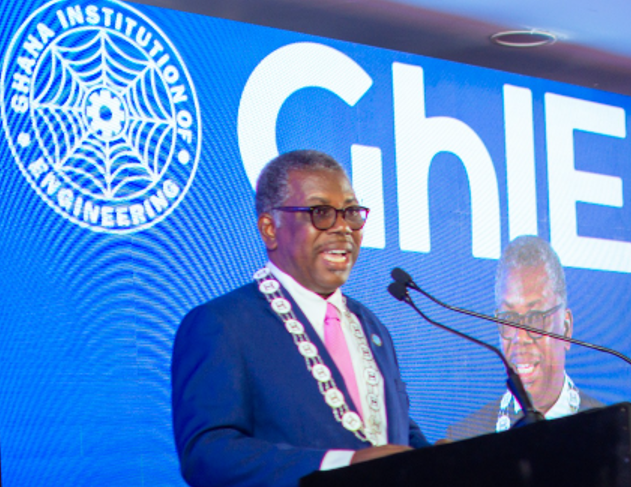
The presser was signed by the Ing. Ludwig Annang Hesse – President –GhIE and Ign. Dr. Enyonam kpekpena – Executive Director –GhIE
Post Views: 1
Discover more from The Business & Financial Times
Subscribe to get the latest posts sent to your email.