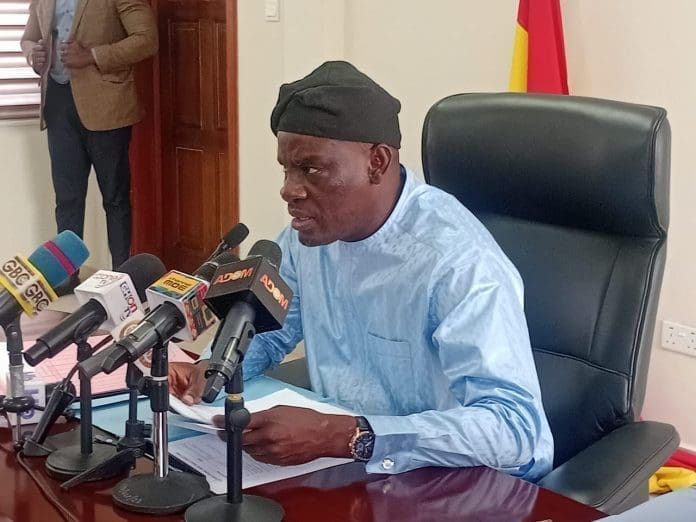

Education Minister Haruna Iddrisu has assured teachers that the government will review the country’s pension system to improve benefits for Ghanaian workers, with particular focus on ensuring better retirement security for educators who have dedicated their lives to national development.
The Minister gave the assurance while addressing delegates at the Second GESOPS Stakeholders’ Meeting 2025 held in Tamale in November, organized under the theme “Our Pension, Our Future.” The conference brought together Board Members of GESOPS, representatives from the National Pensions Regulatory Authority (NPRA), leaders of teacher unions, Regional Directors of Education, Ghana Education Service (GES) retirees, and other stakeholders from across the country.
According to Iddrisu, the event served as a vital platform for reflection, dialogue, and collaboration in the administration of the occupational pension scheme for Ghanaian educators. He described it as not just a meeting, but a reaffirmation of shared commitment to the welfare, dignity, and financial security of teachers, both active and retired.
“Teachers and education workers remain the cornerstone of national development, and securing their future through a robust, transparent, and efficient pension system is essential,” Iddrisu stated.
The Minister urged the Ghana Education Service Occupational Pension Scheme (GESOPS) to review its investment policy to include housing support packages for teachers, citing access to decent accommodation as a major challenge for many education professionals across the country.
Iddrisu announced on behalf of government that a five member committee has been put in place to look into housing for teachers. The initiative will facilitate the provision of two to three bedroom housing units, with the Minister emphasizing that such interventions would boost teacher motivation and ultimately improve teaching and learning outcomes nationwide.
“GES prioritizes the welfare of its staff and sees any organization that works to promote the same as a key ally,” Iddrisu explained. “It is in this light that GES considers GESOPS, managers of the tier two pension scheme for our staff, as strategic partners.”
The Minister gave assurance that GES would continue to support GESOPS to deliver a pension system that gives staff confidence and hope for their retirement. He emphasized that consistent dialogue and mutual understanding were key to building trust and addressing members’ concerns, particularly retirees seeking timely access to benefits.
Iddrisu commended the successful transition to a new scheme administrator, describing it as a major milestone that underscores GESOPS’ commitment to efficiency, accountability, and improved service delivery. He praised the Board, Secretariat, and stakeholders for their efforts since the scheme’s inception.
Acknowledging recent delays in contribution remittances, the Minister assured members that decisive steps were being taken with the Ministry of Finance to clear outstanding payments and ensure consistency going forward. This commitment addresses concerns raised by teachers about irregular pension contributions affecting their retirement planning.
The Minister urged GESOPS to continue leveraging technology to enhance transparency and improve access to information, noting that such initiatives would strengthen the scheme’s services and safeguard the future of Ghanaian educators. Digital platforms and automated systems are expected to reduce processing delays and improve communication with scheme members.
Cynthia Arthur, Chairperson of the Public Sector Workers Employees Pension Scheme (PSWEPS), congratulated GESOPS on its second stakeholders meeting and lauded its consistent efforts in ensuring transparency, accountability and member centered pension administration.
She noted that both GESOPS and PSWEPS share a common mandate of securing the retirement futures of public sector workers. Arthur emphasized collaboration in promoting sustainable investment practices and enhanced member education across the industry.
The pension review commitment comes amid broader government efforts to improve teacher welfare and working conditions. In the 2026 budget presented to Parliament in November, the Ministry of Education allocated significant resources for recruiting 6,100 new teachers and implementing infrastructure improvements across the education sector.
The Cabinet approved the teacher recruitment specifically in response to protests by unemployed trained teachers seeking absorption into the public education system. Iddrisu noted that education remains Ghana’s largest employer and that addressing teacher welfare issues remains a top priority for the government.
Beyond pensions and housing, the government has also partnered with the National Pensions Regulatory Authority on initiatives to introduce pensions education in schools. The NPRA proposed introducing a non scoring course or module on pensions across tertiary, secondary, and vocational institutions to provide young learners with vital knowledge on retirement planning.
Iddrisu described the proposal as both timely and significant, noting that it aligns with the ongoing review of Ghana’s national curriculum from Kindergarten to Primary Six. The Ministry committed to working closely with NPRA, with the National Council for Curriculum and Assessment (NaCCA) and the Ghana Tertiary Education Commission (GTEC) expected to engage with the authority to advance the proposal.
The comprehensive approach to teacher welfare reflects the Mahama administration’s recognition that improving conditions for educators is essential for strengthening Ghana’s education system. By addressing pension security, housing access, recruitment challenges, and professional development, the government aims to boost teacher morale and retention while attracting quality candidates to the profession.
The pension system review is expected to involve consultations with various stakeholders including teacher unions, pension trustees, the Ministry of Finance, and international partners to develop sustainable reforms that enhance benefits without compromising fiscal stability.