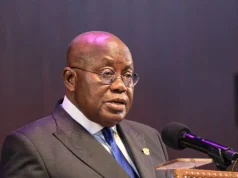
Deputy Finance Minister Thomas Ampem Nyarko has presented findings from an audit of arrears and payables inherited from the previous New Patriotic Party (NPP) administration to Parliament, revealing widespread irregularities, fictitious claims, and potential misappropriation totaling billions of Ghana cedis.
According to the Deputy Minister, the audit conducted by the Ghana Audit Service in collaboration with EY and PwC, examined a total of GH¢68.7 billion in unpaid Interim Payment Certificates (IPCs), invoices, and Bank Transfer Advices (BTAs) submitted to the Ministry of Finance by contractors and suppliers.
Of this amount, GH¢50.5 billion related to outstanding IPCs and invoices, while GH¢18.3 billion comprised outstanding BTAs.
According to the Deputy Minister, GH¢45.4 billion was validated as legitimate and payable. However, GH¢8.1 billion was outright rejected due to issues such as unsupported documentation, duplication, overstatements, already-paid items, falsified stores receipts advice, and no work done.
Further breakdowns showed that approximately GH¢1 billion in BTAs, processed by Ministries, Departments, and Agencies (MDAs) in 2024, approved by the Ministry of Finance, and pending at the Controller and Accountant General’s Department (CAGD), were rejected.
The Deputy Minister noted that this amount would have been paid had the current administration not halted payments in January 2025.
Additionally, GH¢7.1 billion in IPCs and invoices, certified across approval hierarchies, were rejected for reasons including absent supporting documents, duplications, recycled invoices, overstatements, and no work done.
Another GH¢13.3 billion remains unvalidated due to a lack of third-party confirmation, inadequate documentation, and missing supporting contracts.
Among the most alarming revelations was a fictitious debt of GH¢89.4 million under the One District, One Factory (1D1F) initiative.
According to the Deputy Minister, the then Ministry of Trade and Industry requested the transfer of this sum to five commercial banks as government interest contributions.
However, when auditors contacted the banks, all five denied any such liability, confirming the debt as fictitious. A separate recorded payment of GH¢10.5 million to a non-existent “Buffer Account” was also uncovered, with the cited account number not existing in the bank’s records.
The Deputy Minister indicated that these fictitious elements linked to 1D1F necessitate a full forensic audit of the scheme, especially given reported government contributions of GH¢391 million toward interest subsidies by the end of 2024.
The audit also exposed irregularities in Dry Spell expenditure for food security. According to the Deputy Minister, government paid for 34,000 metric tonnes (MT) of rice, but only 24,000 MT was received and distributed by the Ministry of Food and Agriculture, leaving 10,000 MT unaccounted for.
Similarly, payment was made for 100,000 MT of maize worth GH¢771.2 million, yet only 11,900 MT was supplied, despite certified stores receipt advice endorsed by the ministry’s internal auditor.
In grain transportation under the Farmer Food Relief and Recovery Programme, a company contracted for GH¢115.2 million to haul 134,000 MT transported only 35,000 MT (costing GH¢30.9 million) but received GH¢50 million in cash plus GH¢11.7 million worth of rice (7,311 MT equivalent), totaling GH¢61.7 million, amounting to an overpayment.
The Auditor-General rejected an additional GH¢65.2 million request for the same company.
Falsified Stores Receipt Advices (SRAs) worth GH¢9.4 million were uncovered for undelivered goods. The Ministry of Defence issued an SRA dated October 12, 2024, for vehicles for border surveillance and election monitoring, but none were delivered.
The Judicial Service claimed receipt of seven Toyota saloon cars via an SRA dated October 25, 2024, yet the supplier later admitted inability to deliver.
The Deputy Minister’s briefing, delivered during proceedings in Parliament, highlighted these findings as evidence of systemic fraud in arrears claims left by the NPP government.
He emphasised that the audit prevented potentially massive losses of public funds and underscored the administration’s commitment to fiscal transparency and accountability.
According to Thomas Ampem Nyarko, further actions, including forensic audits and possible recoveries, are expected to follow.