

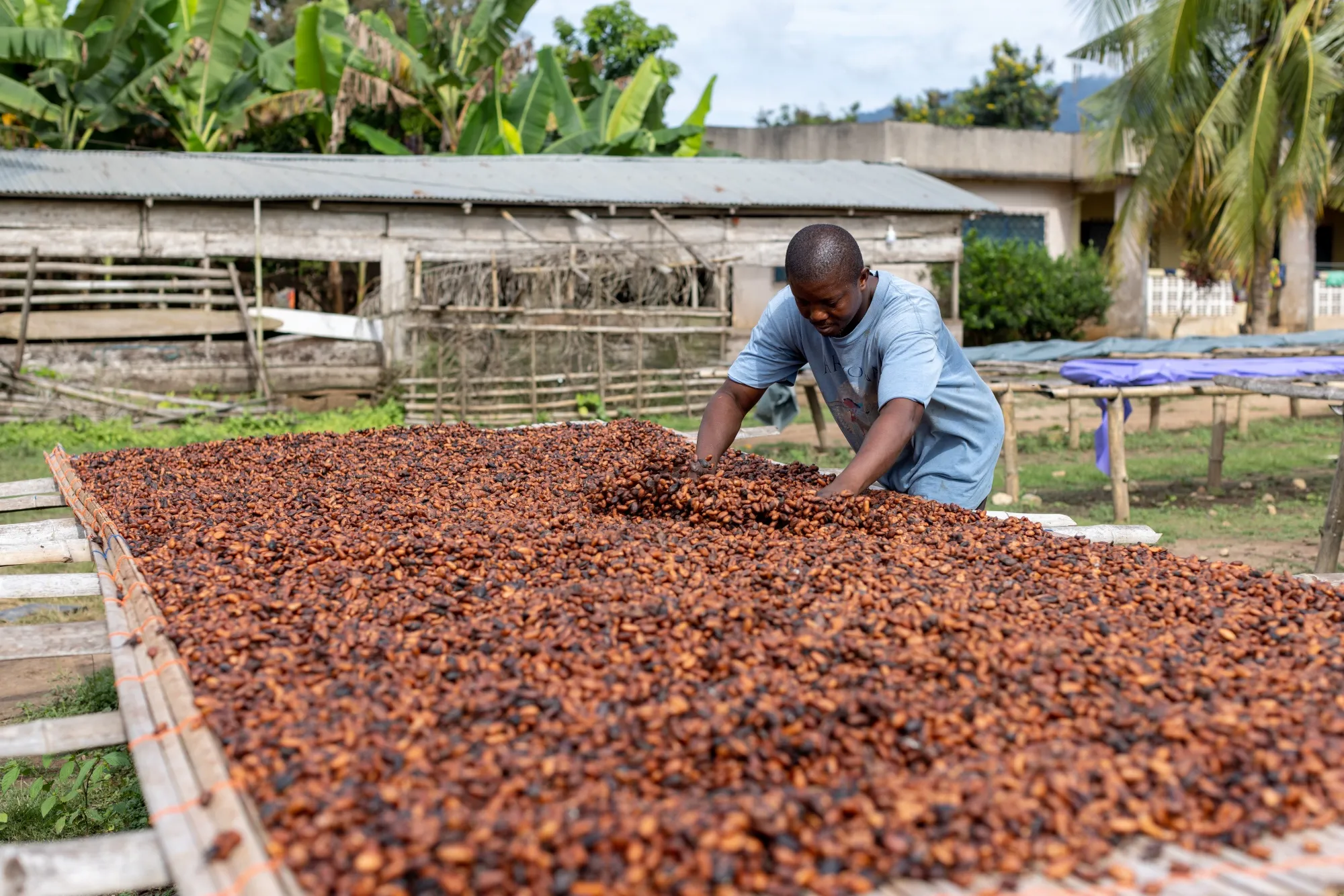
The Government of Ghana has announced a significant downward adjustment to the producer price of cocoa for the remainder of the 2025/2026 crop season, reducing it from GH¢51,660 per tonne to GH¢41,392 per tonne.
The new price, equivalent to GH¢2,587 per 64kg bag, takes effect immediately on Thursday, February 12, 2026, following approval by the Producer Price Review Committee (PPRC).
Finance Minister Dr. Cassiel Ato Forson made the announcement at a press briefing in Accra, explaining that the revision was driven by prevailing conditions in the international cocoa market.
He noted that the adjustment reflects the sharp decline in global cocoa prices, which have fallen significantly in recent months due to factors such as improved supply prospects in West Africa and weaker global demand.
The original producer price for the 2025/26 season, announced at the start in August 2025, was set at US$5,040 per tonne—representing a 62.58 percent increase in dollar terms—which translated to GH¢51,660 per tonne or GH¢3,228.75 per bag at the time, based on the applicable exchange rate.
The revised rate aims to align Ghana’s farmgate price more closely with current world market realities, restore confidence in the cocoa value chain, and prevent further competitiveness issues for local cocoa.
Dr. Forson emphasized that the move is intended to inject immediate liquidity into the sector, accelerate delayed payments to farmers who have faced challenges in recent months, and alleviate financial pressures at the farm level.
“This decision is part of broader reforms to ensure the long-term sustainability of Ghana’s cocoa industry,” the Minister said. “It is necessary to stabilise the sector, strengthen its financial footing, and secure better outcomes for our cocoa farmers.”
The announcement comes amid a global cocoa price slump, with benchmark futures trading around US$3,700–3,800 per tonne in February 2026, down substantially from peaks in late 2024 and early 2025.
The government has indicated that the price cut forms part of efforts to address ongoing challenges in the cocoa sector, including payment delays and structural issues affecting COCOBOD’s operations.