


By Joshua Worlasi AMLANU
Government will raise the country’s gross international reserves to an equivalent of 15 months import cover by end-2028 under a gold-backed accumulation strategy designed to reduce reliance on external borrowing and strengthen resilience against global shocks.
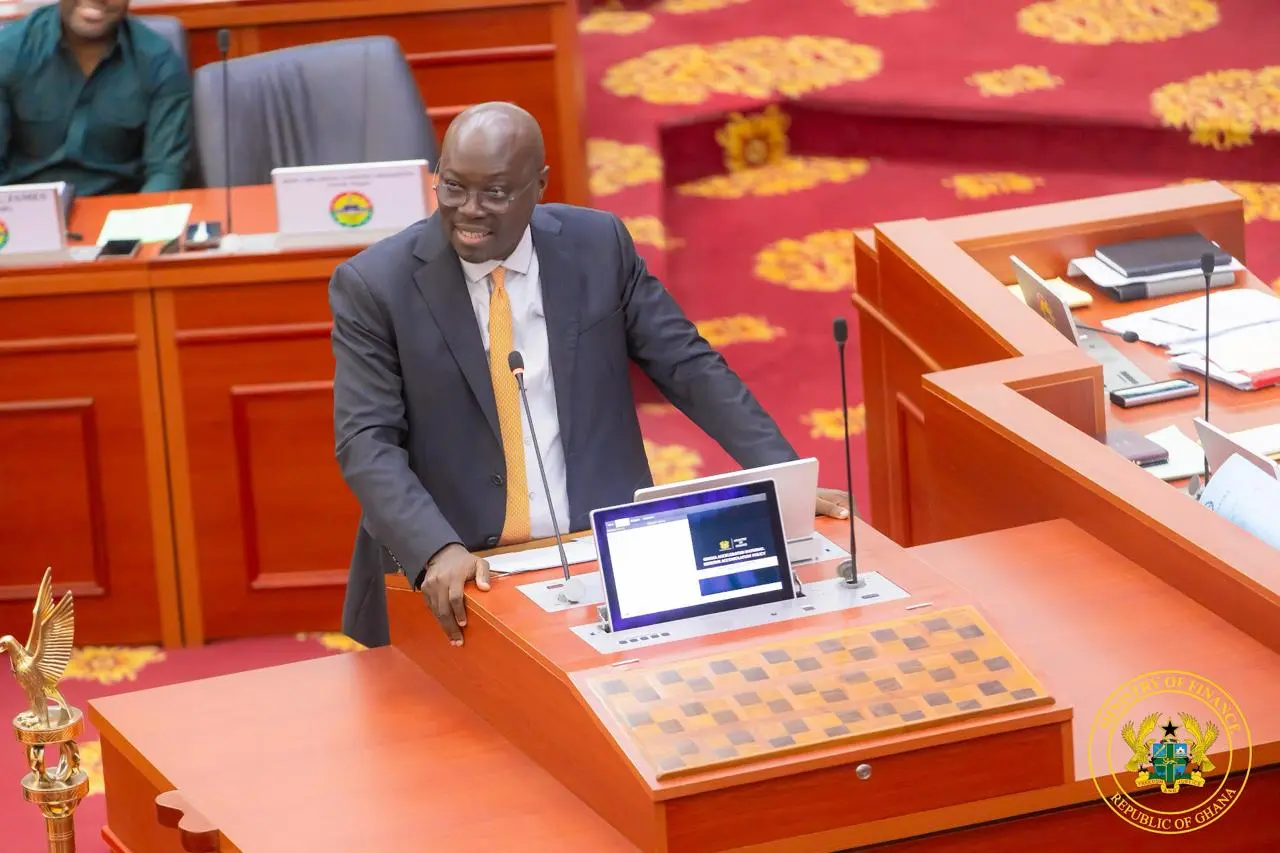
Presenting the Ghana Accelerated National Reserve Accumulation Policy (GANRAP) to parliament, Finance Minister Cassiel Ato Baah Forson said the current reserve level of 5.7 months import cover, though above the traditional three-month adequacy benchmark, is “not sufficient to provide adequate self-insurance against disruptive economic shocks”.
Gross international reserves rose to US$13.8billion at end-2025, equivalent to 5.7 months of import cover – up from US$8.9billion or 4.0 months in 2024. Under the new framework, reserves are projected to reach at least 8.6 months of import cover by end-2026, exceed 11.8 months by 2027 and attain 15 months by 2028.
“This implies an average annual accumulation of 3.1 months import cover over three years,” Dr. Forson said, adding that the policy seeks to build “a strategic buffer beyond the conventional reserve adequacy levels”.
After accounting for debt service, foreign exchange operations, energy sector payments and statutory outflows, government estimates that an average annual addition of about US$9.5billion will be required to meet the target.
The strategy’s operational anchor is a weekly gold purchase target of approximately 3.02 tonnes. At an assumed price of US$5,000 per ounce, annual gross receipts are projected at about US$25.28billion.
The minister described gold as “the most reliable and immediate instrument for accelerating reserve accumulation without increasing public debt or introducing distortions in domestic markets,” citing elevated global prices and sustained central bank demand.
The acquisition framework has two components. The Ghana Gold Board will purchase a minimum of 2.45 tonnes of gold per week from the artisanal and small-scale mining (ASM) sector. Over the next three years, the Board aims to mop up about 127 tonnes annually from ASM producers, generating more than US$20billion in foreign exchange each year at current prices.
In the large-scale sector, government will invoke pre-emption rights under the Ghana Gold Board Act, 2025 (Act 1140) and Minerals and Mining Act, 2006 (Act 703) to acquire at least 20 percent of output, equivalent to about 0.57 tonnes per week. Transactions will be conducted in cedis at prevailing interbank exchange rates and at volume-based discounts. The acquired doré will be refined locally before shipment to London Bullion Market Association refineries for bar casting and stamping into bars for addition to Ghana’s reserves.
The minister said gold acquired under this arrangement “shall only be sold by the central bank subject to prior approval of Cabinet and parliament,” underscoring the holdings’ strategic nature.
The policy marks a departure from Ghana’s previous reliance on borrowing to build reserves. Between 2017 and 2024, the Bank of Ghana and Ministry of Finance collectively borrowed about US$21.7billion to support reserve accumulation. Interest costs over the period amounted to US$3.84billion, in addition to GH¢7.3billion linked to a US$2.25billion domestic bond participation by Franklin Templeton.
Eurobond issuances totalling US$11.025billion between 2018 and 2021 carried coupon rates ranging from 7.6 percent to 9.6 percent, generating cumulative interest costs of about US$2.5billion. Ghana is scheduled to pay US$1.5billion of Eurobond debt service in 2026.
The minister said borrowing to support reserves “is unsustainable and leads to high debt distress and debt overhang”. He contrasted this with the Ghana Gold Board’s performance in 2025, when it generated about US$10billion in foreign exchange at a cost of US$214million. If the same amount had been raised through borrowing at yields of 8.0 percent, the interest cost would have been about US$800million in one year
The reserve expansion plan follows what government describes as a macroeconomic turnaround in 2025. Real GDP growth averaged 6.1 percent in the first three quarters of the year. Inflation declined from 23.8 percent in 2024 to 5.4 percent by December 2025 and further to 3.8 percent in January 2026. The 91-day Treasury bill rate fell from 27.7 percent at end-2024 to 6.4 percent in February 2026. Public debt dropped to 45.3 percent of GDP from 61.8 percent, while the current account posted a US$9.1billion surplus. The cedi appreciated 40.7 percent against the US dollar in 2025.
Beyond gold purchases, the policy outlines measures to expand foreign exchange inflows and reduce outflows. These include scaling up non-traditional exports such as cashew and shea, rehabilitating cocoa farms, accelerating development of new oil fields – including Pecan – and strengthening remittance mobilisation through digital financial systems.
Government also plans on implementing a Gas-to-Power Transformation Policy to reduce annual energy-related foreign exchange outflows estimated at about US$3billion. Maintaining fiscal discipline, including sustaining a primary surplus, will be critical to preserving reserve gains.
“Ghana is positioned to achieve and sustain reserves equivalent to fifteen months of import cover by 2028,” Dr. Forson said, describing this initiative as the country’s first deliberate national policy to build external reserves beyond conventional thresholds.
Post Views: 1
Discover more from The Business & Financial Times
Subscribe to get the latest posts sent to your email.