By Juliet Aguiar DUGBARTEY, Agona Nkwanta
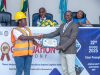
Twenty-seven rubber farmers within the operational areas of Ghana Rubber Estates Limited (GREL) have been honoured for their hard work, loyalty and consistent supply of raw rubber to the company.
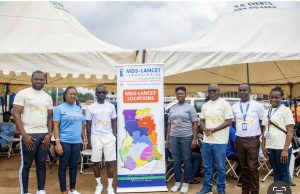
The event held at three locations; Tikobo No.2, Agona Nkwanta and New Subri all in the Western Region had awardees, drawn from the Western, Central and Ashanti Regions.
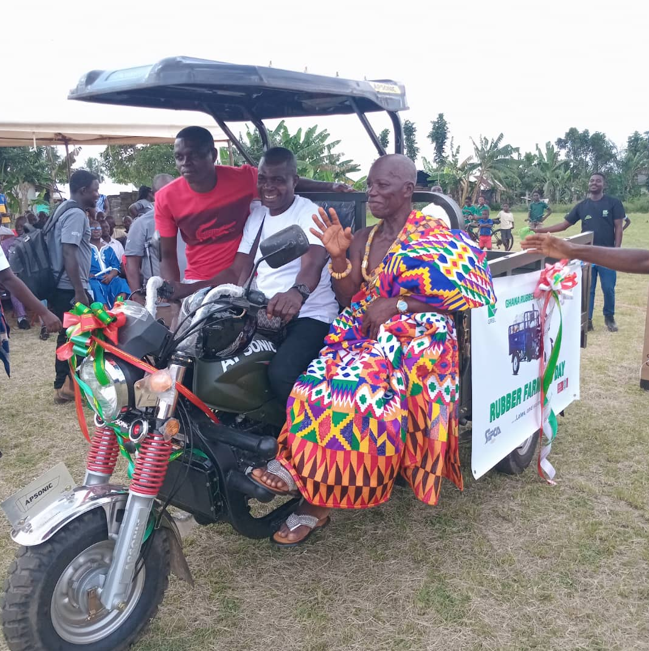
They were presented with various prizes including tricycles, gas cookers with cylinders, 43-inch television sets and certificates of recognition in appreciation of their dedication to sustainable rubber production.
The celebration, held on the theme “Sustainable Rubber, Stronger Future, Powered by Loyalty and Compliance,” underscored the company’s commitment to promoting responsible rubber production that meets current needs without compromising the future of the industry.
The occasion was also to strengthen the long-standing partnership with outgrower farmers, highlighting the various support services it provides, including training for farmers and tappers, technical farm visits, access to inputs and the assurance of a ready market for produce.
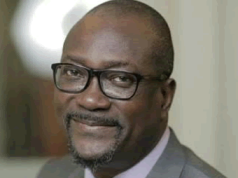
Speaking at the event, Samuel Berko, Head of the Rubber Technical Assistance and Purchase (RuTAP) Department at GREL explained that the decision to organize a company-specific farmers’ day was informed by the need to make the recognition more impactful and meaningful to farmers, rather than relying solely on the national awards platform.
He encouraged farmers to remain loyal to the company and comply with environmental and labour standards, stressing that sustainability, cooperation and mutual trust remain key to securing the future of the rubber industry.
Mr. Berko recalled that GREL implemented the Rubber Outgrower Plantation Programme (ROPP) between 1995 and 2016, developing over 30,000 hectares of rubber plantations for more than 8,000 farmers.

Through the programme, he said farmers were assured of a ready market for their produce as well as technical and logistical support to establish and maintain their plantations.
He pointed out that recent developments had strained the relationship, largely due to competition from side buyers.
“Some of our farmers have found new partners and neglected GREL. These partners are not interested in sustainability but profit. They deceive farmers with marginal price increases and even cheat on the scale,” he alleged.
He, however, assured farmers that GREL has remained committed to their welfare and the long-term growth of the rubber sector.
“As you know, we have been with you, we are with you and we will continue to be with you,” he said.
He outlined several forms of support provided by GREL to its out growers, including regular training for farmers and caretakers, training of tappers, technical visits to farms, specialized support for large-scale farmers, the decentralization of buying centres closer to farming communities, and the sale of farm inputs.
“These interventions are all aimed at ensuring that the rubber business remains sustainable,” he noted.
Despite failing to meet production targets this year due to stiff competition from side buyers, he commended farmers who remained loyal and worked hard to support the company.
He urged them to serve as ambassadors of sustainability and help bring back farmers who have strayed.
Dennis Adjei Antwi, the Ahanta West Municipal Director of the Ministry of Food and Agriculture (MoFA) advised rubber farmers to adopt environmentally friendly farming practices to help combat climate change while improving their livelihoods.
According to him, farmers must avoid activities that degrade the environment, particularly indiscriminate tree felling.
He noted that trees play a critical role in absorbing carbon dioxide from the atmosphere and reducing the effects of climate change.
He encouraged farmers to embrace agroforestry, explaining that rubber cultivation should go hand in hand with intercropping. “Rubber takes about seven years to mature before harvesting begins, so farmers cannot depend on rubber alone during that period. Intercropping provides alternative income to meet their daily needs,” he said.
He added that increased production would enable companies and farmers to invest more in their communities through corporate social responsibility projects such as building schools, laboratories and other social amenities to improve the living conditions of residents.
Christian Kweku Amedor, Best Rubber Farmer at the Agona Nkwanta advised the farmers to keep the best practices and send all their raw rubber to GREL.
Post Views: 30
Discover more from The Business & Financial Times
Subscribe to get the latest posts sent to your email.