
The U.S.–Iran war widened on Wednesday after a U.S. strike hit an Iranian warship off Sri Lanka, deepening a crisis that has paralysed shipping through the Strait of Hormuz for a fifth day and choked off vital Middle East oil and gas flows.
The U.S. submarine strike on the Iranian vessel came as U.S. President Donald Trump pledged to provide insurance and navy escorts to ships exporting oil and gas from the Middle East in a bid to contain soaring energy prices.
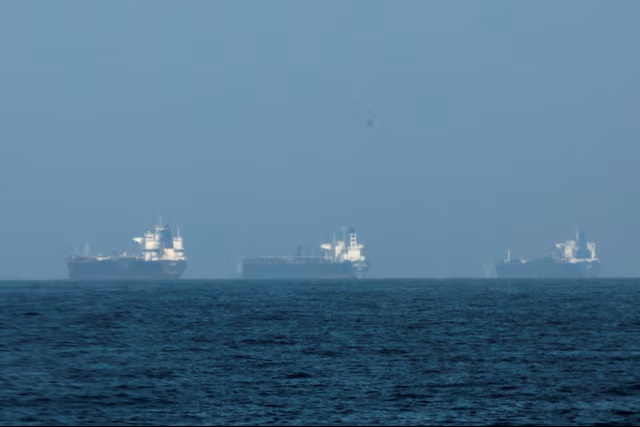
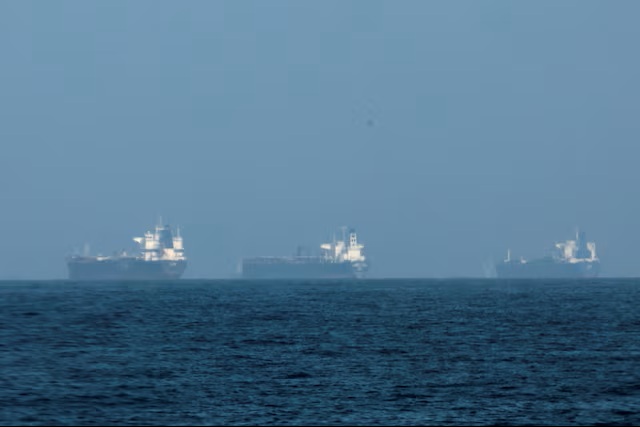
At least 200 ships, including oil and liquefied natural gas tankers as well as cargo ships, remained at anchor in open waters off the coast of major Gulf producers, including Iraq, Saudi Arabia and Qatar, according to Reuters estimates based on ship-tracking data from the MarineTraffic platform.
Hundreds of other vessels remained outside Hormuz, unable to reach ports, shipping data showed. The waterway is a key artery for around a fifth of the world’s oil and LNG supply.
The Maltese-flagged container ship Safeen Prestige was also damaged by a projectile as it sailed toward the northern end of the Strait of Hormuz earlier, prompting the crew to abandon ship, shipping sources said.
Qatar will fully shut down gas liquefaction on Wednesday and won’t return to normal production and exports for at least a month, two sources familiar with the matter told Reuters. Gas giant QatarEnergy declared force majeure on shipments of LNG after attacks on its production facilities.
Iraq cut its oil production as the country ran out of storage, unable to load it in tankers. Saudi Arabia, the UAE and Kuwait were also struggling to load oil but it was not yet clear if they cut output.
Despite the gridlock, a rare voyage took place on Tuesday when the Suezmax tanker Pola sailed through the Strait of Hormuz to the UAE to load crude, according to industry sources and LSEG ship-tracking data.
The Pola had switched off its AIS transponder late on March 2 as it approached the Strait and reappeared the next day off Abu Dhabi.
Trump on Tuesday said he had instructed the U.S. International Development Finance Corporation to provide political-risk insurance and financial guarantees for maritime trade in the Gulf.
“No matter what, the United States will ensure the free flow of energy to the world,” he wrote in a social media post.
Oil prices dipped on Wednesday, but were up 12% since the war started on Saturday, as U.S.-Israeli strikes on Iran disrupted Middle East supplies.
On Wednesday, Goldman Sachs raised its forecast for Brent crude oil in the second quarter by $10 to $76 per barrel. It also raised its prediction for WTI by $9 to $71 per barrel.
The bank said it sees longer-than-expected disruption to exports of oil and gas through the Strait of Hormuz and damage to oil production facilities as risks. It also assumes that low oil flows through Hormuz will lead to large declines in OECD inventories and Middle East production in March.
“Providing protection for all tankers operating in areas currently threatened by Iran is unrealistic as this would require a very high number of warships and other military assets,” said Jakob Larsen, chief safety and security officer with shipping association BIMCO.
Some Asian refiners and petrochemicals companies face output cuts because they are unable to get prompt replacement cargoes from their suppliers in the Gulf due to the shipping standstill.
India’s Mangalore Refinery and Petrochemicals and Petronet LNG both issued force majeure notices due to the disruptions.
Asia sources 60% of its oil from the Middle East, leaving the region vulnerable to the disruptions. Refiners in Indonesia and Japan are sourcing more oil from the U.S. to replace the shortfall. India will consider buying more from Russia, sources at two companies have said.
Saudi Aramco’s largest domestic refinery and key crude export terminal Ras Tanura was struck on Wednesday, four sources said.
DISCLAIMER: The Views, Comments, Opinions, Contributions and Statements made by Readers and Contributors on this platform do not necessarily represent the views or policy of Multimedia Group Limited.
DISCLAIMER: The Views, Comments, Opinions, Contributions and Statements made by Readers and Contributors on this platform do not necessarily represent the views or policy of Multimedia Group Limited.
Source link