

By Elizabeth PUNSU, Kumasi
The local poultry industry is recording notable progress under the Harmonising Agricultural Productivity and Profitability (HAPPY) Programme, with stakeholders reporting improved competitiveness, rising investment and expanded year-round market access for locally produced chicken.
According to Agribusiness and Value Chain Specialist at Agri-Impact, Abraham Sarfo, although the cedi’s recent strengthening has made poultry imports relatively cheaper, local producers are also benefitting from easing production costs, improved processing capacity and stronger market linkages – developments that are helping domestic poultry compete more favourably.
“We are competing favourably with imported products. The economic situation has made imports cheaper – but on the other hand production costs are also improving, though not yet at the level we expect. As the economy improves, our competitiveness will also improve,” he said.
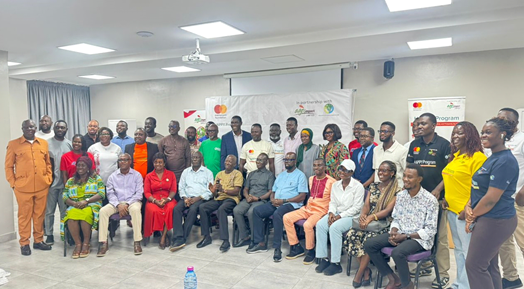
Mr. Sarfo who speaking at a stakeholder workshop for the poultry master plan in Kumasi and indicated that, through the HAPPY Programme, more than 4.6 million birds have been produced.
He added that the sector has also attracted fresh investment, including new feed formulations and improved processing capacity.
He mentioned that some processors are now supplying high-end markets such as fast-food chains, while others have upgraded packaging standards to rival imported products.
“During the recent Christmas season, partner outlets in Accra, Kumasi and other urban centres supplied freshly produced broilers, helping shift consumer preferences toward local chicken. Previously, producers waited for Christmas to sell. Now, we are creating opportunities for poultry to be sold throughout the year at competitive prices,” Mr. Sarfo said.
Mr. Sarfo acknowledged that banning poultry imports is neither realistic nor desirable in a liberal market system. Instead, he stressed the need to strategically position local poultry as a preferred choice by highlighting its quality, freshness and taste.
Poultry sector capacity still undersutilised
Despite the progress, stakeholders believe the industry is still operating far below its potential. Data from field assessments show that less than 20 percent of the sector’s capacity has been fully tapped, pointing to significant room for growth through technology, innovation and targetted investment.
Business Development and Research Manager, Agri-Impact Limited, Prince Manu Yeboah revealed that about 60 percent of poultry investment structures nationwide are underutilised.
In the Dormaa enclave – home to roughly 60 percent of poultry activities – facilities with a combined capacity of about 5.2 million birds are operating at only around 50 percent. In Ashanti Region, the second-largest poultry hub with about 4.2 million bird capacity, utilisation stands at roughly 60 percent.
Processing remains another major gap, with only about half of broiler production processed locally while most layer birds are exported to Côte d’Ivoire.
According to Mr. Manu Yeboah, the HAPPY programme has so far leveraged about US$35million in investment, created approximately 8,000 jobs along the value chain and supported more than 10,000 people engaged in poultry-related trading activities. Much of the foundation support has focused on input provision to young farmers through farm-level interventions.
Looking ahead, Mr. Manu Yeboah called for more calibrated and targetted investment, stronger institutions and greater inclusion of young people and women.
“We need technology and innovation to drive the industry, apply data and monitoring systems and ensure profitability. Institutional strengthening, inclusion and the voice of young people are critical if the poultry sector is to reach its full potential,” he added.
Post Views: 10
Discover more from The Business & Financial Times
Subscribe to get the latest posts sent to your email.