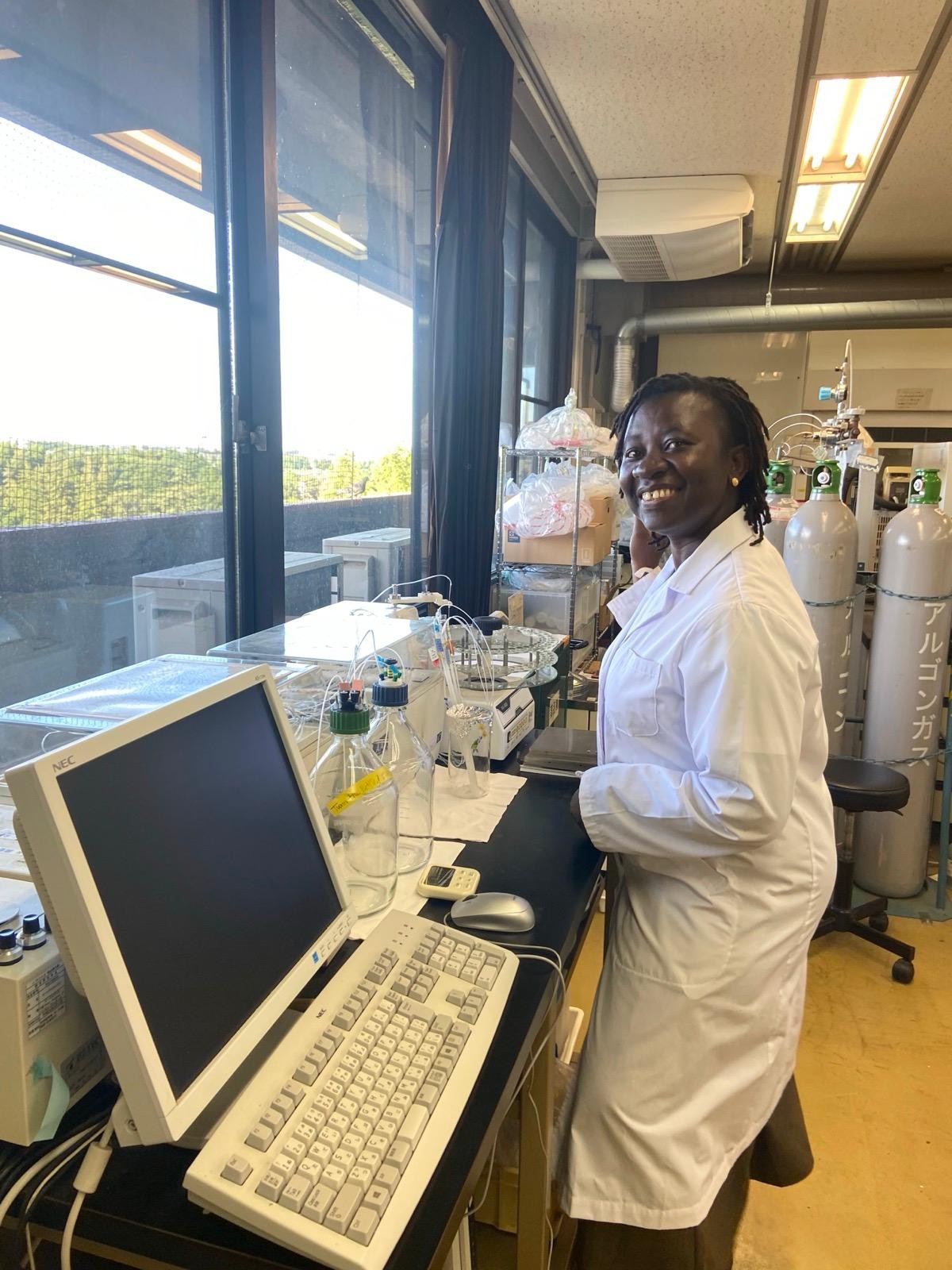

By Dr Elsie SARKODEE-ADDO
Rice, the staple food for more than half of the world’s population, faces mounting threats from drought, soil degradation and the excessive use of chemical fertilisers. As global food security hangs in the balance, scientists are rediscovering nature’s ancient partners: beneficial microorganisms.
These microscopic allies form symbiotic relationships with plants, enhancing their ability to withstand stress, absorb nutrients and increase yields naturally.
Beneath every rice field lies a complex ecosystem of microbes working in harmony with plant roots. Arbuscular mycorrhizal fungi (AMF) act as nature’s nutrient brokers, extending their hyphal networks far beyond the plant’s root system to deliver water and phosphorus directly to their hosts. These fungi not only improve drought resistance by enhancing water uptake, but also increase nutrient-use efficiency and reduce nutrient leaching, ensuring vital elements remain available for plant growth.
Complementing these fungal networks are plant growth-promoting rhizobacteria (PGPR), which perform equally critical functions. They fix atmospheric nitrogen, solubilise bound phosphates and produce growth-stimulating hormones that strengthen root systems. Together, these microorganisms provide a sustainable alternative to synthetic inputs, reducing agriculture’s dependence on chemicals while restoring soil health.

However, these vital microbial communities face unprecedented threats from human activity. The overuse of agrochemicals creates toxic environments in which both pests and beneficial organisms perish. Illegal mining operations strip away fertile topsoil, leaving barren landscapes devoid of microbial life. Deforestation and unsustainable farming practices further disrupt these delicate underground ecosystems.
The consequences are severe. As microbial partners are lost, so too are nature’s free services — natural pest control, efficient nutrient cycling and enhanced drought resilience. Farmers are then forced into greater reliance on costly chemical inputs, creating a vicious cycle of soil degradation and declining productivity.
At the forefront of microbial research is Dr Elsie Sarkodee-Addo, a plant scientist whose work spans continents in pursuit of sustainable solutions. After contributing significantly to agricultural research at the Savanna Agricultural Research Institute (SARI), she now continues her work at the Tokyo University of Agriculture and Technology (TUAT) in Japan, focusing on microbial solutions for rice cultivation.
Her groundbreaking study, published in the Agronomy Journal and titled “Arbuscular Mycorrhizal Fungi Associated with Rice (Oryza sativa L.) in Ghana: Effect of Regional Locations and Soil Factors on Diversity and Community Assembly”, highlights how local soil conditions shape microbial communities. The findings underscore a critical point: effective microbial solutions must be tailored to specific environments.

“Microbes are not one-size-fits-all. They are not universal remedies,” she explained. “Their effectiveness depends entirely on the soil type, climate and farming practices of each region. By understanding these relationships, we can develop truly effective biological solutions for farmers battling water scarcity and poor soils.”
Achieving sustainable rice production will require coordinated action. Scientists must catalogue and preserve indigenous microbial diversity, as locally adapted organisms hold the greatest promise for regional farming systems. This should be followed by the development of targeted bio-fertilisers and microbial inoculants suited to specific crops and environments.
Farmer education is equally essential to support the transition from chemical dependence to microbial stewardship. At the policy level, decisive measures are needed to curb destructive practices such as illegal mining and to promote soil conservation.
The pathway to global food security may lie in strengthening these ancient plant–microbe partnerships. By embracing natural biological systems, farming can become more productive and resilient in the face of climate change. Researchers such as Dr Sarkodee-Addo are demonstrating how the smallest organisms may help address some of humanity’s greatest agricultural challenges.
The writer is a lecturer at the Tokyo University of Agriculture and Technology, Tokyo, Japan.
Post Views: 1
Discover more from The Business & Financial Times
Subscribe to get the latest posts sent to your email.