


Her name is Akorfa, or Grace, or Fatima, or Sandra. She is a nurse, a teacher, a market trader, or an accountant. She wakes before everyone else in the house, prepares breakfast, makes the packed lunches, dresses the children, checks whether her mother-in-law has taken her medication, and leaves for work, where she will spend eight hours looking after other people. When she returns home, she will cook, clean, supervise homework, bath the children, check on her mother-in-law again, and finally sit down sometime after ten o’clock at night, at which point someone will probably ask her where the television remote is. Nobody will ask whether she is alright. Nobody will pay her for any of it. And every economy on earth will continue to function because she will do exactly the same thing again tomorrow.
A landmark ruling issued last year has now said, in the clearest legal language an international court has ever used, that this is not merely unfair. It is a human rights violation. In August 2025, the Inter-American Court of Human Rights delivered a historic Advisory Opinion, requested by the government of Argentina, recognising the right to care as an autonomous human right under the American Convention on Human Rights. The court did not describe care work as a social nicety or a family arrangement.
It described the disproportionate burden of care work placed on women, driven by gender stereotypes, as a form of structural discrimination. You may not have heard about it. You should have. Because this ruling concerns every woman you have ever known and every economy that has ever quietly depended on her.

The scale of what that ruling is addressing is almost impossible to absorb without making it tangible. Every single day, women around the world perform 16 billion hours of unpaid care work. Not 16 billion hours per year. Per day. To understand what that number means in human terms, imagine every woman in the United Kingdom, Ghana, France, Germany, Nigeria, South Africa, and Brazil working a full eight-hour shift simultaneously, every single day, receiving no wage, no pension contribution, no sick leave, and no entitlement to a day off. That is the daily subsidy that women provide to the global economy, not because they chose to, but because the systems built around them left them no viable alternative.
The International Labour Organisation estimates that 708 million women worldwide are currently outside the paid labour force because of unpaid care responsibilities. For comparison, just 41 million men are in the same position.

The consequences for individual women compound across a lifetime in ways that are specific, measurable, and almost entirely ignored in mainstream economic debate.
Research from UN Women shows that every extra hour of unpaid care work reduces a woman’s probability of paid employment by 38 per cent and her access to higher education by 34 per cent. Think about what that means in practice. A woman who spends an additional hour each day caring for a child or an elderly parent, an entirely ordinary reality for millions of women, is statistically almost 40 per cent less likely to hold a paid job as a direct result.
In the United Kingdom, one in three mothers with children under five has left paid employment unwillingly because childcare costs more than her salary. In Europe, 60 per cent of the gender pay gap is linked not to women’s ambitions or abilities but to motherhood itself, to the silent calculation that happens the moment a child arrives and someone has to stop or slow their career. That someone is almost always the woman.
Then there is the elder care dimension, which is where the double burden becomes a triple one. The woman who leaves her job, or reduces her hours, to care for an ageing parent is saving the state an enormous sum. In the United Kingdom alone, unpaid carers save the economy an estimated £162 billion per year in care costs that would otherwise fall to the state. The woman who gives up a senior role to bathe her father three times a week, manage his medication, attend his hospital appointments, and keep him out of a care home she cannot afford receives nothing for this in real time and pays for it for the rest of her life through a depleted pension, a fragmented career record, and the particular exhaustion of having given decades of skilled, emotionally demanding labour to two institutions simultaneously, her employer and her family, while being fully valued by neither.
What makes the Inter-American Court’s ruling so significant is that it does not merely acknowledge this imbalance. It creates legal obligations around it. The court identified three distinct dimensions of the right to care that states are now required to protect. The first is the right to receive care, meaning every person is entitled to adequate, quality care that protects their dignity. The second is the right to provide care, meaning care work, whether paid or unpaid, must be recognised as dignified labour carried out without discrimination and without condemning those who perform it to poverty. The third dimension is the most radical.
It is the right to self-care: the legal entitlement of every individual to look after their own physical, mental and emotional welfare, and to have access to the time, the resources, and the conditions necessary to do so. That final dimension is, in plain language, a court ruling that women are entitled to rest. That their time belongs to them. That the woman sitting down at ten o’clock at night wondering where the television remote is has a legally recognised human right to have had a different evening than the one she just experienced.
This matters enormously in the context of a new report published this week by Equality Now, the international human rights organisation that has spent more than three decades tracking the gap between the promises governments make on women’s rights and the laws they actually enforce. The report, Progress and Backlash: Accountability for the Rights of Women and Girls, is the latest in Equality Now’s long-running Words and Deeds series, which since 1999 has documented the slow and frequently reversed march towards legal equality for women and girls worldwide. The report highlights the Inter-American Court’s care ruling as one of 2025’s most consequential legal developments, and rightly so. But the report is also, through its wider documentation of global backlash, a sobering reminder of the distance between a court ruling and a changed reality.
The World Bank’s Women, Business and the Law 2026 report confirms that not a single country on earth has yet achieved full legal equality between men and women. Not one. Not after decades of international treaties, UN conferences, national action plans, and ministerial pledges delivered with great ceremony. Equality Now has been documenting this gap for 27 years and the pattern is consistent. The laws exist on paper. The commitments have been made in rooms full of important people with important titles. And Amara, and Grace, and Fatima, and Sandra are still waking up first and going to bed last.
There is a particular cruelty in the timing of this ruling. It arrived in a year when the United Nations, the multilateral system most responsible for translating international legal standards into government action, is in serious financial crisis. Budget cuts are being planned across the UN system. Jobs are being lost. In January 2026, the United States directed its withdrawal from 66 international organisations, including at least 31 UN agencies.
UN Women, the body specifically mandated to advance gender equality, faces a potential merger with another UN agency as part of a broader cost-cutting restructuring. The institutional architecture most capable of pushing governments to act on the care ruling is being dismantled at precisely the moment that ruling creates the strongest legal basis for demanding action. The irony would be almost comic if the stakes were not carried home on someone’s back every single night.
The controversial truth embedded in the ruling is one that economic orthodoxy has never been willing to state plainly. The global economy does not merely fail to count care work. It depends on care work remaining uncompensated. The invisibility of women’s domestic and caregiving labour is not an oversight in economic measurement. It is a subsidy. Every hour a woman spends raising children, caring for an elderly parent, or running a household without pay is an hour the state does not have to fund a nursery, a care home, or a social service. To recognise care as a human right with full legal force is to put a price tag on that assumption. The price tag is enormous, and the people most responsible for setting it have very little incentive to do so honestly.
Then there is the argument that polite society tends to avoid entirely: men must do more. Not as a gesture of generosity. Not as a progressive lifestyle choice. As a matter of legal obligation under the framework the court has now established. The husband who announces that he is “helping” with the children, as though they were not his children, is a figure of gentle comedy in most households. The man who tells his colleagues he is “babysitting” his own son on a Friday afternoon is not usually challenged on his language.
The office that quietly promotes the man who stayed late over the woman who left on time to collect her child from school rarely frames that decision as a human rights matter. Under the Inter-American Court’s ruling, all of these moments exist within a legal framework that calls them what they are: the visible surface of structural discrimination. Governments that continue to design parental leave, tax systems, and childcare provision in ways that entrench women as default carers are not making a neutral policy choice. They are, under this framework, in violation of their human rights obligations.
Equality Now’s report calls on states to adopt comprehensive responses that place gender justice at the centre of budgeting decisions. A robust social housing system, the report notes, can protect single mothers escaping violence. Long-term care investment can shield older women from economic precarity. Finance ministries and infrastructure planners must start thinking in care-competent terms, not because it is fashionable, but because the alternative is to continue funding the state on the backs of women who never agreed to the arrangement and were never asked.
Akorfa is still awake. It is past ten o’clock. The court ruling is sitting in a PDF on a server somewhere, waiting for a government with the courage to act on it. Her mother-in-law needs her medication in the morning, the children need their lunches made, and nobody in any parliament anywhere is losing sleep over whether she gets to rest. The Inter-American Court has done something genuinely historic. It has given the invisible a name, a legal framework, and a set of state obligations that governments are now formally required to meet. Whether they meet them is not a question of jurisprudence. It is a question of whether the people who benefit most from the current arrangement are willing, finally, to pay for it honestly. History, on that question, has not been encouraging. But the ruling exists. It cannot be unmade. And the woman on her feet since five this morning knows, even if no one has told her yet, that she was always owed more than this.
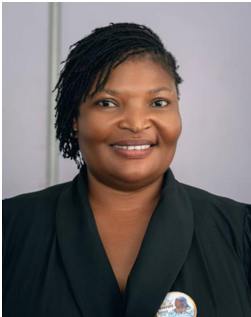
Bridget Mensah is a PR, Marketing & Communications professional and General Secretary of the Network of Women in Broadcasting (NOWIB). A dedicated feminist and advocate for women in media, she champions workplace excellence whilst empowering voices and building bridges across the industry. Bridget is passionate about amplifying women’s stories and driving positive change in Ghana’s media. She can be reached via email at [email protected]
Post Views: 1
Discover more from The Business & Financial Times
Subscribe to get the latest posts sent to your email.